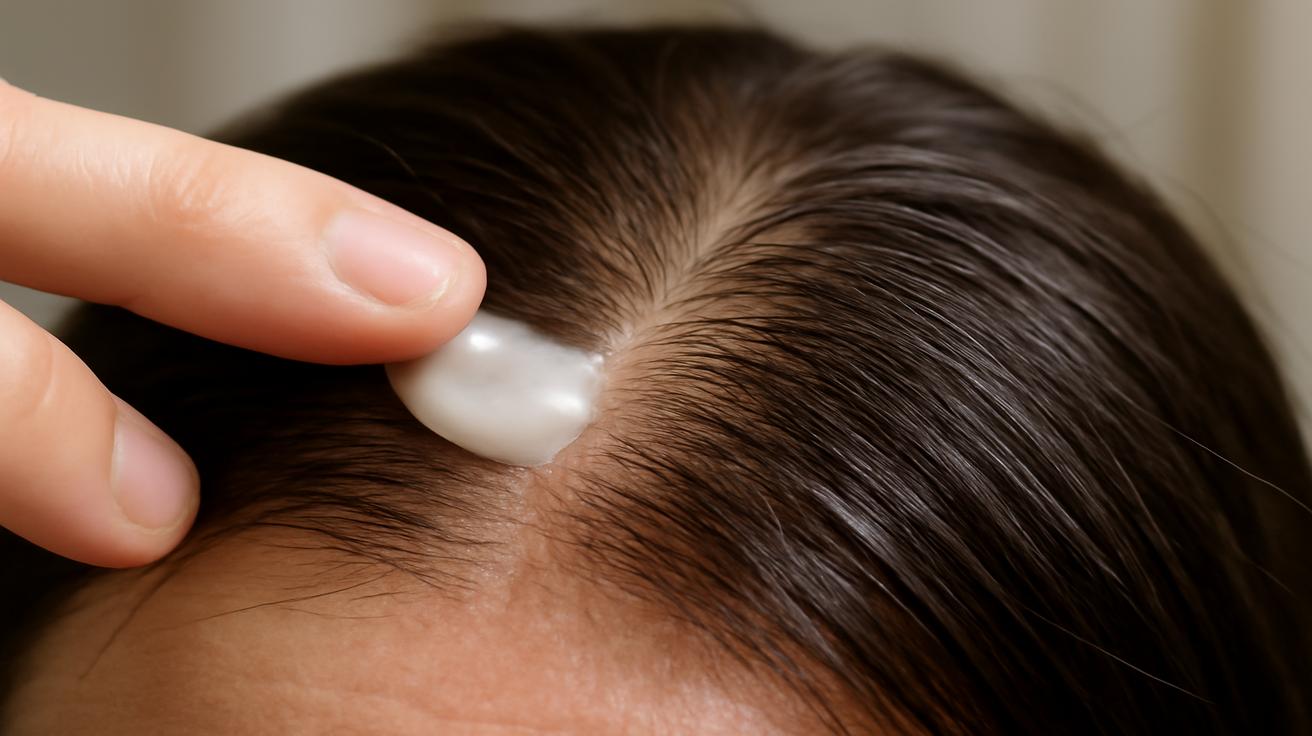
The first strand you notice is always the loudest. It clings to your shower wall, curves across your pillowcase, or glints under a bathroom light like a quiet accusation. You tell yourself it’s nothing—everyone sheds. Then you start to see more. A widening part. A scalp that seems to catch the sun more eagerly than it used to. The ponytail that once needed two tight loops of elastic now folds three times, a little too easily. And somewhere between denial and the mirror, a question rises like static: Is my hair actually thinning?
Listening to What Your Hair Is Trying to Tell You
Before we sprint to miracle oils and laser caps, pause for a moment at the root—literally. Hair, for all its drama, is actually a storyteller. It narrates your internal world with quiet honesty: stress levels, hormones, nutrition, genetics, even how you sleep and wash and brush. When it begins to thin, it’s not always a sign of vanity; it’s a kind of whispered report from inside your body.
Run your fingers through your hair now, wherever you are. Feel the density near your scalp. Is your part line wider than it was a year ago? Do you see more scalp shining through under bright light? Are the hairs at your temples or crown a bit finer, shorter, reluctant to grow? These subtle changes are often the early murmurs of hair loss long before you notice dramatic shedding.
There are many reasons this happens. Some are coded into your DNA—classic pattern baldness, in all its quiet inevitability. Some arrive with hormonal shifts: postpartum shedding that carpets the bathroom floor, thyroid imbalances that leave your hair dull and sparse, the hormonal turbulence of perimenopause. Others slip in with lifestyle: crash diets, chronic stress, iron deficiency, tight ponytails, harsh chemical treatments. Often, it’s not just one culprit but a chorus.
Here’s the strangely hopeful part: many of these causes are modifiable, manageable, or at least slowable. You might not be able to rewrite your genetics, but you can absolutely change the landscape your hair grows in. Think of your scalp as soil. Some soils are naturally richer than others, yes—but with the right care, nearly any patch of earth can be coaxed into new life.
Science-Backed Treatments That Actually Help Hair Look Thicker
The hair-loss world can feel like a marketplace at dusk: bottles promising miracles, supplements whispering secrets, brushes and serums and tonics elbowing for attention. Below the noise, though, a handful of treatments stand on solid scientific ground. They may not work overnight, and they’re not magic—but they change the story for a surprisingly large number of people.
Imagine them as tools in a kit, each designed to nudge more hairs into their growth phase, keep the ones you have from shrinking, and improve the overall environment of your scalp. Most people find that a combination—rather than a single hero product—creates the most noticeable change.
| Treatment | How it Helps | Best For |
|---|---|---|
| Topical minoxidil | Prolongs growth phase, increases blood flow, can regrow and thicken hair | Early-to-moderate thinning in men and women |
| Finasteride & similar meds | Block DHT hormone that shrinks follicles | Genetic male pattern hair loss |
| Low-level laser devices | Stimulate follicles with gentle light energy | Men & women wanting non-drug support |
| Platelet-rich plasma (PRP) | Uses your own growth factors to wake up follicles | Early thinning, especially at crown or part |
| Nutritional & lifestyle changes | Corrects deficiencies, reduces shedding, improves strand quality | Anyone who wants stronger, fuller hair |
Topical Minoxidil: The Slow, Steady Workhorse
If hair-loss treatments were characters in a story, minoxidil would be the quiet, dependable one who shows up early and stays late. Originally a blood-pressure medication, it was found—almost by accident—to spur hair growth. Applied as a foam or liquid directly to the scalp, it helps more hair follicles stay in the anagen, or growth phase, for longer. Over months, this can mean more hairs actively growing instead of slipping into rest and shed cycles too soon.
Minoxidil doesn’t feel dramatic. There’s no tingle, no instant fullness. In fact, for some people, the first chapter is unnerving: a temporary increase in shedding as weak hairs are pushed out to make way for stronger ones. Dermatologists often recommend sticking with it for at least six months before judging results, and a full year to see the best of what it can do. Many users notice new “baby hairs” along their hairline and part—soft, fine, almost translucent at first—that slowly gain pigment and thickness.
It works best when thinning is still in the earlier stages. If the scalp has been shiny and bare for years, the follicles there may be too dormant or scarred to respond. But in the land of widening parts, thinning ponytails, and patchy crowns, minoxidil has changed countless stories. It does, however, require commitment: stop using it, and within several months hair often returns to its pre-treatment pattern.
Hormones, DHT, and the Medications That Interfere
For many men, and some women, hair loss has a key antagonist: dihydrotestosterone, or DHT. This hormone, derived from testosterone, binds to genetically sensitive hair follicles—especially along the hairline and crown—and gradually shrinks them. Hairs grow back thinner and shorter with each cycle, until they resemble soft down and finally disappear.
Medications like finasteride work by quietly turning down the body’s DHT production. Over months and years, this can slow or halt the miniaturization of follicles and help preserve what’s left. Some men even see modest regrowth. Taken as a small daily pill, it tends to be most effective when started well before advanced baldness.
There is a trade-off: any medication that alters hormones deserves respect and careful conversation with a doctor. Some people experience side effects, and the idea of tinkering with DHT can feel unsettling. But for those with clearly hereditary male pattern hair loss, finasteride and related drugs are often the difference between steady thinning and long-term stability.
Women’s hormonal hair loss plays by more complex rules—intertwined with estrogen, progesterone, and sometimes conditions like polycystic ovary syndrome. Instead of finasteride, doctors may use medications such as spironolactone, which can block some of the hormonal triggers that nudge women’s hair into diffuse thinning. The story here is rarely simple, but it is absolutely worth telling in a medical office, especially if your hair loss coincides with irregular cycles, new acne, or weight changes.
Lasers, Needles, and Other High-Tech Helpers
Low-Level Laser Therapy: The Gentle Red Glow
Picture this: you’re sitting on your couch reading, wearing what looks suspiciously like a futuristic bike helmet that glows red from the inside. Inside that strange shell, low-level lasers are bathing your scalp in cool, painless light. The idea, backed by a growing (though still evolving) body of research, is that specific wavelengths of red and near-infrared light can energize hair follicles, improve blood flow, and nudge more follicles into active growth.
Devices range from combs to caps and bands, used a few times per week for about 15–30 minutes at a time. The experience is oddly calming: no noise, no sensation, just a quiet ritual. Results, again, are subtle and slow—a thickening of existing hairs, a bit more density, less shedding in the shower. They seem to work best when paired with other treatments like minoxidil or medications, particularly for those who prefer to avoid increasing drug doses.
Microneedling and PRP: Waking Follicles With Tiny Disturbances
Then there are treatments that deliberately disturb the scalp in order to heal it stronger. Microneedling uses a roller or pen tipped with tiny needles to make controlled, shallow injuries across the skin of your scalp. In response, the body sends growth factors, stem cells, and new circulation to repair the area—some of which appear to benefit hair follicles as well. When combined with topical treatments like minoxidil, microneedling may help them penetrate more deeply.
In a similar spirit, platelet-rich plasma therapy—PRP—draws a small vial of your blood, concentrates the platelets (rich in growth factors), and injects them back into your thinning areas. Think of it as delivering a dense, personalized dose of your body’s own repair signals straight to sleepy follicles. Sessions are usually spaced a month apart for several rounds, then maintained every few months if results are good.
Neither microneedling nor PRP guarantees success. Some scalps respond spectacularly, sprouting new density and baby hairs; others remain stubborn. Cost, access, and tolerance for needles also shape the decision. But for people not ready for hair transplant surgery, these interventions offer a bridge between simple topicals and more invasive options.
Feeding Your Hair From the Inside Out
There is a particular kind of hunger only hair can reveal—a hunger for iron, protein, zinc, vitamin D, B12, or simply enough calories. Hair is metabolically expensive to produce; when the body senses scarcity, it quietly reroutes resources to more vital organs. The follicles, ever patient, are among the first to feel the cutbacks.
Run through your last few months. Have you dramatically changed how you eat? Switched to a very low-calorie or restrictive diet? Been so busy you rely on coffee and snacks to carry you through entire days? These aren’t moral failings; they are simply realities that can show up on your head.
Blood work ordered by a health professional can uncover silent deficiencies. Low ferritin, a marker of iron stores, is a common accomplice in diffuse shedding—especially in people who menstruate or follow plant-based diets without meticulous planning. Restoring iron gradually through food and, when appropriate, supplements can reduce shedding and slowly restore thickness. Adequate protein, too—roughly 1.2 to 1.6 grams per kilogram of body weight for many adults aiming to support hair, skin, and muscle—gives your follicles the raw materials they crave.
Then there’s stress, that invisible hand that tightens your jaw and loosens your hair. Intense, prolonged stress can push a surprising number of hairs into a resting state all at once, only for them to shed en masse two to three months later in what’s called telogen effluvium. The result can be terrifying handfuls of hair after an illness, heartbreak, surgery, new job, or global upheaval. The good news: once the trigger is past and the system calms, hair often regrows. The less-comfortable truth is that calming the system may require changing how you live inside your days—more sleep, gentler self-talk, a willingness to ask for support.
Creating a Daily Ritual That Respects Your Hair
Beyond prescriptions and procedures, there is the quieter world of daily care—the small, repetitive acts that either nurture or slowly erode the health of your strands. You can think of this as house-keeping for your follicular forest.
Start with the basics: how you wash, dry, and style. A clean scalp is a fertile one; sebum, product, sweat, and pollution can accumulate like dust on a windowsill, clogging follicles and inflaming skin. But too-harsh shampoos, scorching-hot water, and rough scrubbing can strip the very oils that protect your hair shaft, leaving it brittle and prone to breakage. When your hair is already thinning, every broken strand can feel like a small betrayal.
Gentle, sulfate-free shampoos; lukewarm water; fingertips instead of nails; a soft towel squeeze instead of a hard rub—these are not glamorous changes, but they add up. So does what you ask of your hair under tension: tight buns, heavy extensions, unyielding braids can pull on fragile follicles day after day, eventually causing traction alopecia. Choosing looser styles, rotating parts, and giving your scalp true rest days can stop that slow pulling before it leaves permanent gaps.
Then there’s the sensory pleasure of scalp massage—a few minutes each evening, perhaps while reading or watching something quiet—using fingertips or a soft silicone tool. The pressure coaxes blood toward the surface, relaxes tense muscles, and invites you to inhabit your body from the top down. Many people pair this with a light oil chosen for the scalp, not just for shine—argan, jojoba, pumpkin seed, rosemary-infused blends. The science on specific oils is still catching up with tradition, but the ritual itself carries benefits in presence and circulation.
When Cosmetic Magic Has Its Place
While your follicles begin their long, slow work of recovery—or accept their new limits—there is no shame in reaching for immediate, cosmetic allies. Hair fibers, for instance, cling electrostatically to existing hairs and scalp like soft, tinted dust, instantly making hair look thicker in sparse areas. A strategically placed root powder along a widening part can visually halve its width in seconds. Volumizing sprays and mousses, used at the roots before blow-drying with a gentle hand, can lift flat hair without harsh stiffness.
For some, the most compassionate choice is not to fight nature but to reimagine style: a shorter cut that gives the illusion of volume, a textured fringe to disguise a high forehead, a carefully chosen wig or topper that restores the lost pleasure of running your hands through a full head of hair. Accepting support—from tools, professionals, or prosthetics—is not a resignation; it’s a creative answer to a changing reality.
Because beneath all the science and rituals, one truth remains: hair is deeply personal. It frames the face you offer the world, but it also shapes how you feel alone in your bathroom, catching your reflection by accident. Wanting to keep, restore, or transform it is not vanity. It is, in many ways, a wish to recognize yourself when you look in the mirror.
Frequently Asked Questions About Thickening Thinning Hair
How long does it take to see results from hair-thickening treatments?
Most treatments that truly change hair growth work on the scale of months, not weeks. Many people see early signs—less shedding, tiny baby hairs—around three months, with more visible thickening between six and twelve months. Hair growth is slow by nature, and consistency is more important than intensity.
Can thinning hair really grow back, or is the damage permanent?
It depends on the cause and how long follicles have been affected. With temporary triggers like stress, illness, or nutrient deficiencies, hair often regrows once the underlying issue is resolved. In genetic pattern hair loss, early intervention can thicken existing hairs and sometimes regrow some, but long-dormant follicles may not revive. A dermatologist can help distinguish between reversible and more permanent patterns.
Are “natural” oils and remedies enough to thicken my hair?
Oils and natural remedies can support scalp health and reduce breakage, making hair look and feel fuller. Some, like rosemary oil, show early promise. But for significant genetic or hormonal hair loss, they usually work best as part of a larger plan that may include medical treatments, nutrition, and lifestyle changes.
Do I have to use minoxidil or medications forever?
For genetic hair loss, most treatments only work as long as you use them. If you stop, your hair typically returns over several months to the trajectory it would have followed without treatment. That doesn’t mean you must commit forever, but it does mean deciding whether ongoing use fits your life and values.
When should I see a doctor or dermatologist about my hair loss?
It’s wise to seek professional help if you notice rapid shedding, visible scalp within a year, patchy bald spots, itching or burning, or hair changes alongside symptoms like fatigue, weight changes, or irregular periods. Early evaluation often means more treatment options—and less guesswork and worry on your own.