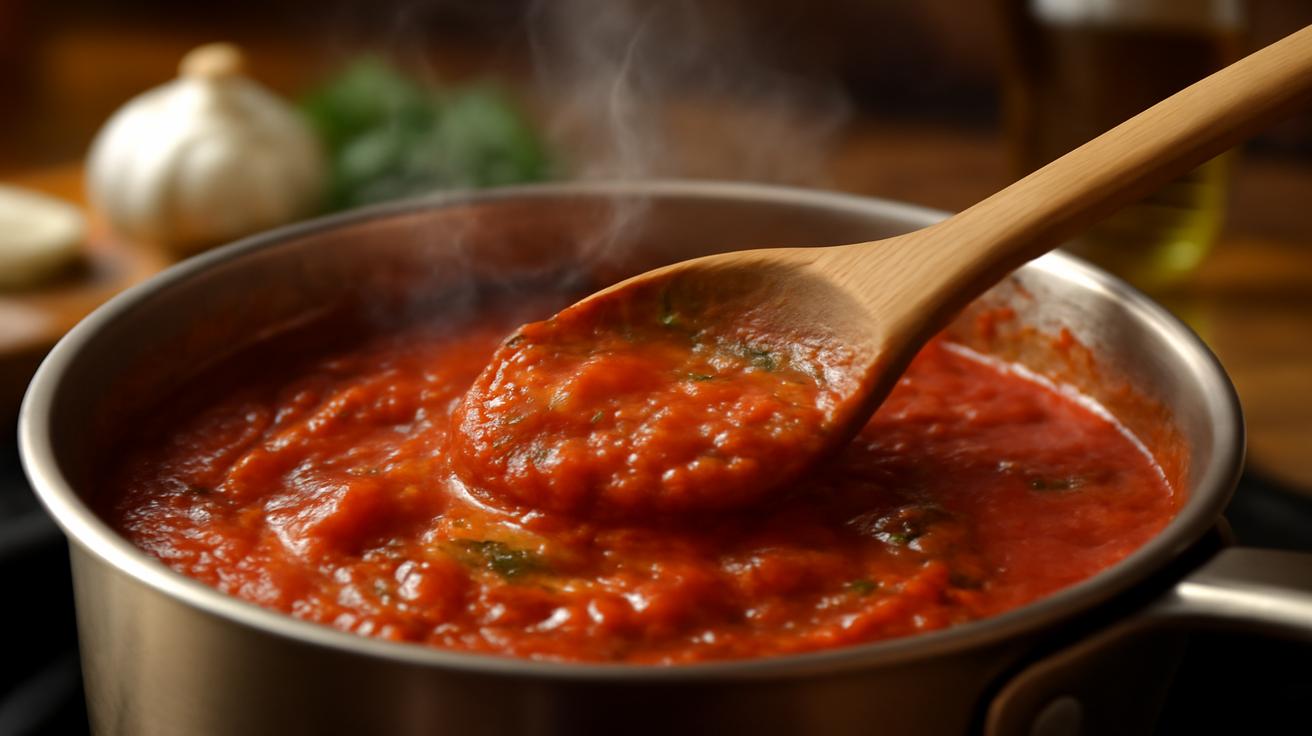
The first time it happened, the whole apartment smelled like a tiny trattoria wedged into a cobblestoned side street somewhere in Rome. No fancy equipment, no ten-step recipe, just four things sitting on the counter that you could count on one hand. A pan, a wooden spoon, and the kind of slow anticipation that makes you stand over the stove, tasting with the back of the spoon, waiting for the moment when everything goes from “tomatoes and stuff” to “oh… this is a real sauce.” That moment when the steam fogs your glasses and you know you’ve crossed an invisible line from home cooking into restaurant territory.
The Quiet Magic of Only Four Ingredients
There is something almost rebellious about deciding you’re going to make a rich, restaurant-quality pasta sauce with only four ingredients. No secret powders, no twelve herbs, no “chef’s blend” of anything. Just four. It feels too simple, the way walking into a forest with no phone feels too simple, too exposed… until your senses wake up and you remember that simple doesn’t mean boring. It means every detail suddenly matters.
Before we cook, let’s name our cast—four characters that will do all the heavy lifting for flavor, texture, and that little bit of magic:
- Good canned whole tomatoes (preferably San Marzano or similar)
- Extra-virgin olive oil
- Garlic
- Salt
That’s it. Yes, you can absolutely add basil, pepper flakes, butter, cheese, onion, wine—whole orchestras of flavor. But the point here is to learn how deep you can go with four notes. Once you taste what these four can do when treated with care, adding extras becomes a choice, not a crutch.
Restaurant-quality is not about complexity, it is about control. The control of heat, of time, of when to leave something alone and when to interfere. With just four ingredients, you’re not hiding behind anything. You’re listening: to the sizzle of the oil, the faint hiss as tomatoes hit the pan, the quiet burble as everything settles into a slow simmer. You’re watching: the way the sauce thickens, the color deepens from bright red to something more brick-like, more serious, more grown-up.
Choosing Ingredients Like a Chef, Even in a Tiny Kitchen
One quiet secret of chefs is this: they’re incredibly picky about the simple things. Salt. Tomatoes. Oil. At home, we tend to reserve our pickiness for big-ticket items, but your four-ingredient sauce lives and dies by how good each thing is. When there are only four characters on stage, even the extras matter.
Tomatoes: Your Main Storyteller
Imagine opening a can of tomatoes and it smells faintly metallic, a little dull. Now imagine a can that smells like a summer garden collapsed into itself: bright, sweet, a little grassy, not harsh. That second can? That’s what you’re looking for. If you can find whole peeled tomatoes labeled “San Marzano” or simply “whole plum tomatoes” from a brand you trust, start there.
Whole tomatoes break down in the pan and give you control over texture. You can crush them by hand, mash them with a spoon, or leave a few chunky pieces to bump into with your fork. Crushed or puréed tomatoes can work in a pinch, but they often lack the same layered flavor and can lean metallic or flat.
Olive Oil: The Quiet Luxury
Good extra-virgin olive oil is like the light in a photograph—it changes how everything else looks. You don’t need a bottle that requires a second mortgage, but you do want something that actually smells like olives when you open it. Peppery, grassy, maybe a little floral. This isn’t just “cooking fat” here; it’s a flavor in its own right and a silky texture all the way through your sauce.
Generosity helps. Restaurant sauces are often richer than you think because they are not shy with oil. You’re not deep-frying anything, but you are coating, massaging, and carrying flavor. Think in tablespoons, not teaspoons.
Garlic: The First Smell of Home
Garlic is the opening scene. The minute it hits warm oil, your kitchen becomes an invitation. For this sauce, fresh garlic is non-negotiable. Pre-minced jars tend to bring a dull, slightly sour note that will haunt your sauce from start to finish.
How you cut your garlic matters. Thin slices will soften and sweeten, almost melting into the sauce. A fine mince will infuse more fiercely and can burn if you’re not careful. Slightly smashed cloves, lightly browned then removed, will give you a gentler, perfume-like garlic backdrop if you prefer a softer profile. You get to choose the mood.
Salt: The Invisible Architect
Salt is less an ingredient and more a lens. It doesn’t just make things salty; it makes things taste more like themselves. Unsalted sauce will always taste like something is “missing” and you may mistakenly blame the tomatoes or oil for what is, at heart, a seasoning issue.
A good pinch at the start, and very small adjustments toward the end, are your best strategy. Taste often. Notice the moment when the tomato suddenly seems sweeter, more tomato-y. That’s salt doing what it does best—quietly building structure.
The Slow, Gentle Ritual of Building Flavor
When you watch a seasoned cook make pasta sauce, there’s no rush. Movements are unhurried. Steps are simple. It’s not about doing a lot; it’s about letting the right things happen long enough. That’s what we’re after here: a small, everyday ritual you can return to on a weeknight, in a messy kitchen, and still feel like you’re making something a little special.
Here is a simple flow you can hold in your head without needing to look at a recipe card:
- Warm olive oil.
- Gently cook garlic.
- Add and break down tomatoes.
- Simmer slowly, season, and taste.
Those four steps are a framework, but the magic is in the details—especially heat and time. Think medium-low instead of high. Think 35–45 minutes instead of 10. The difference between “good” and “restaurant-level” lives in that extra half-hour when you might be tempted to turn off the stove and call it done.
A Handy 4-Ingredient Sauce Blueprint
| Ingredient | Amount (for 2–3 servings) |
| Whole canned tomatoes | 1 can (400 g / 14 oz) |
| Extra-virgin olive oil | 3–4 tablespoons |
| Garlic | 2–4 cloves, to taste |
| Salt | About 1 teaspoon, plus to taste |
This table is not dogma; it’s a guideline. If you love garlic, add another clove. If your tomatoes are already salted, pull back on the salt and creep up slowly. The important thing is that each ingredient has room to speak.
Cooking the Sauce: Letting Time Do the Heavy Lifting
Picture this: a wide, heavy pan on the stove—something that gives your sauce room to spread and evaporate rather than pile up and stew in its own water. You pour in enough olive oil that it coats the bottom with a glossy, shallow pool. The pan warms, not so hot that it smokes, but warm enough that a piece of garlic dropped in will gently sizzle, like rain beginning on a roof.
You add your garlic. The scent rises immediately, sharp at first, then softening. You stir lazily, making sure no piece colors too quickly. This is the moment to slow yourself down. If you rush the garlic and let it burn, the bitter edge will thread through the whole sauce. Aim for pale gold at the edges, not brown. If you’re nervous, lower the heat. Nobody ever ruined a sauce by cooking garlic a little too gently.
When the garlic smells sweet and inviting, you add the tomatoes. The pan may hiss and spit. You can crush them by hand as they go in, or break them gently with the back of a spoon. There’s something oddly satisfying about catching a whole tomato under your spoon and feeling it collapse, seeds and juice releasing into the oil and garlic.
This part may not look promising at first. The sauce will be bright, thin, a little unruly. Give it a good pinch of salt and stir. Then drop the heat to low or medium-low, just enough that you see a lazy, occasional bubble. This is where you decide what kind of cook you’re going to be: the one who flees the kitchen and forgets the pan, or the one who stays nearby, checking in every so often like you would with a simmering conversation.
As the sauce simmers, water evaporates. Flavors condense. The edge of raw tomato softens; sweetness steps forward, acidity learns some manners. After 20 minutes, it will be good. After 35–45 minutes, it will be something else entirely—thicker, deeper, almost creamy on the tongue despite the lack of any cream. A restaurant chef would let it go that far. So can you.
Toward the end, taste and adjust. Maybe you add a tiny bit more salt and the tomato suddenly tastes brighter. Maybe the sauce feels a bit sharp and you let it simmer another 5 or 10 minutes. This is your small act of craftsmanship: you’re not just following steps; you’re steering.
Turning Sauce into a Restaurant-Style Pasta Dish
Restaurant-quality isn’t just about the sauce in the pan—it’s about how that sauce meets the pasta. If you’ve ever wondered why your noodles at home never feel quite as “one” with the sauce as they do in a good Italian place, the secret is surprisingly simple: they’re not married in the pan.
While your sauce is gently simmering toward richness, you boil your pasta. Any shape will do, but something that holds sauce well—spaghetti, rigatoni, penne, bucatini—will shine. Salt the cooking water generously; it should taste pleasantly like the sea. This is your first seasoning step for the pasta itself.
Here’s the key move: don’t wait until the pasta is completely soft. Pull it from the water a minute or so before it’s truly done, when it’s just a little firmer than you like. Transfer it straight into the pan of simmering sauce, along with a small ladle of the starchy pasta water. That water is liquid gold; starch helps the sauce cling, helps everything emulsify into a silky coat rather than sliding off in red puddles.
Now you toss. Tongs, a big spoon, a shake of the pan—whatever works. Over low heat, for a minute or two, the pasta finishes cooking inside the sauce. It absorbs flavor instead of just wearing it like a jacket. The sauce thickens around it, finding every curve and hollow.
Even without cheese, without butter, without a single extra ingredient, the result can taste unexpectedly complete. The tomatoes are sweet and concentrated. The garlic is a warm echo rather than a sharp jab. The olive oil gives everything a gentle gloss. The salt threads all the flavors together so that each bite tastes like a deliberate thing, not an accident.
Little Adjustments, Big Restaurant Energy
Want it silkier? Add a splash more olive oil at the very end, off the heat, and toss again. In many restaurant kitchens, this finishing oil is the quiet step that takes a sauce from “nice” to “luxurious.”
Want a more rustic feel? Don’t overwork the tomatoes at the start. Leave some chunks intact so that you get small bursts of concentrated tomato against the smoothness of the rest of the sauce.
Want a softer garlic presence? Use lightly smashed cloves, sauté them until golden, then fish them out before adding the tomatoes. You’ll have a sauce that whispers garlic instead of announcing it with a megaphone.
Each of these are still within the boundaries of our four ingredients. You’re not changing the cast; you’re directing the scene differently.
Living With a Sauce You Can Trust
The real beauty of a four-ingredient sauce isn’t just what it tastes like on a Tuesday night; it’s how it becomes part of your kitchen vocabulary. It’s the sauce you can make half-asleep, the one you trust enough to serve to guests without performing, the one you quietly upgrade with a pinch of chili, a handful of torn basil, or a knob of butter only if you feel like it.
Maybe you make a double batch on a lazy Sunday afternoon, letting it murmur on the stove while you drift in and out of the kitchen. You taste it at different points in its journey—20 minutes, 30, 45—and start to understand, not in theory but in your bones, what time does to tomatoes. You tuck half of it into a jar for later in the week, knowing there is something in your fridge that can rescue tired pasta, swirl into a pan with eggs, or spoon over grilled vegetables.
There’s a quiet confidence that comes from knowing how to coax depth from simple things. Four ingredients, one pan, a little patience. The kind of cooking that doesn’t shout for attention but, when you sit down with a bowl of glossy, red-coated pasta, makes you pause for a moment, fork hovering, thinking: “I actually made this. And it tastes like a place I’d pay money to eat at.”
That’s the secret: restaurant-quality doesn’t live only in restaurants. It lives in how carefully you listen to what’s in the pan, even when there are only four voices speaking.
FAQs About 4-Ingredient Restaurant-Quality Pasta Sauce
Can I use fresh tomatoes instead of canned?
Yes, but choose ripe, flavorful tomatoes and peel them if possible. You’ll need to cook them a bit longer to concentrate their flavor, and you may want to add a touch more salt since fresh tomatoes can be milder than good canned ones.
What if my sauce tastes too acidic?
Let it simmer longer; time softens acidity as water evaporates and flavors condense. If it is still sharp after 45 minutes, a tiny pinch of salt usually helps. Some cooks add a pinch of sugar, but with good tomatoes and enough time, you often won’t need it.
How long can I store this sauce?
In the fridge, it keeps well for about 4–5 days in a sealed container. For longer storage, portion it into small containers and freeze for up to 3 months. Thaw gently and reheat over low heat, adding a splash of water if it’s too thick.
Is this sauce good without cheese?
Absolutely. It is designed to be rich and satisfying on its own, thanks to the olive oil and slow simmer. If you do choose to add cheese at the table, think of it as an extra layer, not a requirement for flavor.
Can I double or triple the recipe?
Yes, it scales beautifully. Use a wide pot so excess moisture can still evaporate, and allow a little extra time for simmering. Taste often, as larger batches sometimes need slightly more salt to bring the flavor into focus.