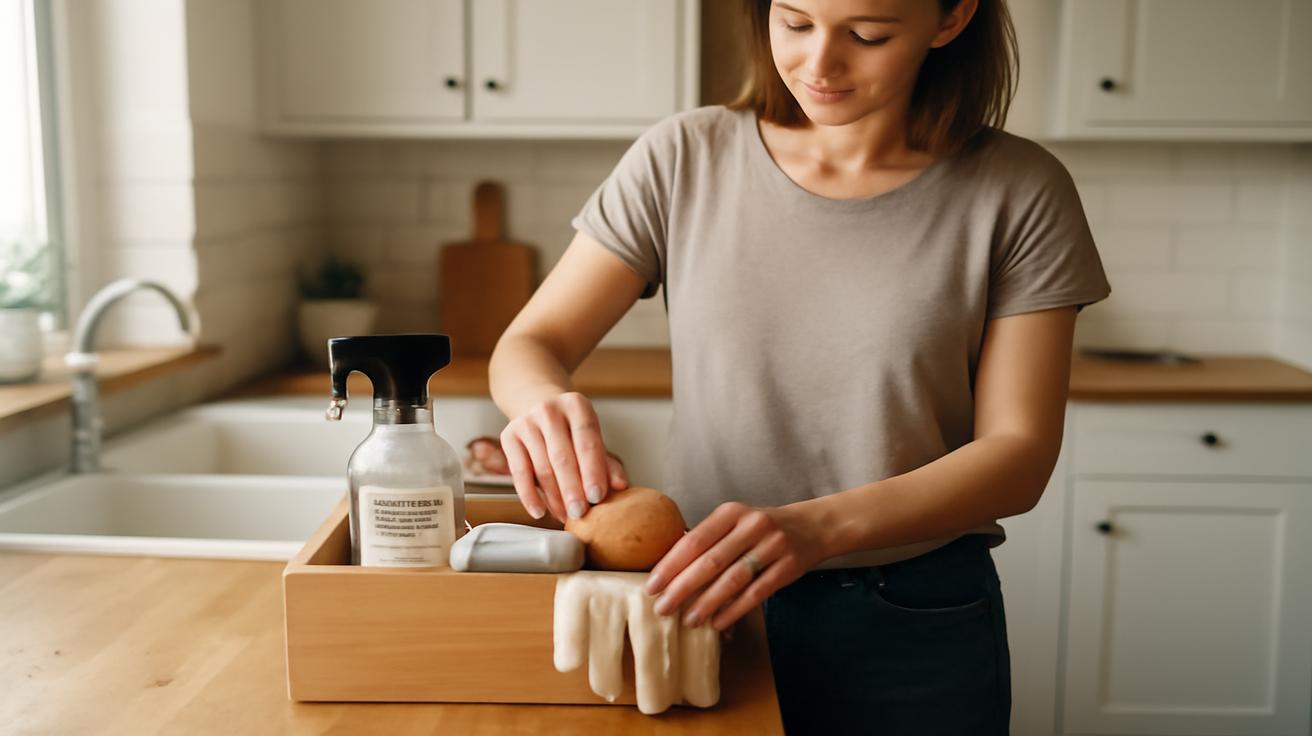
The first thing I noticed wasn’t the sparkling counters or the empty laundry basket. It was the silence. No buzzing urgency in my chest, no mental list barking orders. Just the soft shuffle of my socks on the floor, the distant hum of the fridge, the way the afternoon light pooled on the kitchen tiles like warm honey. I had cleaned this house a thousand times before—but that day, for the first time, it felt almost…peaceful.
It didn’t happen because I found the perfect vacuum or some miracle multi-surface spray. Everything changed because of what happened before the cleaning even began. The quiet planning. The small rituals. The surprising pause in a world that seems allergic to slowing down. Somewhere between the broom and the broken systems I’d been using for years, I decided to change the way I prepared—and cleaning stopped being a battle and started feeling like a flow.
The Old Way: Chaos, Clutter, and Constant Restarting
For years, my cleaning days followed a very familiar script: I’d look around, feel overwhelmed, and then launch into a frantic, unfocused attack on everything at once. I’d start with the dishes, get distracted by crumbs on the floor, abandon the dishes for the broom, then notice the mountain of laundry, then the dusty shelves, then the mysterious smell coming from the fridge. I’d pinball from room to room, hands full of random items that never quite made it back where they belonged.
By midday, the house looked like a “during” shot in a home makeover show—nothing finished, everything in progress. A pile of folded clothes waited on the couch. Half-wiped counters dried in streaks. A lone sock sat on the stairs like it had given up on life. I felt the same way.
I told myself the problem was time. Or energy. Or the wrong cleaning products. But the real problem was that I treated cleaning like a sprint with no starting line. I just…went. No plan, no intention. Just guilt and urgency.
Then one day, something small cracked that pattern. I was about to dive into my usual whirlwind when I realized I couldn’t find the glass cleaner. Or the microfiber cloths. Or the scrub brush for the tub. I spent 15 minutes pacing from room to room, annoyed, already tired, before I even started.
Standing there, staring at the cluttered under-sink cabinet, I had a quiet thought: What if the cleaning isn’t hard? What if the way I enter it is?
The Moment I Decided to Prepare Differently
The shift began not with a checklist, but with a feeling: I was tired of fighting my house. Tired of resenting the laundry like it had personally wronged me. Tired of cleaning from a place of urgency and shame, driven by the fear that someone might drop in unannounced and discover that I am, in fact, a human being who lives in a space that gets messy.
So I tried something that felt almost rebellious: I sat down before I cleaned.
Not at my computer, not scrolling my phone. I just sat at the edge of the bed, closed my eyes for a moment, and took stock—not of the mess, but of my energy. What did I really have to give today? What mattered most? What absolutely had to get done, and what could wait without the world collapsing?
It felt odd, almost indulgent, to pause like that. But even in that tiny space of stillness, something softened. Instead of chasing every dust bunny like it was a moral failing, I started seeing my home more like a living, breathing body that needed care in simple, regular ways.
And then I made a decision: if I was going to clean, I would prepare like it was something I cared about, not a punishment I had to endure.
Gathering the Tools: Creating a Calm Before the Clean
Before that day, my cleaning supplies were scattered like lost thoughts—some under the kitchen sink, some in a hallway basket, some perched in the laundry room like they’d wandered off mid-task. Just finding what I needed felt like a chore.
I started small. I emptied everything out: sprays, cloths, brushes, the random half-used sponge that probably had a PhD in bacteria by now. I sorted through each thing, paying attention to textures, scents, the quiet little satisfaction of discarding what was empty or broken.
Then I created what I began to think of as my “cleaning kit”—a simple caddy that could travel with me from room to room. Not stuffed to the brim, not weighed down with specialty items I never used. Just the fundamentals:
- A gentle all-purpose cleaner
- Glass cleaner
- Two microfiber cloths: one for dust, one for polish
- A small scrub brush
- A pair of gloves that actually fit
- Trash bags folded flat, tucked in the side
When I picked it up, I noticed something I’d never felt before: readiness. Instead of wandering the house searching for supplies, I had a small, curated toolkit that came with me like a quiet companion. My preparation, before a single surface was wiped, had already smoothed the path.
| Old Way | New Way |
|---|---|
| Start cleaning in a rush, no plan | Pause, breathe, choose 1–3 priorities |
| Supplies scattered in different rooms | One simple cleaning caddy ready to go |
| Jump between rooms constantly | Work one zone at a time, top to bottom |
| Push through until exhausted | Set gentle time blocks with mini-breaks |
| Clean from frustration or guilt | Clean from intention and small rituals |
The Quiet Rituals That Changed the Mood
1. Dressing for the Task
It sounds almost too simple, but changing clothes became a line in the sand between “thinking about cleaning” and “actually cleaning.” I’d pull on soft, worn-in clothes I could move in, tie my hair back, and slip on shoes that made me feel steady, grounded. This tiny uniform told my body: We’re about to do something physical, but it doesn’t have to hurt.
There’s something almost ceremonial about it. Instead of feeling like I was squeezing cleaning into the cracks of my day, I was stepping into it deliberately, like you might step onto a yoga mat or into a studio. The task didn’t change—but my posture toward it did.
2. Choosing a Soundtrack
Before, I’d clean in silence or with random background noise that did nothing but keep me slightly distracted. Now, I choose my sound before I pick up a sponge. Sometimes it’s a calm playlist, sometimes an audiobook, sometimes the soft hum of a podcast where voices drift in and out as I move around the room.
This part matters more than I expected. It creates a container for time, a gentle frame around the work. When the album ends, I know I’ve moved through a chunk of effort. When the chapter closes, so does a small part of my cleaning session. The audio becomes a thread I can follow, instead of my mind tangling in a thousand directions.
3. Setting a Boundary with Time
I used to declare, optimistically: “I’m going to clean the whole house today.” That sentence, it turns out, is heavy enough to crush an afternoon.
Now, I set a simple boundary: a timer. Sometimes 25 minutes, sometimes 40, sometimes just 10 if the day’s been long. I prepare not only my tools, but my expectations. I promise myself: When the timer goes off, you can stop. Even if it’s not perfect.
Paradoxically, this makes me more focused. Instead of dragging my feet through an endless sentence of chores, I’m moving through a defined chapter. The end is in sight before I begin, and that makes it easier to start.
Zone by Zone: How Planning My Path Smoothed the Whole Day
There’s a rhythm in cleaning that I never noticed when I was bouncing around like a distracted ping-pong ball. When I began preparing differently, I also started thinking in “zones” instead of “everything.”
On a day when energy was low, I chose one: the kitchen counters. On a better day, maybe three: living room surfaces, bathroom sink, bedroom floor. I would stand in the doorway of a room and ask a quiet, practical question: If only one thing gets done here today, what will make the biggest difference to how it feels?
That question changed everything. It transformed cleaning from “fix all the flaws” to “enhance the feeling.” Often, it wasn’t the deep scrub or the perfectly folded towels that mattered most. It was clearing the table. Making the bed. Emptying the trash so the room smelled like nothing at all—clean air, open space.
Because I had a plan, I stopped wandering. I moved through each zone in the same calm order:
- Quick pickup of obvious clutter
- Dust or wipe from top surfaces downward
- Finish with the floor
That simple sequence became a quiet drumbeat under everything. I didn’t have to think about what to do next anymore; I’d already decided before I started. The more I honored that pattern, the smoother it felt—like my body was learning choreography instead of improvising under pressure.
The Emotional Shift: From Judgment to Relationship
On the surface, changing how I prepare before cleaning is a very practical story: gather supplies, set a timer, choose a room. But underneath, something more tender was happening. I was finally shifting from judging my home to relating to it.
Before, I looked around and saw evidence of failure: the dishes meant I hadn’t been efficient enough. The dust meant I hadn’t tried hard enough. The clutter meant some deep defect in my personality.
Now, when I prepare, I approach the mess with a new lens: this isn’t proof of my inadequacy. It’s proof that I live here. That life happens here. That meals are cooked, ideas are born, clothes are worn, stories are told, rest is taken. The crumbs under the table don’t mean I’m behind; they mean someone ate breakfast.
Cleaning, with this mindset, becomes an act of participation in the life of the home instead of an endless attempt to erase it. My preparation isn’t about gearing up for war; it’s about entering into care. It’s about saying, in small, unspoken ways: I am in relationship with this space, and I’m willing to tend to it.
What Changed When Everything Felt Smoother
The surprising part isn’t that my home grew cleaner; it’s how my days felt less jagged.
Because I prepared—mentally, emotionally, and practically—the cleaning itself took on a different texture. Less like a series of urgent demands, more like a sequence of small, manageable choices. The resistance dialed down. The resentment softened. Even the boredom felt less sharp, because I wasn’t fighting so hard against the task.
On a very ordinary Tuesday afternoon, I noticed the difference most clearly. I had exactly 30 minutes before an appointment. Old me would have scrolled my phone and then rushed out the door, vaguely annoyed at the crumbs on the counter I “never had time” for.
Instead, I slipped into my cleaning clothes, grabbed the caddy, set a 20-minute timer, and put on a favorite playlist. I cleared the counter, wiped it slowly, rinsed the sponge. I could smell the faint citrus of the cleaner mixing with the earthy scent of coffee grounds in the trash. The light shifted on the stainless steel sink as I polished away water spots. It wasn’t glamorous. It wasn’t Instagram-worthy. But it was strangely satisfying.
When the timer went off, I stopped. The whole kitchen wasn’t perfect. The floor needed sweeping; the fridge needed love. But the counter gleamed. The sink shone. The room felt lighter, and so did I.
Walking out the door, I didn’t carry the usual mental weight of everything undone. I carried the quiet knowledge that I had done something—deliberately, gently, with care. And that tomorrow, or the day after, I could do a little more.
Trying It Yourself: A Gentle Invitation
If your own cleaning days feel like mine used to—chaotic, resentful, endlessly restarting—maybe you don’t need a better mop. Maybe you need a better beginning.
Before you tackle the mess, you might try this:
- Pause for one full minute. Sit. Notice your breath. Let your shoulders drop.
- Ask yourself what truly matters today. Name one to three things, no more.
- Gather your tools in one place, like you’re packing a small suitcase for a short journey.
- Choose a sound—music, an audiobook, the quiet of your own home—that will keep you company.
- Set a gentle boundary with time. Promise yourself you’ll stop when the timer ends.
You may find, as I did, that the mess is the same, but the experience is not. The floors still need sweeping. The dishes still return, as they always will. But your relationship to those tasks can soften, shift, and smooth out around the edges.
In the end, I didn’t just change the way I prepare before cleaning. I changed the way I enter into care—of my home, of my time, of my attention. And when that changed, everything else, somehow, felt smoother too.
Frequently Asked Questions
How long should I spend preparing before I start cleaning?
You don’t need a long ritual. Even 5–10 minutes is enough to gather supplies, set a timer, choose a focus area, and put on music or a podcast. The goal is to shift out of autopilot and into intention.
What if I only have a small window of time to clean?
Preparation matters even more when time is short. Pick just one area or task—like the bathroom sink or the kitchen counter—and commit your limited time to that. A focused 15 minutes can feel far more satisfying than 45 scattered ones.
How do I stop feeling guilty about how messy my place is?
Try reframing the mess as evidence of life, not failure. Everyone’s home gets messy. Start by tending to one small spot and let that be enough for the day. Progress, not perfection, is the healthier standard.
What’s the minimum I need in a cleaning caddy?
An all-purpose cleaner, glass cleaner, two microfiber cloths, a small scrub brush, gloves, and a few trash bags are usually enough for most routine cleaning. You can add other products over time if you truly use them.
How do I keep from getting overwhelmed once I start?
Work in zones and follow a simple order: clear surfaces, wipe or dust from top to bottom, then finish with the floor. Keep your timer on, and give yourself permission to stop when it rings. Overwhelm often eases when you know there’s a clear end point.