The steam that rose from my grandmother’s kitchen used to smell like nothing. Just heat and starch and that faint metallic tang of the old pot. Potatoes went in, potatoes came out. We salted them, mashed them, fried them, forgot about them. They were background music in a meal, the bass note you only notice if it’s missing. Then, one late autumn evening, in a small wooden cabin tucked against a spruce forest, someone handed me a bowl of potatoes that tasted like walking through a garden at dusk. And I stopped boiling potatoes in plain water forever.
The Night That Changed My Potatoes
It was raining the kind of rain that doesn’t fall so much as drift sideways, the sky a thick wool blanket over the hills. Inside the cabin, the air smelled of smoke and thyme and something I couldn’t name. My friend Lina – the kind of person who can make a meal from a half-empty pantry and a handful of herbs – had invited a small circle of us to escape the city for a weekend. We strung wet coats by the door, held cold hands to the stove, and watched as she worked at the counter.
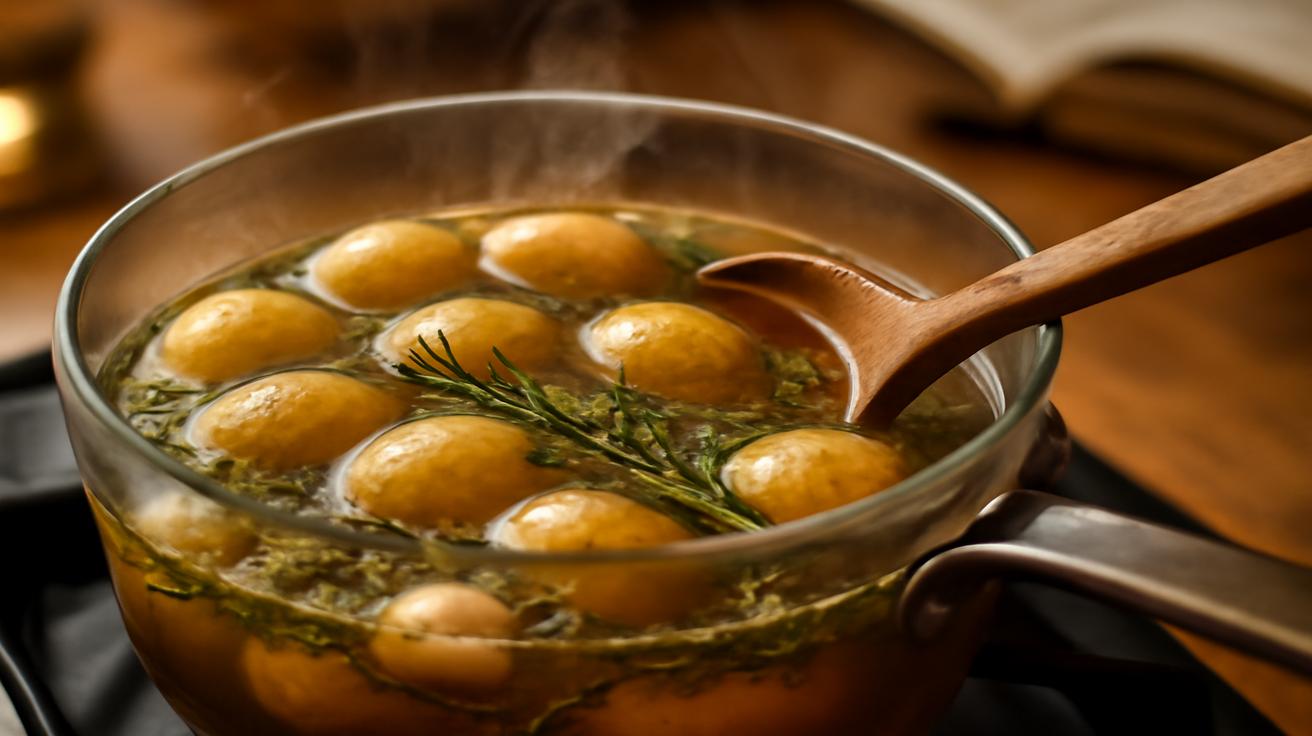
On it sat a big pot, its lid rattling gently as steam hissed around the edges. I assumed it was soup. Definitely soup. The air carried the warm, earthy scent of garlic and bay leaves, the green brightness of parsley stems, the soft sweetness of carrots. But when Lina lifted the lid, it wasn’t a soup at all. It was potatoes – small, golden, thin-skinned potatoes – bobbing gently in a liquid the color of weak tea, dappled with herbs.
“You boiled them in stock?” I asked, leaning closer.
She grinned. “Not stock. Broth. There’s a difference. Taste first, though.”
She spooned a few onto a plate, the skins glistening, steam curling up like breath in cold air. I crushed one with the side of my fork. It yielded with a soft sigh, the inside a pale, velvety cloud. When I took a bite, the flavor startled me – not showy, not overpowering, but layered. The potato tasted like itself, only somehow deeper: a little woodsy from the bay, faintly sweet from slow-simmered onion, carrying whispers of pepper and celery and something bright and green that stayed on my tongue.
“Why does this taste like a whole meal?” I asked, half-laughing.
“Because you cooked it in a story,” she said. “Water just heats. Broth remembers.”
It sounded poetic and ridiculous and completely true. That was the moment I realized I’d been treating potatoes like afterthoughts – when in fact, they’re sponges, quiet archivists of the flavors we surround them with. And if they’re going to soak something in, why on earth should it be plain water?
Why Plain Water Suddenly Felt… Sad
Back home, I boiled potatoes in water one last time, just to compare. I put them on the stove out of habit, threw in a handful of salt, walked away. The steam that rose was blank. No aromatics. No depth. The smell was just “hot.” I ate them with butter and salt, and they were fine – which, I realized, was the problem. Just fine, like small talk about the weather, or the beige walls of a rented apartment.
Potatoes are humble, yes, but they’re also generous. They will gladly soak up whatever you give them: salt, fat, herbs, the soul of a broth that’s been quietly coaxed into being. Plain water doesn’t offer them anything except a path to tenderness. Broth gives them a world to inhabit.
And when I say broth, I don’t mean the fancy glass bottles lined up like perfume on gourmet store shelves. I mean the kind of broth that starts with odds and ends in your kitchen: the onion skins you usually compost, the carrot nubs, the celery leaves, a stray mushroom, a sprig of rosemary that’s starting to droop in the jar by the window. The stuff that feels like nothing – until you simmer it, taste it, and realize you’ve been throwing away possibility.
The first time I made what I now think of as potato bath broth, I stood by the stove and watched the color slowly change as it simmered. The kitchen filled with a gentle fog of scent: sweet, grassy, earthy. It didn’t feel like cooking. It felt like steeping a memory.
The Simple Alchemy of an Aromatic Potato Broth
Here’s the thing: you don’t need a strict recipe to transform potatoes with broth. You just need a loose template and your own nose. But there is a rhythm to it, a kind of quiet choreography that repeats itself in my kitchen at least once a week now.
I start with a big pot and a little patience. Into the pot goes:
- One onion, cut in half (skins on for a deeper color, off for something lighter)
- Two or three garlic cloves, slightly crushed
- A carrot, chopped into chunky coins
- A celery stalk, leaves included – they’re full of flavor
- A bay leaf or two
- A handful of parsley stems or herb odds and ends
- A few peppercorns, rolled around the palm of my hand
I cover it all with water and bring it to a simmer, not a roiling boil; I want coaxing, not violence. As it simmers, the water thickens in scent, turns a little gold, takes on the soft weight of vegetables loosening themselves into the liquid. I skim off the occasional foam, mostly because my grandmother used to and old habits carry wisdom even when we don’t fully understand it.
After 30 to 40 minutes, I taste. That’s always my favorite part. A quiet spoonful, blown on gently, then a sip. Too mild? I let it go longer. Just right? I add salt until the broth tastes like something I’d happily drink on a cold day.
Only then do the potatoes enter the story.
They go in whole if they’re small and thin-skinned, halved or quartered if they’re larger. The broth covers them completely, hugging each piece. They simmer gently until a knife goes through with no resistance. And when I lift the lid this time, the smell isn’t just “dinner.” It’s the entire path that got us there: the garden, the pantry, the rain on the kitchen window, the memory of that cabin in the spruce forest.
How Broth Changes the Potato Itself
There’s a quiet but profound shift that happens when you cook potatoes in broth instead of water. It’s not about drowning them in flavor; it’s about layering. Potatoes are mostly starch and water, and that starch is like open arms, ready to hold on to whatever you give it.
In plain water, they simply soften. The seasoning comes later – usually as an afterthought on the surface. With broth, the seasoning isn’t just on the outside; it slips into the flesh, molecule by molecule. The garlic, the bay, the whisper of herbs – they don’t shout. They murmur from within the potato, so even if you take a bite without butter or salt or anything else, there’s still something there. A kind of built-in comfort.
Texturally, something interesting happens too. Broth often has a bit more dissolved solids than water – bits of vegetable, maybe bone if you’re using it, the faintest trace of gelatin. It clings differently, lending the potatoes a subtle silkiness. When you crush them with a fork, they don’t feel watery. They feel plush.
And then there’s what happens after they leave the pot. These broth-cooked potatoes are ready to play.
- Mash them with a drizzle of olive oil and some of that still-warm broth instead of milk, and you get something light yet luxurious.
- Toss them with butter and fresh herbs, and they taste like they were born in a garden.
- Let them cool, then sear them in a skillet until the edges are crisp and golden – the broth’s flavors concentrate and caramelize.
Even the leftovers have stories to tell. A bowl of cold, broth-cooked potatoes in the fridge is a promise: a future salad, a hash, a quick snack with a sprinkle of flaky salt.
Different Broths, Different Moods
What I love most is how easily the broth can shape not just the taste, but the mood of a meal. Change the broth, change the feeling on the plate. Over time, I’ve fallen into a few favorite “personalities” for my potato broths.
| Broth Style | Key Ingredients | Potato Mood & Best Use |
|---|---|---|
| Garden Vegetable | Onion, carrot, celery, parsley stems, bay leaf, peppercorns | Bright, comforting; perfect for mashing or warm potato salads |
| Herb & Garlic | Garlic, thyme, rosemary, a little lemon peel, black pepper | Woodsy, fragrant; ideal with roasted meats or grilled vegetables |
| Smoky Winter | Smoked paprika, bay, onion, a splash of soy sauce or tamari | Deep, cozy; great for crispy skillet potatoes or hashes |
| Light Citrus | Lemon peel, parsley, dill, a touch of white wine (optional) | Fresh, lifted; beautiful for spring plates and fish dishes |
Some evenings I want the potatoes to taste like the edge of a pine forest after rain: for that, I reach for rosemary, thyme, maybe a crushed juniper berry if I’m feeling wild. On hot, heavy days, the kind that press against your skin, I lean toward citrus and dill, a broth that feels like opening a window.
Once you let yourself play, you start seeing broths everywhere. The leftover bones from a roast chicken become the base for deeply savory potatoes. The tough green ends of leeks, the fading herbs in your crisper – all of it can be invited into the pot, turning what might have been waste into the most flavorful bath your potatoes have ever known.
Rescuing Time: The Broth That Keeps on Giving
There’s another reason I rarely boil potatoes in water now: time. Not because broth is faster – it isn’t – but because broth respects the time I already spend in the kitchen. It’s a way of banking flavor for later, of stretching a few slow moments across many meals.
On Sundays, when the light slants in at that particular forgiving angle, I’ll often start a big pot of “base broth.” Nothing fancy, just whatever vegetable scraps I’ve saved and maybe a few aromatics on purpose. It simmers while I do other things: fold laundry, call a friend, stare out the window and watch clouds negotiate their way across the sky.
Once it’s cool, I strain it into jars and tuck them into the fridge. Suddenly, the week ahead has options. That broth might become soup, sure, but more often it becomes the quiet magic behind quick dinners:
- A pan of potatoes, simmered and then roasted until their edges fray and crisp.
- A one-pot meal where potatoes, beans, and greens all share the same fragrant bath.
- A tray of root vegetables tossed with a ladle of broth before going into the oven, emerging glazed and concentrated.
Using broth for potatoes stopped feeling like an extra step and started feeling like the step that pays me back. The flavor is there, waiting, ready to step in where water once slid in unnoticed.
The Way the House Smells, and What That Does to You
There’s an almost unspoken side to this practice that has nothing to do with taste, at least not directly. It’s the way the house smells when potatoes simmer in aromatic broth. The way that smell wraps around you when you open the door after work, or drift from another room while reading.
Broth has a roundness to its aroma that plain boiling water will never know. It reaches into corners. It makes a kitchen feel inhabited, even if you live alone. It feels like someone is taking care – of you, of the ingredients, of the moment. It slows you down in a gentle way.
I’ve noticed that on broth-and-potato nights, the table conversation changes. People linger more. They talk about childhood meals, about grandparents’ gardens, about the soups that got them through hard winters. Potatoes, in their sturdy, modest way, become a portal to stories. And broth is what opens the door.
A Few Gentle Guidelines (Not Rules)
If you’re tempted to stop boiling potatoes in plain water, here are a few easy touchstones to keep in mind. They’re not rules so much as friendly suggestions from someone who’s made plenty of experiments – and a few mistakes.
- Salt the broth, not the water. You want the liquid to taste pleasantly seasoned on its own. That’s your best guide. Too bland, and the potatoes will be shy. Too salty, and they’ll come out bossy.
- Keep the simmer gentle. A rolling boil can jostle potatoes to pieces and muddy the broth. Little bubbles, soft movement – that’s your sweet spot.
- Mind the aromatics’ strength. A bit of garlic is lovely; a whole head can dominate. Same with very assertive herbs like rosemary or sage. Think “background choir,” not soloist.
- Strain if you like things neat. If you’re cooking for guests or want a clean look, strain the broth before adding potatoes. If you don’t mind onion bits and herbs clinging here and there, skip it.
- Save what’s left. After cooking, the broth will be even more infused – with potato starch and subtle sweetness. Cool it, strain it, and freeze it in small portions. It gives body to future soups and sauces.
Most importantly: trust your senses. If the broth smells good, if a spoonful makes you pause and go back for another taste, your potatoes are about to be very, very happy.
Once You Switch, It’s Hard to Go Back
Now, when someone tells me they “just boiled some potatoes,” I picture a pot of clear, quiet water and feel a small tug of sadness for all that untapped potential. Because once you’ve watched potatoes emerge from a broth that carries the spirit of herbs, vegetables, maybe bones, and definitely care, it’s like seeing them in color for the first time.
They stop being a filler food and start being an experience in their own right. Even a bowl of simple boiled potatoes with a knob of butter and a sprinkle of salt can feel like an arrival, not an apology.
There are, of course, meals when time is tight, when you’re hungry and the thought of chopping an onion and simmering a broth feels like a mountain. Those are the moments I reach into the fridge, pull out a jar of leftover broth from some earlier, slower afternoon, and let my past self throw me a rope. In ten minutes, the house smells like someone’s been cooking for hours. In twenty, I’m sitting down with a bowl of potatoes that taste like they’ve absorbed not just flavor, but attention.
Potatoes didn’t change. Water didn’t change. I did – by choosing to pay a little more attention to the space between raw and cooked, by inviting more of the world into the pot.
I don’t boil potatoes in plain water anymore. I give them a fragrant, aromatic bath that tells a story, one they carry to the table in every tender bite. And once you taste the difference, I suspect you might, quietly, never go back either.
Frequently Asked Questions
Can I use store-bought broth for boiling potatoes?
Yes. Choose a low-sodium vegetable or chicken broth so you can control the salt level. If it tastes very strong, dilute it with a little water before adding the potatoes.
Do I need to peel the potatoes first?
No. Thin-skinned potatoes (like baby reds or Yukons) are wonderful unpeeled; the skins hold flavor and nutrition. For thicker-skinned or older potatoes, peeling is more about texture preference than necessity.
How much broth should I use?
Use enough broth to cover the potatoes by about 2–3 cm (1 inch). They should be fully submerged so they cook evenly and absorb flavor from all sides.
Can I reuse the broth after cooking potatoes?
You can, as long as you cool it quickly and store it in the fridge for a couple of days or freeze it. It will be slightly thicker from potato starch and is great added to soups, stews, or gravies.
What if I don’t have many vegetables for broth?
Even very simple combinations work. An onion, a garlic clove, a bay leaf, and a few peppercorns can create a surprisingly aromatic base. You can always build from there as you experiment.