The first time I made this pasta, I threw the entire thing in the trash—pan, noodles, burnt sauce and all. The smoke alarm was screaming, the windows were fogged with a sticky film of scorched tomato, and I stood in the middle of my kitchen clutching a wooden spoon like it was a bad decision made solid. The smell—bitter, metallic, like over-roasted coffee mixed with campfire ash—clung to my sweater for days. For a while, I couldn’t even look at a box of spaghetti without remembering that disaster. But that ruined dinner became the start of a ritual I now guard like a little household secret. I learned this pasta recipe the hard way, one mistake at a time, and now I never make it any other way.
The Night Everything Went Wrong (and Why I’m Glad It Did)
It started with overconfidence, as so many kitchen mishaps do. I’d seen a recipe online promising a “simple, one-pan, life-changing pasta.” You know the type: glossy photos, impossibly red tomatoes, basil leaves placed like they’ve been airbrushed. I scrolled past the actual instructions—too many words, I thought, how complicated could boiled noodles and tomato sauce really be?
I grabbed a deep pan, dumped in dry pasta, a can of tomatoes, some garlic, a very heroic amount of olive oil, and enough water to “probably be fine.” I cranked the heat to high, thinking faster was better, and then—like a true amateur—I walked away. I remember sending a text, rinsing some dishes, maybe humming along to a song. When I turned back, the pan was an exclamation point of chaos. The water had nearly evaporated, the pasta was half-raw and half-glued to the bottom, and the tomatoes had gone from bright red to something like a bad mood.
That smell—the sharp sting of scorching garlic, the sugary tang of tomatoes pushed past caramelization into bitterness—hit my nose and my pride at the same time. I tried to rescue it with more water. The pan hissed and snarled. The pasta turned swollen and gummy, the sauce thinned, and the whole thing tasted like disappointment and dish soap. Into the trash it went, still warm, sliding off the plate in one sad, unified mass.
But later that week, stubbornness pulled me back. I couldn’t accept that something so basic had mastered me. Pasta was supposed to be simple, honest food—flour, water, heat, time. So I went back, not with confidence this time, but with something better: attention.
The Simple Secret: It’s Not Really About the Recipe
The pasta I make now isn’t complicated. In fact, it looks almost offensively plain at first glance. No elaborate sauces, no twelve-step reductions, no fragile garnish that collapses if you breathe on it. But simplicity can be dangerous; there’s no room to hide. Every choice matters—the heat, the order of ingredients, even the moment you salt the water.
What I eventually learned is that this pasta isn’t really about instructions; it’s about rhythm. It’s about understanding how ingredients behave when they meet heat and water and time, and learning to pay attention to small signs—the way garlic changes color at the edges, the way pasta sounds when it’s almost done, the way sauce clings to the back of a spoon when it’s ready.
I stopped treating recipes like commandments and started treating them like maps. I let myself wander a little, get lost, open the lid and really look. I learned to trust my senses instead of the timer alone: the soft drum of simmering, the steam puffing in slow, steady breaths instead of frantic ones, the smell shifting from raw and sharp to mellow and sweet.
The “hard way” wasn’t just that first catastrophic attempt. It was the half-dozen almost-right versions that followed: too watery, too salty, too stiff, not enough flavor, sauce finished before the pasta, pasta finished before the sauce. Each time I inched closer, adjusting heat, seasoning, stirring less, stirring more. Until one night, without anything particularly dramatic happening, it all just… clicked.
The Recipe I’ll Never Mess With Again
Now, when I make this pasta, there’s a small ritual to it. I make it on evenings that feel too loud, when the day has been jangling in my head like loose change. I clear the counter, light a single small candle on the table—not for mood, but for the quiet—and gather my ingredients like I’m about to tell a story rather than cook dinner.
The heart of it is this: pasta cooked just shy of done in well-salted water, then finished directly in a shallow pan with a simple tomato-garlic sauce that’s been gently coaxed into sweetness. The sauce doesn’t smother the noodles; it envelopes them. The starch from the pasta water thickens everything into a glossy, clingy coat that feels both light and deeply comforting.
Here’s the rhythm, as it now lives in my hands.
- Bring a big pot of water to a rolling boil. Not a lazy simmer—the kind of boil that sounds like gentle applause. Only then do you add salt, enough that the water tastes like the sea, not like a tear.
- While the water heats, film a wide pan with olive oil. Not a nervous drizzle—an honest glug. Add thinly sliced garlic to cold oil, then turn the heat to low. The garlic should wake up slowly, not panic.
- Watch the garlic closely. When the edges just begin to turn the color of straw and the smell becomes sweet, almost nutty, pour in crushed tomatoes. The pan will sigh and hiss. Stir in a pinch of salt, a little sugar if the tomatoes are dull, and maybe a crushed red pepper flake if the day has worn you out and you need a little spark.
- Let the sauce simmer softly, uncovered, until it thickens slightly and the raw, sharp smell of tomato fades. Stir lazily. Taste. Adjust. This part is not a rush job; it’s a small conversation between you and the pan.
- Drop the pasta into the boiling water. Stir in slow figure-eights so it doesn’t clump. Cook until it’s almost there but not quite—when you bite a strand and the center still has the faintest snap.
- Move the pasta straight into the simmering sauce, carrying some of that starchy water with it. Don’t drain it dry. That cloudy, salty liquid is the invisible bridge between noodle and sauce.
- Finish everything together over low heat, tossing and stirring. Add a spoonful more pasta water if it looks tight. In a minute or two, the sauce will go from watery to silky, clinging to each strand instead of pooling at the bottom.
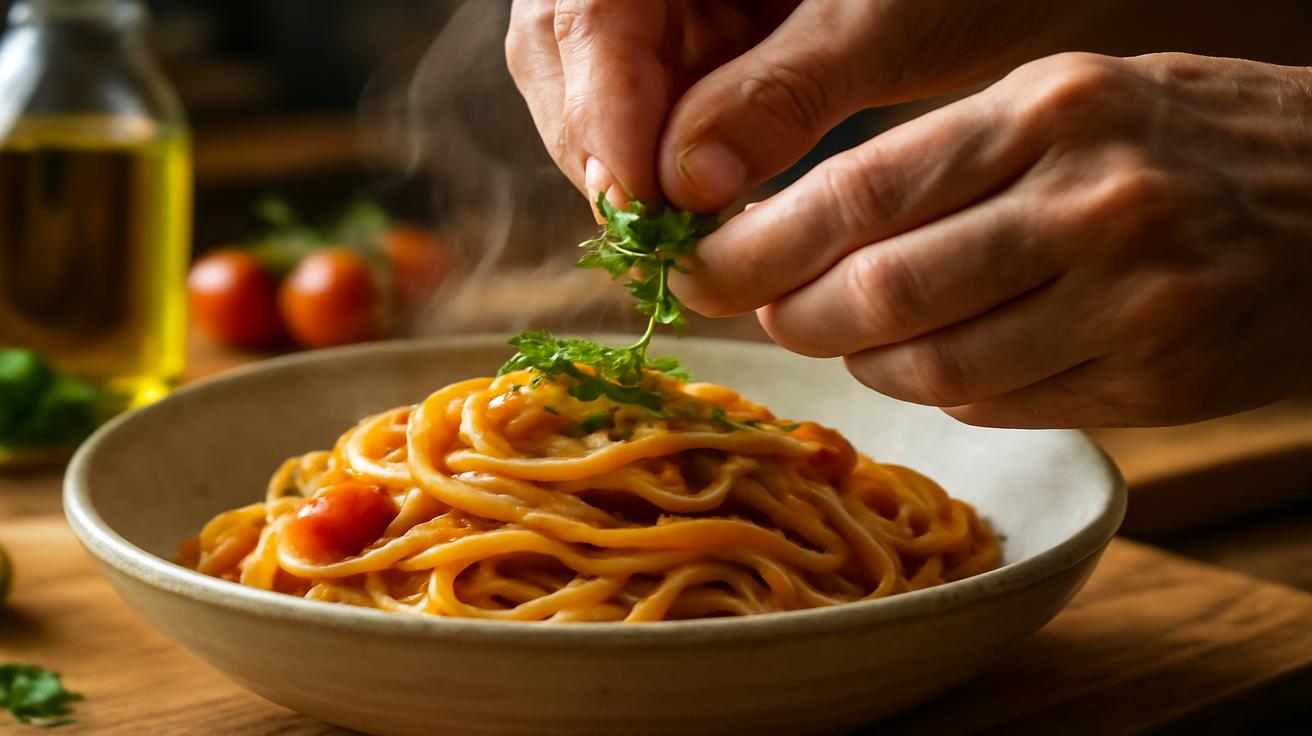
When it’s right, the pasta moves as one soft, glossy wave when you shake the pan. You turn off the heat, shower it with freshly grated cheese—a snowfall of Parmigiano or pecorino that melts on contact—and maybe a ribbon of good olive oil to finish. A handful of torn basil, if you have it. If not, it’s beautiful without.
| Ingredient | Approximate Amount | Notes |
|---|---|---|
| Dried pasta (spaghetti or linguine) | 200–250 g (for 2 servings) | Long shapes work best for this method. |
| Olive oil | 3–4 tbsp | Use the best you comfortably can; it matters. |
| Garlic, thinly sliced | 3–4 cloves | Adjust to your love (or fear) of garlic. |
| Crushed tomatoes | 1 can (400 g) | Good-quality tomatoes make a big difference. |
| Salt | To taste | Season the water and the sauce separately. |
| Red pepper flakes (optional) | Pinch | For a gentle warmth, not a burn. |
| Sugar (optional) | 1/2 tsp | Only if tomatoes taste harsh or acidic. |
| Grated hard cheese | 2–3 tbsp, plus more for serving | Parmigiano Reggiano or pecorino. |
| Fresh basil (optional) | Small handful | Torn just before serving. |
What the Burnt Pan Taught Me
The funny thing is, when I think back now, I’m almost grateful for that first scorched attempt. If it had worked out “fine,” I might still be dumping jarred sauce over overcooked noodles and calling it dinner. Instead, that ruined pan became a kind of teacher—loud, cranky, unforgettable.
It taught me patience first. Pasta insists on timing. You can’t bully it into cooking faster without paying the price. Water needs time to boil properly; garlic needs time to gently soften; tomatoes need time to relax into sweetness. My first mistake was trying to skip the waiting, as if time were the enemy. But some things only happen if you let them take exactly as long as they need.
It also taught me to stay present. You can’t walk away from garlic in hot oil. You just can’t. It turns on you in seconds. Now, when the garlic hits the pan, I stay close. I watch the color shifting from pale to golden, I listen to the tiny, eager hiss, I breathe in that smell that says, quietly: something good is about to happen if you’re here to notice it.
Maybe most importantly, it taught me to trust my senses. Measurements matter, but on their own they’re a little blind. The water might boil slower on a cold day. The tomatoes might be sweeter in August than in January. Your stove might run hotter than mine. The recipe stays the same, but reality shifts. Learning to adjust—to taste and tweak rather than just obey—turned making pasta from a task into a little act of craft.
How This One Pot Became a Place
Now, cooking this pasta feels less like following a recipe and more like visiting a place I know well. The kitchen becomes smaller, more defined: the bubble of the pot, the weight of the pan, the steam curling up past my face. Outside, life can be loud and fast and jagged, but at the stove everything narrows to a few simple decisions—stir now, wait a bit longer, taste, adjust, turn off the heat.
There’s something almost meditative about it. The swirl of pasta in the water, the gentle scrape of wood on metal, the soft, steady simmer of tomatoes breathing in the pan. Even the act of grating cheese at the end—a small snowstorm over a red hillside of noodles—feels like a ritual closing gesture. A quiet full stop at the end of a busy sentence.
I’ve served this pasta to people I love on nights that needed comfort but not ceremony: after long drives, after bad news, after first days in new jobs, after unpacking boxes in a new apartment. I’ve made it just for myself too, eating straight from a warm bowl while leaning against the counter in socks, the candle burning down to a low lake of wax, the sink holding a peaceful little pile of rinsed dishes.
Each time, it tastes slightly different—brighter in summer when basil is abundant, richer in winter when I let the sauce go a little darker and heavier with cheese. But the bones of it, the rhythm of it, never change. I don’t reach for other methods anymore. There are fancier sauces and more complex recipes out there, but this one has become my anchor. I learned it the hard way, and now it feels like it learned me back.
Making It Your Own Without Losing Its Soul
Once you understand the basic dance between pasta, water, and sauce, there’s room to improvise without breaking the spell. The key is to respect the structure: build a gentle base of flavor, cook the pasta separately but not fully, and always bring noodles and sauce together for the final few minutes so they can become one unified thing.
You can introduce small variations the way you might change the inflection in a familiar story:
- Add a few anchovy fillets to the oil before the garlic, letting them melt away until only their deep, savory whisper remains.
- Toss in a handful of cherry tomatoes along with the crushed ones, so some burst and some stay juicy, studding the sauce like pockets of summer.
- Swap in a knob of butter at the end instead of extra olive oil for a softer, rounder richness, especially good on cold evenings.
- Fold in a scoop of ricotta on top of each bowl instead of more grated cheese, letting it slouch and melt into creamy streaks as you eat.
What I never change anymore is the order of things: water first, then oil and garlic, then tomato, then pasta almost-done, then everything together. I don’t rush the garlic, I don’t drown the pan, and I don’t walk away at the crucial moments. The hard way taught me those boundaries; the easy joy that followed keeps me honoring them.
FAQ
Can I use fresh tomatoes instead of canned?
Yes, you can, especially when tomatoes are in season and deeply flavorful. Use ripe, plump tomatoes, peel them if you like, and chop them roughly. You may need to simmer them a bit longer to cook off extra liquid and intensify the flavor. Taste often and adjust with salt and a pinch of sugar if they’re too acidic.
What if I don’t have a large pan for finishing the pasta in the sauce?
You can use a medium-sized pot instead, as long as it’s wide enough to allow you to toss the pasta comfortably. If space is tight, add the pasta in batches to the sauce, stirring and folding gently until everything is coated.
How do I avoid overcooking the pasta?
Start checking the pasta a few minutes before the package suggests. Bite a strand: you should feel a slight resistance in the center, not crunch, but not softness all the way through. Remember it will cook further in the sauce, so err on the side of slightly underdone before transferring it.
Is pasta water really that important?
Yes. The starch in pasta water helps the sauce thicken and cling to the noodles, turning a loose tomato mixture into a silky, cohesive coat. Always reserve some before you drain the pot, or better yet, transfer the pasta straight from the water into the sauce so some of that liquid comes along naturally.
Can I make this ahead of time?
You can make the tomato-garlic sauce ahead and keep it in the refrigerator for a day or two. When you’re ready to eat, cook the pasta fresh, rewarm the sauce gently, and finish the pasta in the sauce as usual. Fully cooked, sauced pasta is best eaten right away; it tends to lose its perfect texture if held too long.
What type of pasta works best for this recipe?
Long, thin shapes like spaghetti, linguine, or bucatini work beautifully because they tangle with the sauce and create that satisfying, glossy swirl in the pan. Short shapes can work too, but they’ll feel a bit different—more rustic, less silky.
How can I make this recipe feel special for guests?
Warm the bowls before serving, bring extra grated cheese to the table, and finish each plate with a fine drizzle of high-quality olive oil and a few torn basil leaves. Serve with a simple side—like a crisp salad or some crusty bread—and let the pasta be the quiet star. The beauty of this dish is in its simplicity, and the care you took to get it just right is what guests will actually taste.