The day had been loud in the way only ordinary days can be loud—emails chiming, traffic sighing outside the window, a to‑do list breeding new items like a stubborn vine. By late afternoon, my shoulders sat somewhere near my ears and my jaw ached from an invisible clench. Nothing was exactly wrong, but nothing felt quite right either. The kind of restlessness that makes you pace your own kitchen, opening and closing cabinets like doors in a house you no longer recognize. And then, in that small, fluorescent-lit moment, I remembered something very simple: I could make a bowl of food. Not a grand dinner, not a three‑course parade—just one comforting bowl that might, if I was lucky, turn down the volume of the day.
The Kitchen as a Quiet Forest
It started with a decision to slow my hands down, as if I were walking into a forest instead of a kitchen. I turned off the overhead light and clicked on the warm yellow lamp in the corner. The room softened. Shadows pooled in the sink; the countertop picked up a faint honey glow. Outside, the sky was fading into that in‑between color—neither blue nor black, the color of cooling tea.
I opened the pantry, and a familiar, slightly dusty smell met me: dry grains, paper bags, a hint of spice. My day had been full of digital abstractions, but here there were only concrete things—rice, lentils, salt. I reached for a jar of short‑grain brown rice, feeling the weight of it in my palm. The grains slid against the glass with a soft, hush‑hush sound, like bare feet in dry leaves. It already felt like the right choice: something sturdy, honest, unhurried.
The measuring felt ceremonial. One cup of rice into a small bowl, then a rinse under cool running water. The grains clinked against porcelain as I stirred them with my fingers. The water turned cloudy, a small storm in a shallow pool, then cleared with another rinse. There was something forgiving about it: no rush, no precision demanding perfection—just a quiet, repetitive motion that started to unknot the tightness inside my chest.
When the rice hit the bottom of the pot, the sound was gentle, dull, like rain on a soft roof. I added water—not quite twice as much as the rice, enough to leave room for slow expansion. I sprinkled in a pinch of salt, watching the crystals fall and vanish. The lid went on with a soft click, and soon the faint murmur of simmering began, like a small, distant brook finding its path.
Soon steam curled from the edges of the lid, carrying with it the nutty, slightly sweet scent of rice. It moved through the kitchen and wrapped itself around me. The day’s sharp edges receded a little. My phone buzzed on the counter, but I ignored it. Right now, I was busy letting water and grain do what they’ve always done, long before screens learned how to glow.
The Soft Geometry of a Bowl
Before I even thought about toppings, I went to the cabinet where the bowls live. There are plates, of course, in neat, flat stacks. But this night needed a bowl. There’s something inherently sheltering about their shape—curved, holding, a small world contained.
My hand paused over the stack and landed on one particular bowl: wide but not shallow, glazed in a cloudy off‑white with a ring of midnight blue around the rim. It has a small chip along the bottom edge, not enough to matter but enough to prove it has a history. I held it for a moment, thumb resting in the dip where the potter’s hand once turned clay on a wheel. It felt like choosing not just a object, but a mood.
On the counter, I lined up potential companions for the rice as if laying out brushes and colors. A fat carrot, its skin dusty and imperfect. A small bunch of kale, leaves curled and dark as river weeds. A piece of fresh ginger, knobbly and fragrant. An egg, smooth and cold, a tiny moon cupped in my palm. A clove of garlic, papery and whisper‑thin. A bottle of sesame oil stood at the back, modest and patient, next to a jar of soy sauce, almost empty but not quite.
This wasn’t going to be a recipe so much as a conversation: what do I have, what do I need, what will comfort me right now? I didn’t want complexity. I wanted warmth, softness, a bowl I could hold in both hands and lean over, letting the steam wash my face like a gentle fog.
Chopping as a Breathing Practice
I set the carrot on the cutting board and started peeling slow, steady ribbons. They fell into a bright orange pile, smelling faintly green and sweet, like damp earth in spring. I sliced it into coins, each one landing with a soft tick against the wood, forming a crooked line of little suns. I didn’t rush them into uniformity; uneven pieces meant some would be tender, others with a slight bite—a small variety of texture to keep the bowl interesting.
The kale got a rinse, leaves unfurling under the tap like dark sails. I stripped them from their stems with a satisfying rip, then stacked them in a loose pile and sliced them into ribbons no wider than my finger. They looked like forest paths, curly and deep green.
The ginger released its perfume the moment the knife trimmed away its thin skin—sharp, bright, almost lemony, a smell that woke up the quieter parts of my attention. Garlic followed, its scent warmer, familiar, like an old story you’ve heard a hundred times but still want to hear again. I minced both, tiny pieces catching the light and sticking slightly to my fingers. The sensation grounded me: here is where you are, in this room, with this knife, making this food. Not in your inbox. Not in tomorrow.
| Ingredient | Purpose | Comfort Factor |
|---|---|---|
| Brown rice | Hearty base, slow energy | Nutty, warm, grounding |
| Carrot | Sweet crunch and color | Gentle sweetness, cheerful orange |
| Kale | Green balance and texture | Earthy depth, feels nourishing |
| Egg | Silky protein | Soft, rich, almost velvety |
| Ginger & garlic | Aromatic warmth | Clearing, soothing, deeply familiar |
Building Heat, Letting Go
A pan warmed on the stove, the metal gradually losing its chill. I added a small pool of neutral oil, watching it relax and shimmer, almost invisible except for the way it bent the light. When the first tiny wisp of smoke appeared, I tossed in the garlic and ginger. The sizzle was instant, a bright, celebratory sound. Aromas rose like a small flare: spicy, cozy, promising.
The carrot coins followed, scattering into the pan with soft clicks. I stirred them slowly, listening to the rhythm of the wooden spoon against metal—tap, scrape, stir. The edges of the carrot began to gloss and soften, their orange deepening. I added a small splash of water and covered the pan, letting a quick steam work its magic.
When I lifted the lid, a plume of scented vapor billowed out, fogging my glasses. It made me laugh out loud, an unanticipated, light sound that felt like a window opening. The kale ribbons went in last, hitting the pan with a faint hiss, their deep green brightening the moment they met the heat. I watched them wilt, curling in on themselves like they were also finally exhaling after a long day of standing tall and stoic in a grocery bin.
A drizzle of soy sauce darkened everything slightly, painting the vegetables with a savory glaze. Another swirl of sesame oil joined, so small it was almost symbolic, yet its toasty aroma unfurled instantly, rising above everything else. I seasoned with a little more salt, a touch of pepper, then turned off the heat. The vegetables were soft but not tired, glossy but not greasy. They looked exactly right—like they’d been listened to.
The Soft-Cooked Center
For the egg, I chose the gentlest route. In a small pot, water came to a lazy simmer, not a full, angry boil. I eased the egg in and watched it roll, bumping the sides like a small boat on a quiet lake. Seven minutes felt like the right amount of time: enough for the whites to set, enough for the yolk to remain custardy, rich, and ready to spill.
Those minutes were an unexpected pause. I didn’t reach for my phone, didn’t open another browser tab, didn’t wander away. I stood there in my soft socks on the cool tile floor, listening to the hushed singing of water and the faint, steady breath of the rice pot beside it. My body started to match their tempo. My shoulders eased downward, not dramatically, just a few millimeters—but enough to notice.
When the timer chimed, I lifted the egg out and slipped it into a bowl of cool water, the shell warm under my fingertips. Cracking it open was a small exercise in attention. The shell gave way with gentle pressure, breaking into large, satisfying pieces. Underneath, the egg was glossy and tender, still holding its shape. I sliced it in half, and the yolk eased forward, thick and golden, like late afternoon sun spilling across a floor.
The Moment the Bowl Appeared
By now the rice was done, plump and fragrant. I turned off the heat and let it sit a minute, just to gather itself. Lifting the lid released a billow of steam that smelled like roasted nuts and warm toast. I fluffed the grains with a fork, each one defined but clinging loosely to its neighbors, a small community of softness.
I spooned a generous mound into my chosen bowl, listening to the quiet shush as it settled in. The vegetables followed, nestled on top like a loose, colorful blanket: orange coins, dark green ribbons, flecks of golden garlic and pale ginger. The egg halves took their place last, yolks gleaming against the white, poised at the side as if waiting their turn to join the warmth.
On a whim, I scattered a few toasted sesame seeds over everything and added the lightest drizzle of sesame oil on top. It wasn’t about aesthetics, though the bowl did look pretty—like a small, edible landscape: hills of rice, forests of kale, bright paths of carrot, twin suns of yolk.
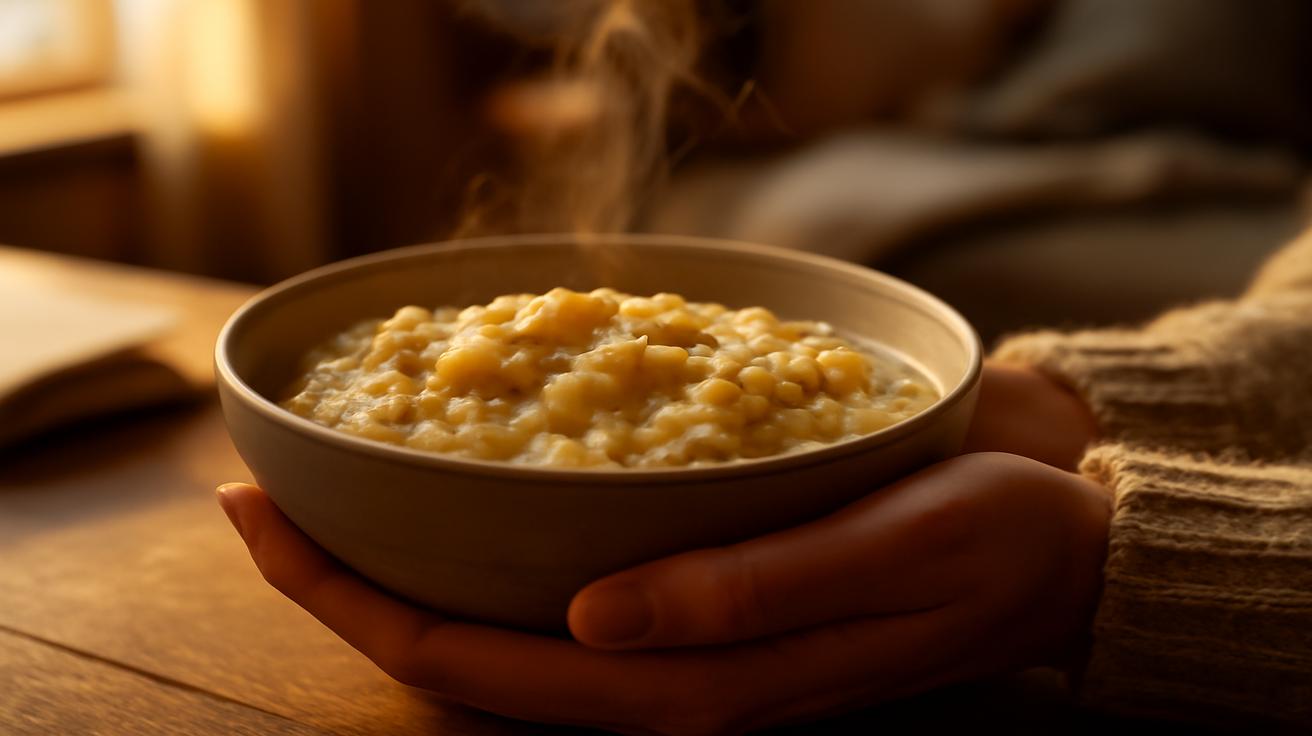
What happened next was embarrassingly simple. I wrapped both hands around the bowl and just held it. The heat soaked slowly into my palms, then into the sore places in my fingers that had spent too much of the day curled over a keyboard. I lifted the bowl close to my face and inhaled. Ginger, garlic, toasted sesame, the subtle sweetness of rice and carrot—together they created a smell that felt less like “food” and more like a lullaby.
The noise of the world thinned into a kind of soft static. I pulled a chair up by the window and sat down, bowl cradled against my ribs, spoon ready but not yet moving. Outside, a neighbor’s dog barked once, then again, then stopped. A car door thudded in the distance. Inside, there was only the small creak of the chair, the faint clink of ceramic as my spoon slid in.
The First Bite, and the Quiet After
The first spoonful was simple: rice, kale, a coin of carrot, a bit of egg yolk that had surrendered to the heat and gone silky. It met my tongue like a warm wave. The rice was soft but still had a slight chew, steady and reassuring. The kale was tender but sturdy, offering the faintest resistance before yielding. The carrot brought a mild sweetness, exactly what my tired brain hadn’t known it was missing. And the yolk—rich, creamy, almost buttery—coated everything in a gentle glow.
I felt my entire body respond. It wasn’t dramatic, no cinematic sigh or tear in the corner of the eye. Just a slow, spreading warmth that moved down my throat, across my chest, into my belly. My jaw unclenched without being asked to. The impatient, tapping foot I hadn’t noticed under the table went still. I realized I had been holding a tightness in my stomach all day, a kind of interior flinch, and that now, with every swallow, it was loosening, like someone gradually letting go of a rope.
I took another spoonful. And another. I began to eat with a kind of slow curiosity, noticing how the different components changed as they mingled. A bite with more ginger had a bright, clearing kick that lit up the back of my throat. A forkful of mostly rice and yolk tasted like the culinary version of a weighted blanket—dense, deeply grounding. Occasionally my spoon would catch on a crispy edge of carrot or a slightly browned bit of kale, and that tiny crunch woke me up just enough to keep me anchored in the moment.
With each bite, the day’s narrative rewrote itself. The offhand comment that had stung earlier, the unfinished tasks, the messages waiting for replies—they all felt suddenly smaller, like distant houses viewed from the soft safety of a train window. I was still myself, still in the same life, but the bowl had created a circle of gentler perspective around me.
Why This Bowl Worked Like an Exhale
Looking back, it would be easy to say it was about the ingredients—brown rice and eggs and kale and carrot, the familiar cast of any “healthy” bowl. But what actually relaxed me lived between the steps, in the spaces where I slowed down just enough to feel each part of the process.
There was the way the kitchen transformed from a passageway into a refuge, just by changing the light and deciding to listen to the quiet sounds of cooking. There was the act of choosing an imperfect but beloved bowl, the tactile reassurance of ceramic under my hands. There was the decision to let the rice simmer without fiddling, trusting time and heat to do their quiet work.
Chopping the vegetables had become a kind of breathing practice, a reason to coordinate eyes and hands and senses around a simple task. The smell of ginger and garlic in hot oil turned into a small ceremony of arrival: you are here now, it seemed to say. You are not anywhere else. You do not need to be.
And then there was the shape of the meal itself: one bowl, held close. A plate suggests presentation, distance. A bowl invites you in. You lean over it. You wrap your hands around it. You can’t help but bring your face near to breathe in the steam. It’s food as small shelter, food as temporary home.
By the time I scraped the last grains from the bottom, I wasn’t fixed, exactly. Life’s messes were all still there, waiting politely outside the kitchen door. But something inside had rearranged. The brittle, overcaffeinated edges of the day had softened. My thoughts weren’t racing anymore; they were strolling. My body felt less like a machine I was piloting and more like a place I could live in comfortably again.
That bowl didn’t solve anything. It simply reminded me of something I already knew but keep forgetting: that sometimes the most powerful act of self‑care isn’t grand or complicated. It’s a pot of simmering rice, a pan of soft vegetables, an egg coddled in warm water, a bowl chosen with care, and a quiet half hour where the only job is to eat slowly and listen to your own hunger, in all the ways it speaks.
Carrying the Comfort Forward
Now, on other restless days, I find my way back to that bowl. Sometimes I swap brown rice for barley or quinoa, sometimes kale for spinach or cabbage, sometimes the egg for a handful of chickpeas or a few slices of tofu crisped in the pan. The details shift with the season and the contents of my fridge, but the promise remains the same.
It’s become a kind of personal ritual: the decision to make one warm, held bowl when the world feels too much. I’ve started to notice how my body recognizes the steps even before my mind does—the way my shoulders relax the moment I hear rice rinsing in the bowl, how the smell of garlic hitting hot oil feels like a door closing softly on the outside world.
The magic is not in perfection. It’s in presence. In letting the making of the food be as soothing as the eating of it. In allowing the kitchen to become, even for half an hour, a small sanctuary where heat and scent and color do their old, humble work of reminding us we are here, we are alive, and we can still be nourished.
That night, when I finished the last bite and rinsed the bowl, I noticed how quiet the apartment had become. The window had turned into a dark mirror, and my reflection looked a little softer around the eyes, a little less like someone bracing for the next thing. I turned off the lamp, feeling the residual warmth of the bowl still tingling in my hands, and realized that in making myself something simple and tender, I had, without meaning to, made myself a little more tender to the world.
FAQ
Can I make a similar comforting bowl if I don’t have much time?
Yes. Use quick‑cooking grains like white rice, couscous, or even leftover rice from the fridge. Sauté whatever vegetables you have on hand, add a fried or scrambled egg, and drizzle with soy sauce or your favorite seasoning. The key is to slow yourself, not the clock—move with intention, even if the meal takes only 15 minutes.
What if I don’t like eggs?
You can replace the egg with tofu, tempeh, cooked beans, or shredded rotisserie chicken. Pan‑sear tofu cubes with a little soy sauce and garlic, or warm beans in the same pan as your vegetables so they absorb the flavor.
How can I make this bowl vegetarian or vegan?
It’s already vegetarian if you keep the egg. For a vegan version, skip the egg and add plant‑based protein: tofu, chickpeas, lentils, or edamame. Use vegetable oil instead of butter, and keep the same aromatics—garlic, ginger, and sesame oil—for depth and comfort.
What makes food feel “comforting” in this way?
Comfort often comes from warmth, softness, familiar flavors, and the feeling of being cared for. Bowls that combine a hearty base (like rice), tender vegetables, and a rich element (like egg or beans) tend to feel especially grounding. The sensory ritual of cooking—chopping, stirring, smelling—also signals safety and presence to the nervous system.
Can this kind of simple bowl really help with stress?
It won’t remove stressors, but the act of cooking and eating slowly can shift your state. Focusing on physical sensations—smell, texture, warmth—can gently pull you out of looping thoughts. A warm, balanced meal also stabilizes blood sugar and can make emotional waves feel more manageable. Sometimes that tiny reset is exactly what’s needed.