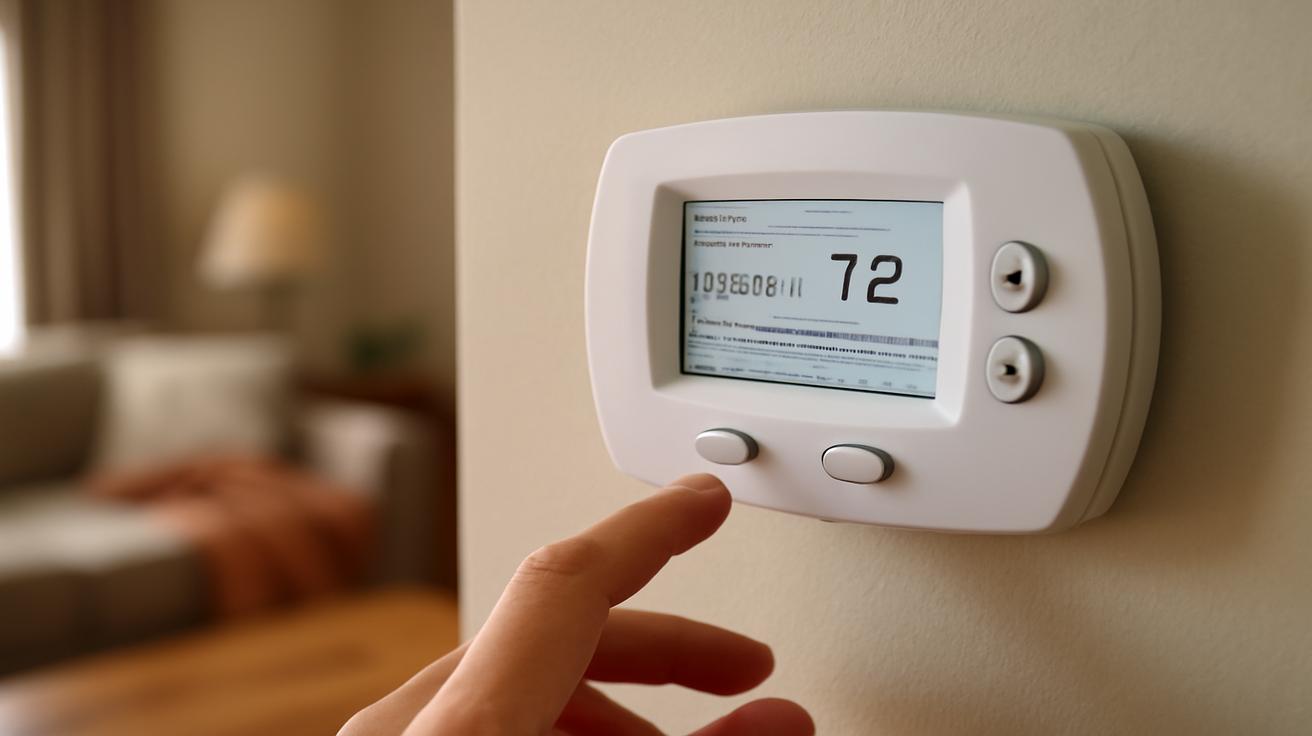
The first cold night of the season always creeps up on you. One evening the air feels merely crisp; the next, it slices through your jumper as if the fabric isn’t even there. You close the windows, notice the quiet hush over the street, and feel that instinctive tug toward the thermostat. And then the old doubt tiptoes in: should you flick the heating on for a while, let the radiators glow, and then switch it off again… or leave it humming away on a low, steady warmth all day and night?
The Myth of the Ever‑On Radiator
For many people, that question is tangled up with childhood memories: the parent who stalked the hallway, muttering about “not heating the whole neighbourhood,” or the relative who insisted the boiler should never be turned off or it would “cost a fortune to restart it.” The result is a kind of domestic folklore, passed between generations with more conviction than evidence.
In the dim light of an autumn afternoon, imagine standing in your hallway, hand hovering over the thermostat. The radiators are cold to the touch. The house smells faintly of dust and wood and carpets that have held a hundred winters. Somewhere in the pipes is the potential for warmth. But how you use it—short bursts or constant “just warm enough”—is where physics, comfort, and money meet.
At the heart of the question is a simple truth: a warm house is constantly leaking heat into a colder world. Your walls, roof, windows, even the tiniest gaps around door frames—each is a quiet escape route for the warmth you’ve paid for. The greater the temperature difference between inside and outside, and the longer you maintain that difference, the more heat leaks away.
Leaving the heating on low all the time seems gentle, considerate, almost caring: you’re “maintaining” warmth, not blasting it. But maintenance still requires fuel. Every extra degree you keep your home above the outdoor temperature invites more heat loss. Whether the boiler is roaring or whispering, it is still feeding that constant trickle of warmth out through bricks, panes, and plaster.
The Science of a Warm House (and a Cold World)
The physics guiding this choice is surprisingly clear, even if our instincts push back against it. Heat moves from warmer areas to cooler ones—always, relentlessly. Think of your house as a big mug of tea left on a windowsill in winter. Whether you sip the tea quickly or slowly, it cools faster if it’s kept hot for longer in a cold room.
When you run your heating all day on a low setting, you’re effectively agreeing to keep that mug of tea warm around the clock. You are constantly adding a little bit more heat to replace what’s being lost. The losses are smaller per minute than if the house were roasting, but they go on for longer. Over the course of a day, week, or month, that slow leak adds up.
By contrast, turning the heating on only when you need it—bringing the temperature up, then letting it fall again—means the house is warm for fewer hours. During the cooler stretches, when the heating is off or turned right down, the temperature difference between inside and outside is smaller. There’s less of a gradient for heat to leak across. The total heat loss, and therefore total energy used, is generally lower.
It can feel counterintuitive, like pulling thick curtains during the day or opening a window in winter to dry washing faster. But most energy experts and building scientists broadly agree: in typical homes, with normal insulation, it’s usually more efficient to heat when needed rather than maintain a constant low warmth.
The Comfort Catch
Yet numbers on a gas bill are only part of the story. Comfort has a voice in this too, and it speaks loudest in the quiet hours. There’s the bite of cold kitchen tiles at 6 a.m., the chill of a study that’s sat unused all day, the way a sofa in a cold room seems to resist being sat on. It’s one thing to talk theoretically about “intermittent heating”; it’s another to step out of a hot shower into an unheated bathroom.
Fortunately, better technology makes it easier not to choose between comfort and efficiency, but to stitch them together. Programmable thermostats, smart valves, and zoned systems can bring rooms gently up to temperature right before you need them, rather than forcing you to decide between permanent low‑level heating or teeth‑chattering cold. The world between “always on” and “always off” is wide and inviting.
Heating Habits in Real Life: A Tale of Two Houses
Picture two neighbours on the same street. Same weather. Similar houses. Very different rituals.
In one house, the radiators never go cold. The owners keep the thermostat nudged to a modest, respectable temperature—say 18–19°C—24 hours a day. The house feels evenly temperate, never truly cold, never quite toasty. When friends come over, they comment that it’s “nice and steady in here.” The boiler murmurs in the background like a tired old song.
Next door, the second household takes a more tactical approach. They let the house cool right down overnight and while they’re at work. A timer fires the boiler up an hour before they wake, easing the chill from bedsheets and bathroom floors. When everyone leaves, the heating drops away again, only returning to life before they come home in the evening. On weekends, they nudge the thermostat to follow them from room to room.
On a particularly icy week, both families spend more on heating than in spring. But over the course of a winter, the second house generally uses less total energy. Their home may swing a bit more in temperature, but it spends fewer hours a day at that higher, heat‑leaking level.
There are caveats, of course: the thermal inertia of the building (how quickly it warms up or cools down), how well insulated it is, how drafty the windows are, and even how much sun lands on the brickwork all play a role. But in most realistic scenarios, constantly warming a building simply so it never dips into the cooler range is like leaving your car idling in the driveway all day “just in case” you need to pop to the shop.
When “Always On” Might Make Sense
There are a few exceptions, and this is where the story gets more interesting. Some buildings are so heavy, so well insulated, or so slow to change temperature that letting them cool fully can mean a long, stubborn struggle to warm them again. Think thick stone cottages with deep walls and high ceilings, or very large, open‑plan spaces. In such homes, an almost constant low‑level heat can, in some cases, keep things stable more comfortably.
There are also human exceptions: people with certain health conditions, older residents, or very young children may need a more stable temperature for wellbeing. For them, the goal is not shaving every last unit of energy from the bill, but creating a consistently safe and comfortable environment. Even then, “always on” doesn’t have to mean “always at the same temperature in every room.” Zoning becomes a gentle negotiation between spaces and needs.
The Hidden Players: Insulation, Drafts, and the Bones of Your Home
To really understand what your heating is up against, listen to your house on a windy evening. Feel for the faint cool ribbon of air sneaking in under the back door. Notice how quickly the bedroom falls from comfortable to icy once the radiators click off. These are all clues about the biggest factor in your heating decision: how well your home holds onto heat in the first place.
Insulation is the quiet, unsung main character in this story. Loft insulation, cavity wall fill, double‑glazed windows, draft‑proofed doors—these are the parts of your home that slow the escape of heat. Every improvement here makes your “on and off” strategy more rewarding, because your home can stay warm for longer without constant topping up.
A well‑insulated house behaves like a good thermos, holding onto warmth hours after the heating clicks off. In winter, you can almost feel the walls hugging you back. In such spaces, turning the heating on when needed rather than running it endlessly on low makes even more sense—the warmth you add has time to linger.
By contrast, a drafty, poorly insulated home is like a sieve for heat. In those spaces, whether you leave the heating on low or toggle it on and off, you’re losing warmth rapidly. But here’s the key: leaving it on continuously means you’re losing that warmth continuously as well. Intermittent heating might result in bigger temperature swings, yet it still tends to cost less in total energy than maintaining a round‑the‑clock temperature that the building can’t hold.
Simple Clues Your House Is Leaking Heat
Without any fancy equipment, you can read your home like a weathered field guide:
- Rooms near external corners feel noticeably colder than interior rooms.
- Windows form beads of condensation on cold mornings.
- Carpets lift slightly when the wind gusts outside, signalling drafts under doors or floorboards.
- Radiators mounted below single‑glazed windows struggle to keep the area warm.
Each of these whispers the same message: whatever strategy you use—always on, or on and off—your first ally is reducing the escape routes for heat.
Counting the Cost: How Your Choices Stack Up
While every home is unique, it helps to see the trade‑offs side by side. Imagine this as a conversation spread across your kitchen table, a mug of something hot between your hands, while the radiators tick gently in the background.
| Approach | How It Works | Pros | Cons |
|---|---|---|---|
| Heating on low all the time | Keeps the house at a gentle, steady temperature 24/7. |
|
|
| Turning heating on and off (timed) | Heats home only during chosen hours (morning/evening, etc.). |
|
|
| Smart / zoned heating | Uses thermostats and smart valves to heat specific rooms at specific times. |
|
|
Finding Your Own Rhythm of Warmth
In the end, this isn’t just a question about boilers and bricks; it’s about the daily rhythm of your life. When do you rise? How much time do you spend in each room? Do you like to pad barefoot across the kitchen tiles, or are you already reaching for thick socks? Do you work from home at a desk by a drafty window, or are you gone from dawn to dusk?
A practical way to answer the “on and off or low and slow?” question is to treat your winter like an experiment, not a fixed verdict. For two or three weeks, use a timed schedule: heating on shortly before you wake, off as you leave, on again before you come home, perhaps a final shorter burst in the evening. Keep notes—mentally or literally—on how it feels:
- Do you wake to a comfortable home?
- Does the warmth linger through the day in some rooms?
- Are there problem spots that refuse to warm or cool too fast?
Then, if you’re curious, try the “low and constant” approach for the same length of time. Keep the thermostat at a modest temperature and let the heating idle away in the background. Pay attention to your comfort, and then to the bill that arrives later.
The numbers rarely lie: in most cases, you’ll find that targeted, timed heating uses less energy than leaving it on low all the time. But the details of your building and routines may nudge things slightly one way or the other. Somewhere between the theory and your slippers on the floorboards is a pattern that suits you.
Small Tweaks with Big Effects
Alongside the on/off decision, a handful of small rituals can transform how your home holds warmth:
- Use curtains like insulation: Open them during sunny winter days to let light warm the room, and close them firmly at dusk to trap that warmth in.
- Bleed radiators: Trapped air stops them heating fully; a quick bleed lets hot water fill the panels properly.
- Seal the drafts: Draft excluders, brush strips, and simple sealants can soften those invisible rivers of cold air under doors and around windows.
- Let radiators breathe: Move heavy furniture away from them so heat can circulate freely rather than being absorbed into a sofa back.
- Lower the thermostat slightly: Even a 1°C reduction can meaningfully cut bills, especially when combined with intermittent heating.
Each of these habits layers a little more common sense on top of the physics, making “heat when needed” not just cheaper, but more comfortable.
So… Is It Better to Turn It On and Off, or Leave It on Low?
Step back, look at the breath on your windowpane, the quiet ticking of cooling pipes, the way your home feels when you walk in from a frosty street. The honest, quietly unspectacular answer is this:
For most homes, most of the time, it is better—for both your wallet and the planet—to turn the heating on when you need it and off (or down) when you don’t, rather than leaving it on low all the time.
Keeping your house constantly warm means you’re constantly losing heat to the outside world. The boiler has to keep feeding that loss, hour after hour. Intermittent heating shrinks the total time your home spends at that higher, leaky temperature.
But this isn’t a rigid rule carved into the brickwork. A very well‑insulated house may coast gently between heating periods with little comfort lost. A drafty, older home may need slightly more frequent bursts to take the edge off the chill. People with health vulnerabilities may prioritise steady warmth over savings. And smart, zoned systems can blur the lines entirely, keeping just your bedroom or study snug at exactly the right time.
What remains constant is the underlying story: warmth is precious, and it’s restless. It wants to drift outward into the cold. How you invite it into your home—and how you keep it there—is up to you. The switch on the wall is less a simple on/off decision and more a chance to listen to your house, your habits, and the quiet laws of heat that shape every winter evening.
Frequently Asked Questions
Does turning the heating on and off use more energy than leaving it on?
Usually, no. In most homes, turning the heating on only when needed uses less total energy than leaving it on low all the time. Keeping a house warm all day means heat is constantly being lost to the outside, so the boiler must keep replacing it. Intermittent heating reduces the number of hours your home sits at a higher, leaky temperature.
Will my boiler use extra energy to “reheat” the house from cold?
Your boiler will work harder for a short period when it first turns on, but this is typically still more efficient overall than running gently all day. The extra burst to warm a cooler house is usually less energy than the continuous trickle needed to maintain heat when you’re not there or asleep.
Is it better to keep just one room warm and leave others cold?
If you spend most of your time in one or two rooms, heating those spaces more and keeping others cooler can be efficient, especially with thermostatic radiator valves or zoning. However, let rooms cool, not freeze—very cold, damp rooms can encourage condensation and mould, and may cause pipes to freeze in extreme weather.
Can leaving the heating off cause damp or mould?
Very cold, underheated homes can indeed become damp, as warm, moist air condenses on cold surfaces. The answer isn’t to leave the heating on low all the time, but to combine sensible heating with ventilation and insulation. Short, effective heating periods, extracting moist air from kitchens and bathrooms, and improving insulation can all help prevent damp.
What temperature should I set my thermostat to in winter?
Many guidelines suggest around 18–21°C for living spaces, with bedrooms often comfortable a little cooler. The “right” number depends on your health, insulation, and clothing. Dropping the thermostat by even 1°C, especially when paired with timed heating, can noticeably reduce energy use without making the home feel unwelcoming.