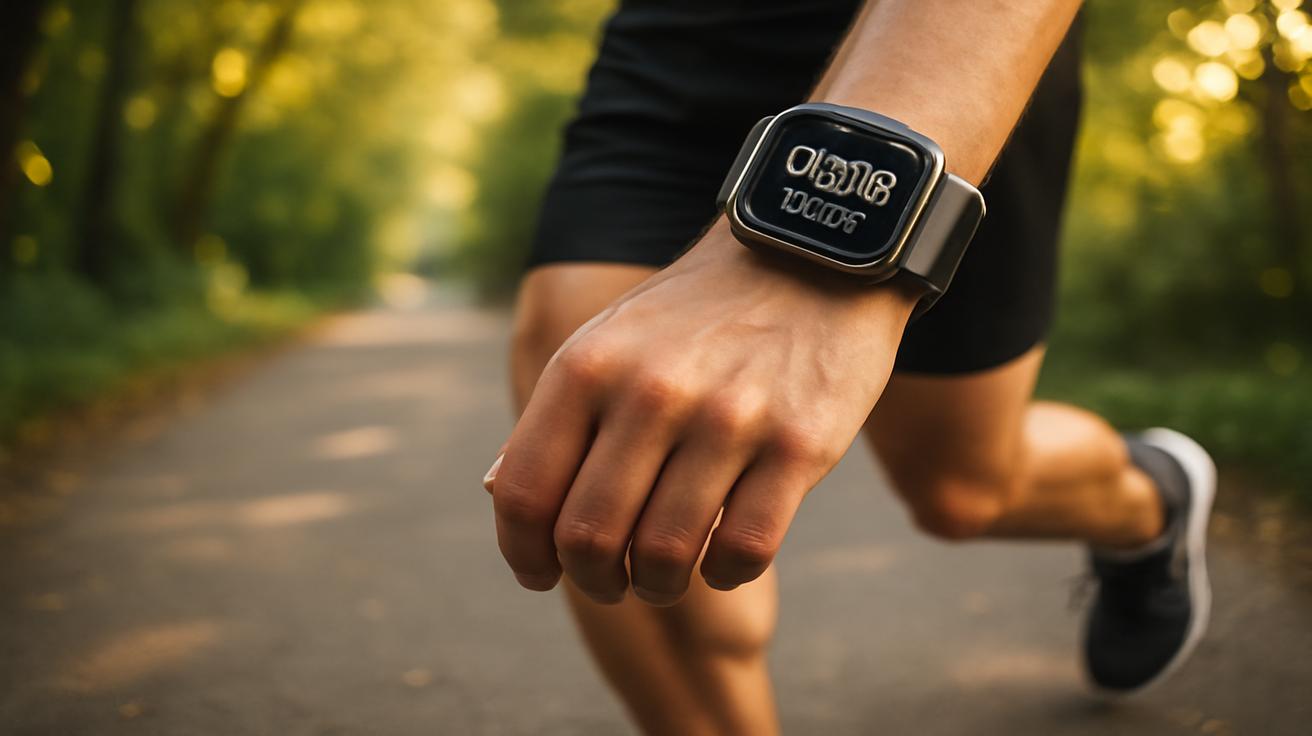
The first thing you notice is the sound. Not the metallic clank of weight machines or the thump of bass-heavy remixes, but the soft, repetitive hush of your own footsteps on the pavement. Early light is spilling over the rooftops, the air is cool enough to sting your nose a little, and your arms are swinging in that easy, familiar rhythm. No membership card. No lockers. No mirrors. Just you, moving forward at a pace that feels almost embarrassingly simple—about 5 kilometers an hour, brisk but not frantic—while your brain whispers, “Can this really count as a workout?”
This is the quiet rebellion that more and more people are choosing: skipping the gym in favor of a 30-minute, non-stop walk. No fancy metrics, no complicated programs—just a steady, intentional pace. It sounds almost too gentle to be powerful, too ordinary to be transformative. Yet, beneath that simplicity is a very specific kind of magic. The magic, it turns out, is not just in walking… but in how you walk.
The Pace That Changes Everything
Let’s get concrete for a second, before we drift back into birdsong and sunrise. That phrase you’ve probably heard—“Walking works just as well as the gym”—is only half true. The missing half is the kind that hides in the fine print:
It works if you walk non-stop for 30 minutes at a steady pace of around 5 km/h.
Five kilometers per hour is not a stroll-while-scrolling pace. It’s the “I’ve got somewhere to be, but I’m not late yet” pace. Your breathing is a little heavier; you can talk, but maybe not comfortably deliver a long speech. Your body knows you’re working, but it doesn’t feel like punishment.
At this speed, your stride lengthens. Your arms begin to swing with a purposeful arc. Your core, that ever-elusive group of muscles the gym promises to sculpt, quietly engages to keep you balanced. Your heart rate lifts into a light to moderate cardio zone—enough to matter, not enough to terrify.
And here’s the key: you don’t stop. Not to answer texts, not to check that one notification, not to pause and scroll while “catching your breath.” Continuous movement for a full 30 minutes is what turns a nice walk into a legitimate training session.
The Science Hiding in a Simple Walk
If you could zoom out far enough from your own body during this walk, you’d see a whole web of systems coming to life. Blood moving more quickly through your vessels. Muscles warming, tendons gliding, lungs expanding and contracting like bellows. Your nervous system switching, gradually, from frazzled and wired to focused and steady.
At around that 5 km/h pace, and sustained for 30 minutes, a few quiet but powerful things begin to happen:
- Your heart rate moves into a zone where cardiovascular fitness actually improves, rather than just shifting from “sitting” to “standing.”
- Your muscles, especially in the legs, hips, and core, start to work rhythmically and repetitively—this is how strength for everyday life is built.
- Your body taps into stored energy in a more meaningful way: using glucose efficiently and gradually improving its ability to use fat as fuel.
- Your joints get lubricated through movement, which often leads to less stiffness and discomfort over time, not more.
You don’t see any of this while you’re watching your shadow stretch along the sidewalk, but it’s real. And over weeks and months, tiny physiological changes begin to stack, like compound interest. A longer walk here, a hill there, a little more speed on days you feel strong. But everything begins with that baseline target: 30 minutes, non-stop, around 5 km/h.
The Catch: Why “Just Walking” Often Fails
Of course, if “just walking” were enough on its own, everyone who logged steps between the kitchen, car, and office would be in terrific shape. They’re not. Which is where the problem—and the misunderstanding—really lives.
Most everyday walking happens in a broken pattern: five minutes here, two there, a pause, then another three. You wander. You browse. You amble with a coffee in hand. Your body absolutely benefits from this movement for general health, but it rarely crosses the threshold where fitness adaptation kicks in.
It’s the difference between:
- Stirring a pot occasionally so nothing burns.
- Actually turning on the heat so something cooks.
That non-stop 30-minute window at a steady 5 km/h is where the heat gets turned on. Break it into ten cute little 3-minute chunks and your heart, lungs, and muscles never really get the memo: “We’re training now.” They just think you’re busy.
Even people who intend to “go for a walk” often slip into a softer, less effective rhythm. You slow to look at your phone. You pause to check a message. You stop to scroll at a scenic spot. Before you know it, your half hour of “walking” includes 7 minutes of standing, 4 minutes of idle dithering, and only 19 minutes of actual movement at pace.
That’s not a workout. That’s an intermission-heavy performance of “I Meant Well.”
How Fast Is 5 km/h, Really?
On paper, 5 kilometers per hour sounds more like something a car would do in a parking lot than something your legs need to worry about. In practice, it’s a brisk walk that most reasonably healthy adults can achieve without running.
| Pace | km/h | Approx. min/km | How it feels |
|---|---|---|---|
| Easy stroll | 3.0–3.5 | 17–20 min/km | You can chat, scroll, maybe sip a drink. |
| Comfortable walk | 4.0–4.5 | 13–15 min/km | You feel like you’re “going for a walk,” but not quite exercising. |
| Brisk, purposeful walk | ≈5.0 | 12 min/km | Breathing deeper, arms swinging, you know you’re working. |
| Fast power walk | 5.5–6.0 | 10–11 min/km | Right on the edge of a slow jog; talking in full sentences is harder. |
If you cover about 2.5 kilometers in your 30-minute walk, you’re right in the zone. No stopwatch? Let your body be the guide: breathing a bit heavier, warm but not gasping, able to talk but not sing. That’s your sweet spot.
Turning Your Neighborhood into Your New “Gym”
Picture this as a ritual, not a chore. You lace your shoes, step outside, and instead of battling traffic to reach a crowded parking lot and fluorescent-lit room full of machines, your “equipment” is the world itself: the sidewalk, the park path, the riverside trail, even the long corridors of your apartment complex if you have no better option.
You start walking with intent. The first few minutes are a negotiation between your body and gravity: creaky ankles, a stiff back, maybe the faint resistance of a mind that would still rather be horizontal. But you keep that pace steady, and within five minutes, your muscles are warming, your breath settling into a rhythm, your shoulders lowering away from your ears.
Fifteen minutes in, something subtle shifts. The thoughts that were tumbling over each other in your head begin to untangle. Your to-do list feels less like a cliff and more like a path. The chatter in your brain aligns with the cadence of your feet—step, step, breathe, step. The world sharpens: you notice the smell of wet soil after last night’s rain, the uneven patch of sidewalk that always trips you up, the way a certain tree always leans into the light.
By minute twenty-five, there may be sweat at the base of your neck, a pleasant heaviness in your thighs, a sense that your body is finally doing what it was built to do: move, rhythmically and efficiently, through space.
Then your timer buzzes at thirty minutes. You slow to a gentle stroll for a couple of minutes, letting your breath calm itself. You return not glowing in neon gym gear, but carrying the quiet, satisfied fatigue that comes from actual work done in fresh air.
Why the Outdoors Makes It Stick
You could walk on a treadmill at 5 km/h for 30 minutes, and physiologically, you’d get many of the same benefits. But there’s a reason so many people find outdoor walking more sustainable than indoor gym routines.
- The changing scenery distracts you from effort and boredom.
- Natural light helps regulate your body clock and mood.
- Even small variations—curbs, slopes, turns—challenge stabilizing muscles the treadmill never quite reaches.
- You’re not relying on opening hours, class times, or machine availability. The world is always “open.”
In other words, walking outside doesn’t just work for your heart and muscles—it works for your mind. And mental buy-in is often what decides whether a habit survives long enough to matter.
“But I Want Gym Results” – What Walking Really Delivers
You may still be picturing rows of weight racks and mirrored walls and wondering: Can half an hour of walking really stack up to that?
The honest answer: it depends on what you mean by “results.”
If your goal is to deadlift your body weight or step on a bodybuilding stage, walking alone won’t get you there. But if your vision of “fit” looks more like this:
- Climbing stairs without feeling like your chest is on fire
- Sleeping better and waking up less groggy
- Steadier energy through the day
- Better mood and lower background anxiety
- Gradual weight management and improved markers like blood pressure and blood sugar
…then yes, that daily 30-minute, 5 km/h walk can absolutely be your gym—if you treat it with the same respect as a workout.
The key difference is that the gym often promises transformation through intensity: lift heavier, sweat harder, feel destroyed. Walking delivers transformation through consistency: show up again tomorrow. And the next day. And next week.
Making It “Count” Like a Workout
To make your walk more than “just steps,” treat it as an appointment with your future self:
- Schedule it: Pick a specific time—before breakfast, lunch break, or after work—and protect it the way you would a class.
- Dress for it: Put on walking shoes and clothes you wouldn’t mind getting slightly sweaty in. This shifts your mindset.
- Warm up while you go: Start slightly slower for the first 3–5 minutes, then ease into your full brisk pace.
- Stay moving: No standing around. If you must check your phone, slow down but keep walking.
- Cool down: Last 2–3 minutes, ease back to a gentler pace; follow with a couple of simple stretches if you like.
When Life Is Messy: Small Adjustments, Not Excuses
Life does not care that you’ve decided to become a walker. It will throw late meetings, bad weather, tired evenings, and unexpected obligations in your path, often right at your planned walking time. But one of the quiet strengths of walking is its flexibility.
Raining? Grab a jacket, hat, or umbrella and go a little shorter but maintain the 5 km/h pace. Dark outside? Walk in well-lit streets, a safe local loop, or even long indoor hallways if you have access. Too tired? Tell yourself you’ll just do ten minutes; once you’re moving, see if you can extend it to the full thirty.
You will miss days. That’s not failure; that’s life being life. The only real failure is letting one missed day silently become ten. The trick is this: never miss twice in a row if you can help it. Let walking be something you return to, not something you abandon the first time it gets inconvenient.
And remember, this is not an all-or-nothing agreement. You can walk most days and still go to the gym some days. You can walk all week and do bodyweight strength exercises at home twice a week for more muscle work. The point is not to declare war on the gym. The point is to realize you aren’t doomed if it doesn’t fit your life right now.
Building a Relationship with Your 30 Minutes
There’s something strangely intimate about committing to the same daily practice. Over time, that half hour of walking becomes more than cardio. It becomes:
- Your decision-making space
- Your decompression time after work or study
- Your private podcast or audiobook theater
- Or the rare slice of your day with no input at all, just the sound of your own breath and the world around you
The more personal this time becomes, the more fiercely you’ll defend it. Fitness then stops being a distant, intimidating project and becomes something quieter, deeper: a non-negotiable part of your day, like brushing your teeth or having that first coffee.
Letting Walking Be Enough (For Now)
Perhaps the most radical part of this whole idea is permission: the permission to let something as ordinary as walking be enough. Not forever, maybe. But for now.
There are seasons in life where a high-powered gym routine is realistic and fun. There are other seasons where the thought of managing memberships, classes, and commutes is enough to make you give up before you start. Walking doesn’t demand that version of you. It just asks you to show up with your body, your shoes, and thirty minutes of intention.
You don’t have to “earn” the right to start gentle. You don’t have to be ashamed that your fitness journey is happening on sidewalks and trails instead of in a gleaming studio. If you walk non-stop for 30 minutes at a steady 5 km/h pace, most days of the week, you are training. You are doing cardiovascular work. You are strengthening joints and muscles and carving out time for your brain to breathe. You are, quite literally, moving your life in a healthier direction.
One day, maybe you’ll add hills. Maybe you’ll lengthen your walks to 45 minutes or even an hour. Maybe you’ll mix in intervals—two minutes a little faster, three minutes back to your baseline. Or maybe you’ll decide to step into a gym again, this time with a better foundation, a stronger heart, more resilient joints, and a daily movement habit that no membership contract ever gave you.
But if all that happens is this: you close your front door, walk out into the world, and keep a steady, purposeful pace for half an hour, day after day… that’s not a compromise. That’s a powerful choice.
So the next time you pass on the gym and feel that sting of guilt, remember the rhythm of your feet, the lift of your breath, the subtle sweat along your spine, the 2.5 kilometers you covered in that half hour. If you honored that pace and didn’t stop, you didn’t “skip a workout.”
You just moved it outside.
FAQ
Is 30 minutes of walking at 5 km/h really enough exercise?
For many adults, especially those who are currently inactive or moderately active, 30 minutes of continuous brisk walking at about 5 km/h most days of the week is enough to significantly improve cardiovascular health, support weight management, and boost mood and energy. As you get fitter, you can increase duration, pace, or add hills and strength work for further benefits.
What if I can’t maintain 5 km/h yet?
Start where you are. Walk at a pace that feels “brisk but doable” for you, even if that’s 4 km/h or less. The important part is continuity: aim for the full 30 minutes without stopping. Over time, as your fitness improves, gradually nudge your pace up toward 5 km/h.
Can I split the 30 minutes into shorter walks?
Short walks throughout the day are great for overall health, but they don’t provide the same training effect as one continuous 30-minute session. For building fitness, it’s best to include at least one uninterrupted 30-minute brisk walk, and then treat extra short walks as a bonus.
Do I need any special gear to get started?
Not really. Comfortable walking shoes with decent support and clothing you can move and lightly sweat in are usually enough. If you like, you can use a simple watch, pedometer, or phone app to estimate distance and pace, but it’s not mandatory.
How many days a week should I walk like this?
Aim for at least 5 days a week of 30 minutes at a brisk pace. If that feels like too much at first, start with 3–4 days and build up. More frequent walking can bring faster improvements, as long as your body feels generally good and you’re not ignoring persistent pain or extreme fatigue.
Will walking like this help with weight loss?
It can. A daily 30-minute brisk walk increases your energy expenditure, supports better blood sugar control, and often helps regulate appetite and stress—factors closely tied to weight. Combined with mindful eating and enough sleep, it can be a powerful, sustainable tool for weight management, especially over the long term.
Is walking enough if I’m older or have joint issues?
For many older adults or people with joint concerns, walking at a manageable pace is one of the safest and most effective exercises. If 5 km/h is too fast, go slower and focus on consistent, pain-free movement. If you have specific medical conditions, it’s wise to check with a healthcare professional before starting or increasing your walking routine.