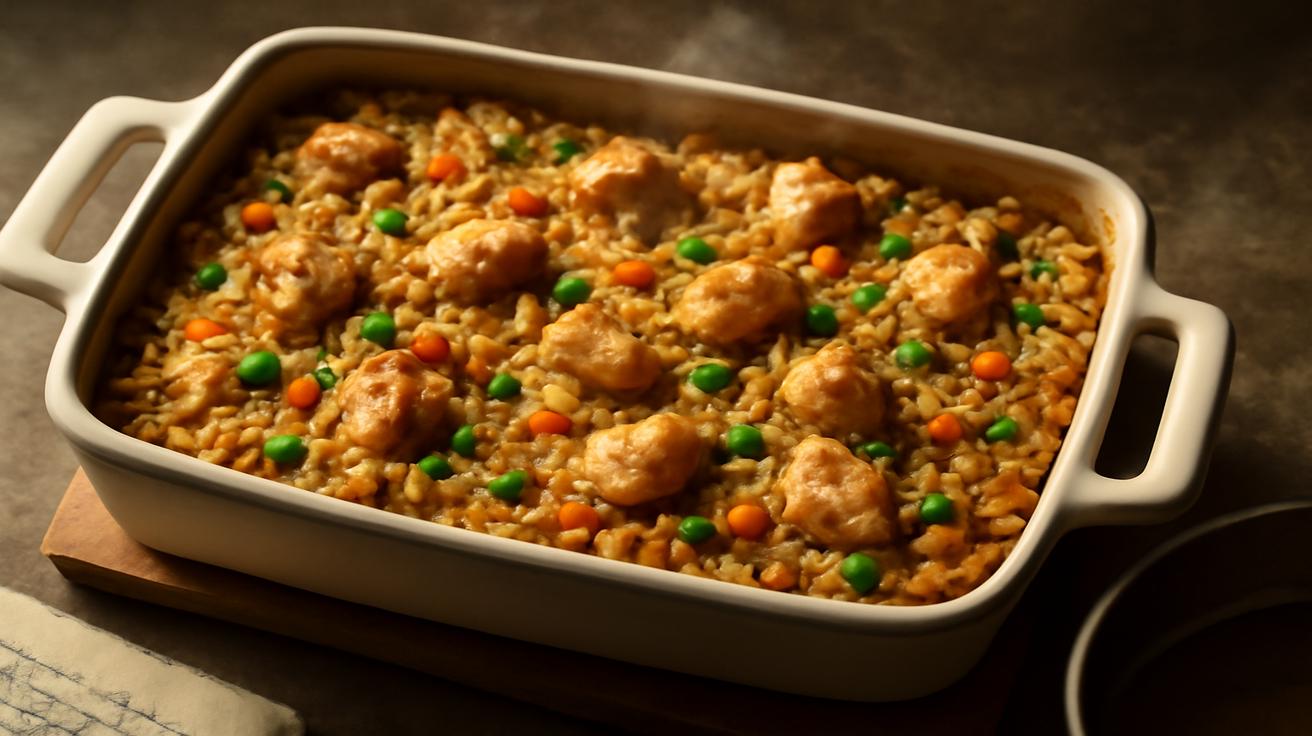
The first time I heard the phrase “just don’t touch it,” it sounded like an accusation. I was standing in a warm, small kitchen with the window cracked open to a blue, late-autumn sky, watching a pot of rice and broth come slowly, almost imperceptibly, to a simmer. The smell was already enormous—roasted chicken bones, crushed garlic, a shy suggestion of saffron blooming in golden streaks. Somewhere in the building, someone was listening to old soul records. Radiators hissed. I reached for the wooden spoon on instinct, the way you automatically reach to steady a falling glass—because rice, after all, needs tending. You stir risotto. You hover over pilaf. You fuss and lift lids and worry.
“No,” my friend said, nudging the spoon away with the gentlest tap. “That’s the whole point. You let the broth do the work. This is rice you can trust.”
It sounded almost mystical: a rice dish that asks you to walk away, to surrender, to stop watching your own dinner with the anxious vigilance of a security camera. No constant stirring. No peeking. Just an oven, a generous amount of broth, and the quiet engineering of starch and steam. When you make it once, it feels like a trick. When you make it twice, it feels like a ritual. By the third time, it starts to feel like a story you want to tell.
The Alchemy of Not Stirring
The idea of an oven-baked rice dish that cooks fully in broth, without a single swirl of a spoon, can feel like heresy if you grew up with any of the classic rice traditions. Maybe your family rinsed and measured with mathematical precision, the way mine did, watching water lines on knuckles. Maybe someone handed down a cast-iron pot with dents and blackened sides and the unspoken rule: stay close. Stir, adjust the flame, keep an ear trained for the sizzle that means danger.
But oven-baked rice is built on another kind of trust—on the even, surrounding heat of the oven, on the slow diplomacy of liquid and grain. Instead of hovering over the stovetop, you build a small world in a single pan: onions softened in olive oil until they’re translucent and sweet, maybe a few coins of chorizo blushing red around the edges, or the clean mineral smell of clams nestled in their shells. You add rice—the short-grained kind that likes to cling to flavor—and then comes the main character: hot broth, in a generous, unapologetic pour.
There’s a moment right after you slide the pan into the oven when the kitchen goes quiet again. The steam disappears. The hiss gives way to the low, slow murmur of the oven’s breath. You’re no longer actively cooking; you’re waiting. For people wired to poke and taste and adjust, that waiting can feel radical.
Yet something miraculous is happening behind the oven door. Each grain of rice is drawing in broth, saturating with whatever story you chose to tell: saffron and paprika for a seaside afternoon you’ve never actually lived; miso and ginger for a cold night in an imagined mountain cabin; tomatoes and smoked paprika for the color of late summer. No one grain is being agitated or scratched apart by an overzealous spoon. The top begins to dry, concentrate, caramelize. The bottom, in the best versions of this dish, develops a gentle crust that crackles just enough to whisper when you dig your serving spoon into it.
The Quiet Drama of the Oven
Unlike the flamboyance of a wok or the hiss of a hot skillet, oven-baked rice hides its drama. You don’t get the theater of flames leaping or the show-off swirl of a pan. Instead, your clues are smaller: the smell that grows rounder and deeper as the broth reduces; the way the window of the oven fogs and clears, fogs and clears again. Steam pulses against glass like the tide, and each time it retreats, the rice has inched closer to doneness.
When you finally open the oven door, the air hits you in a fragrant rush. The edges of the pan are browned, humming with heat. On top, the rice is dry but tender, some grains lifted into tiny peaks, others collapsed, studded with whatever additions you’ve chosen—slivers of roasted pepper, glossy green peas, hunks of roasted squash bruised at the edges with caramelization. If you’ve used shell-on shrimp or mussels, they sit proudly like exclamation marks on a story you’re about to eat.
There is no swirl of creamy starch as in risotto, no clumping, no glue. Instead, each grain is distinct—soft, rich, and full of whatever broth it has quietly absorbed. This is what happens when you leave the rice alone, when you let heat and time do the talking. The oven has a way of smoothing out our human impulses toward fussing and correcting, of translating them into a calm, deep, even cook.
It’s easy to think of this dish as effortless, but that undersells it. It’s not that there’s no effort; it’s that the effort is front-loaded. You coax your aromatics into sweetness, toast your rice just enough to make it nutty, season your broth with intent. Then you step back. The oven is less a shortcut and more a partner, the kind that doesn’t need you to hover. It just needs you to trust.
The Deep Comfort of Broth-Soaked Grains
At the center of this dish is a simple truth: rice cooked in water feeds you; rice cooked in broth remembers you. You can taste the hand that salted the stock pot, the browned bones at the bottom, the vegetables that gave up their structure to become flavor. It’s the difference between a conversation and a monologue.
When you pour hot broth over your rice and slide the pan into the oven, you’re building a kind of edible archive. Chicken broth carries the memory of Sundays and simmering. Vegetable broth remembers the sweetness of carrots and the grassy tops of leeks. Seafood broth calls back the ocean even if your kitchen window opens only to a fire escape and a distant alley cat. All those histories pour into the grains, who quietly accept them.
On a January night when the sky gets dark before you’ve even considered dinner, the smell of oven-baked rice in broth can feel medicinal. The air grows thick and savory. You walk through it and feel some inner knot start to loosen. There’s a reason humanity has been cooking grains in broth for as long as we’ve had pots and patience; it’s a way of turning scarcity into comfort, of stretching bones and shells and vegetable peels into something that feels like abundance.
This dish, in its simplest form, is peasant food wearing its Sunday best—humble materials transformed by time and care. A handful of rice, a pot of broth, a few good vegetables or scraps of cured meat, maybe a lemon to brighten it at the end. Nothing showy, nothing rare. And yet when you spoon it onto a plate, steam curling upward, it feels like you’ve pulled off a small magic trick.
Choosing Your Rice, Choosing Your Story
The kind of rice you choose changes the way the story unfolds. Short-grain varieties—those stubbier, more rounded grains—tend to soak up broth like it’s gossip. They cling to flavor, hugging it in close, forming tender, slightly plump grains that feel almost luxurious. Medium-grain rice can give you that perfect balance: grains that separate but still feel rich.
Long-grain rice, if you insist on using it, will give you a clearer, fluffier result—each grain more independent, less clingy. There’s a personality in that, too. Think of it as the difference between a crowded kitchen table conversation where everyone talks over each other and a quieter one where each voice has its turn.
What matters most is consistency. You pick your grain, learn how thirsty it is, and then you listen. Does it like a generous bath of broth or just enough to sit comfortably and sip? You’ll learn by watching how the liquid disappears in the oven, how the grains swell, how the crust—if you let it—forms along the bottom. Over time, you don’t really need measurements. You’ll pour until something in you says, “There. That’s enough.”
Different broths deepen the story. A smoky, paprika-colored chicken stock will carry you toward something paella-like, all sunshine and shoreline. A delicate vegetable broth infused with fennel and bay will steer you to something subtler, greener, more forest than sea. Add a spoonful of tomato paste and suddenly the dish remembers summer. Drop in some dried porcini and it starts talking about pine needles and wet earth.
Oven Rice Across Places and Memories
Most cultures with access to ovens and rice have, in some way, arrived at a version of this dish. In Spain, the family of paella and its oven-finished cousins gather around wide pans and burnished crusts. In parts of the Mediterranean, you’ll find rice baked with lamb and eggplant until everything dissolves into a single, fragrant hush. In some Latin American kitchens, rice bakes with chicken and olives, or with seafood, or with nothing more than garlic, oil, and broth, emerging from the oven as a quiet, golden landscape.
Every migration, every cramped apartment, every change of stove and oven reshapes the dish. A pan that once held rabbit and snails might now hold canned chickpeas and wedges of lemon because that’s what your corner store sells. A clay pot passed down through generations might be replaced by a battered metal roasting pan that somehow, with enough repetition, feels just as sacred.
When you bake rice this way, you join a loose, global fellowship of people who have decided that dinner can be a one-pan act of patience. You become the kind of person who knows how to let something be—who can walk away from a pot and trust that, in the quiet heat of an oven, things are moving steadily toward deliciousness.
There’s an intimacy to the way this dish fits itself to you. If you love sharpness, you finish it with a squeeze of lemon and a scatter of chopped herbs. If you love comfort, you fold in a knob of butter just as it comes out, letting it melt into the grains. If you crave smoke, you lean into paprika or char your vegetables before layering them on top. The basic method stays the same; the accent changes with your mood.
A Simple Map for Oven-Baked, No-Stir Rice
Though this isn’t a strict recipe, there is a gentle pattern to how this dish comes together. Think of it as a map you can redraw as you like.
| Step | What Happens | What You Notice |
|---|---|---|
| 1. Heat & Aromatics | Warm oil, soften onions, garlic, and spices in an oven-safe pan. | The kitchen starts to smell sweet, then savory and deep. |
| 2. Toast the Rice | Stir in rice; toast until edges look slightly translucent. | A nutty scent rises; grains look glossy and coated. |
| 3. Add Broth | Pour in hot broth, taste and adjust salt, add vegetables or proteins. | A brief simmer, tiny bubbles around the edges, colors blooming. |
| 4. Into the Oven | Bake uncovered until liquid is mostly absorbed and rice is tender. | Steam fogs the oven window; aromas become round and intense. |
| 5. Rest & Serve | Let the pan rest off-heat, then fluff gently and finish with herbs or lemon. | The surface settles; grains relax; flavors feel complete. |
Within that structure, you can improvise endlessly. Chunks of sausage and bell pepper one night; fennel, white beans, and rosemary the next. The method rarely changes. Only the mood does.
Learning to Leave the Spoon Alone
If there’s a villain in this story, it’s the urge to interfere. We are a culture of over-stirrers. We peek under lids, nudge pots, jostle pans. We treat recipes like negotiations, not invitations. But this oven-baked rice dish lays down a simple, firm boundary: once the broth is in and the pan is in the oven, your job is to step back. No stirring. No tasting. No quick little “just to check” scrape along the bottom.
At first, this can feel almost irresponsible. Isn’t cooking about adjusting? Don’t real cooks taste as they go, respond in real time? Of course they do. But they also know when to let the quiet forces of heat and time do what only they can. Bread dough needs to sit. Stews need to mellow. Rice, in this case, needs to be left entirely alone.
What you gain in return is texture: that dreamlike, tender interior; the faintly toasty layer at the base of the pan; a top that’s dry enough to hold its shape but soft enough to give way. Stirring would smear those differences into sameness. Leaving the spoon on the counter lets contrast develop: soft and crisp, moist and browned, bright and deep.
It’s strange how a pot of rice can become a tiny lesson in restraint. How many other places in your life, you might wonder as you stand in your quiet kitchen, have you stirred when you could have waited? Nudged when you could have trusted? Hovered over something that needed only a steady, surrounding warmth and your temporary absence?
Eating the Edges and the Center
When the rice is done, you bring the pan to the table as it is. No transferring to a pristine bowl. No fussing. The pan is part of the story: its blackened handles, its browned edges, the places where steam has left mineral marks.
Everyone approaches it differently. Some go straight for the center, where the grains are softest, juiciest, most saturated with broth. Others angle the spoon to rescue the edges, where the rice has dried just enough to feel almost toasted, where the flavor concentrates into tiny bursts. Then there are those who, with slow determination, scrape at the bottom, hunting for that gentle crust—never burnt, just barely caramelized—that might be the quiet soul of the whole dish.
The first bite is always hotter than you anticipate. You pull the spoon away from your mouth to blow on it, watching the steam coil and vanish. The rice is both familiar and surprising: it tastes like rice, certainly, but more like the sum of every choice you made along the way. The broth you used, the fat you started with, the herbs you threw in almost absentmindedly. Each grain is a record of those decisions.
You eat a few bites in silence. Good food has a way of suspending conversation, just for a moment. Then the words return: about the day you had, the neighbor who plays trumpet late into the night, the book someone is reading, the next place you’d like to travel. The rice sits in the middle of it all, giving off its warmth, asking almost nothing in return.
Why This Dish Belongs in Your Life
In a world that constantly suggests we should be doing three things at once, this oven-baked, broth-rich, no-stir rice is an argument for single-tasking. It asks you to prepare with care and then, crucially, to let go. Once the pan is in the oven, you are released. You can set the table, answer a message, read a few pages, stand at the window for no reason at all. Dinner is happening, quietly, without your supervision.
It’s also a dish that scales its generosity. You can make a small pan for two and feel like you’ve cooked a feast. Or you can stretch it to feed a long table of friends, everyone reaching in with spoons, the rice reshaped with every scoop. It can be luxurious—with seafood, saffron, and wine—or humbly restorative, nothing more than onions, garlic, a good broth, and maybe a handful of frozen peas stirred in at the end.
Most of all, it’s forgiving. The edges might brown a bit more one night. The broth might be saltier or lighter. The grains might be slightly firmer or softer depending on your oven’s quirks. Still, almost every time, the dish lands somewhere between satisfying and quietly exquisite. You don’t need precision; you need attention, once, at the beginning, and then your willingness to wait.
Someday, perhaps, you’ll find yourself telling someone else, in your own kitchen, what my friend told me: “No. Don’t touch it. Let the broth and the heat do the work.” You’ll say it with a smile and maybe a bit of ceremony, as though passing on a spell. And inside the oven, behind the fogged glass, a million little grains of rice will be quietly becoming dinner—softening, swelling, and learning, with patient certainty, how to hold everything you’ve poured into them.
FAQ
Can I really bake rice without stirring it at all?
Yes. As long as you use enough hot broth, an oven-safe pan, and an even oven temperature, the rice will cook through without stirring. Stirring actually disrupts the texture and can make the grains gummy instead of tender and distinct.
Do I need to cover the pan while the rice is in the oven?
You can cook it uncovered for a drier top and a light crust, or cover it for softer, more uniform grains. Many people prefer uncovered for better flavor concentration and a more interesting texture contrast between the top and bottom.
What kind of rice works best for this method?
Short- or medium-grain rice tends to work beautifully because it absorbs broth well and gives a tender, slightly plump texture. You can use long-grain rice, but the result will be fluffier and less creamy.
How do I know when the rice is done?
The liquid should be mostly absorbed, the grains should be tender when you taste one from the center of the pan, and small steam holes often appear on the surface. If it’s still firm, add a splash of hot broth or water and return it to the oven for a few minutes.
Can I make this dish ahead of time?
You can bake it a bit early and let it rest, covered with a clean towel or loose foil, for 10–15 minutes. For longer holds, reheat gently in the oven with a small splash of broth to restore moisture, though the texture is at its best soon after baking.