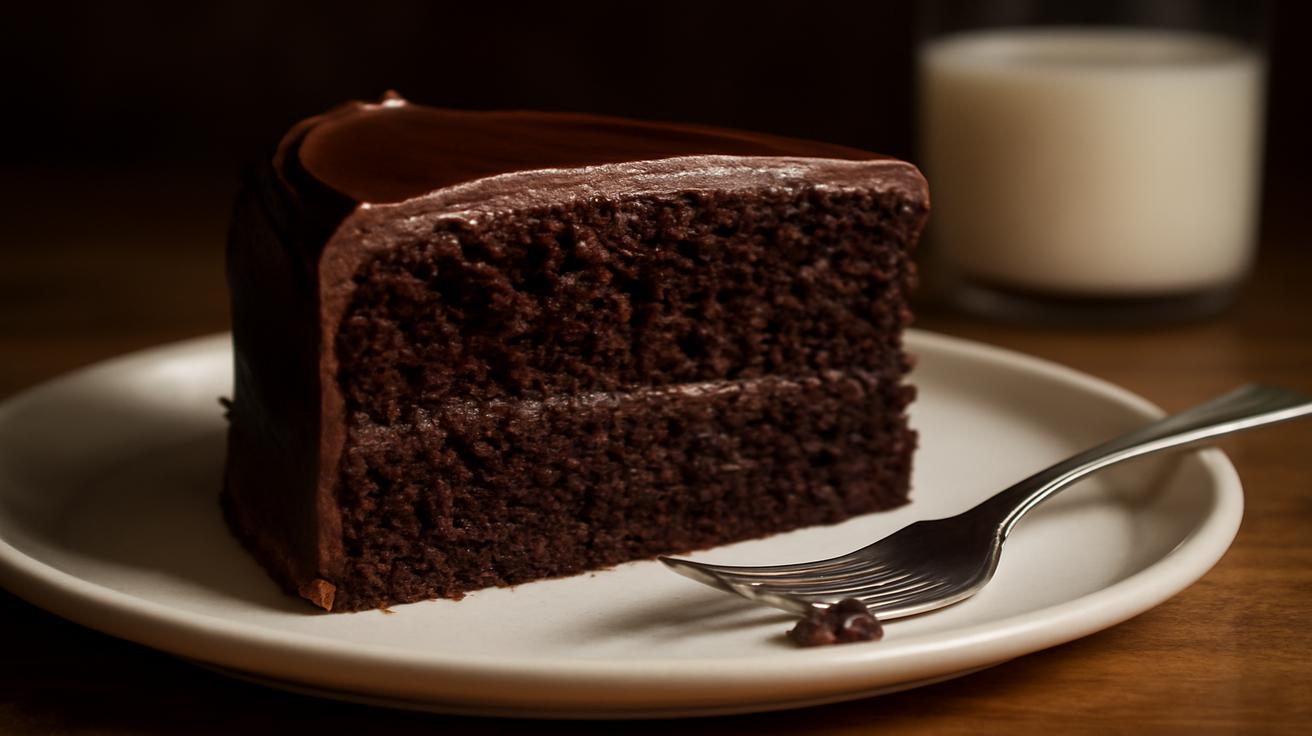
The first thing you notice is the scent. It hits you before you’ve even opened the oven door—a dark, velvety wave of cocoa and butter that feels almost like a memory you forgot you had. It smells like rainy Sundays, like the low murmur of family voices in another room, like the soft crackle of an old radio somewhere. You don’t see the cake yet, but you can already picture it: rich, deep brown, with a tender crumb that promises to stay moist long after everyone has had “just one more slice.” No frosting, no towering layers, no complicated decorations—just pure, unapologetic chocolate, the kind that makes you close your eyes on the first bite.
The Secret Life of a Cake That Stays Moist
Most cakes, if we’re honest, are a little like short stories. Wonderful in the moment, forgettable a day later. You bake them, you slice them, you admire the glossy frosting, and by the next afternoon they’ve already begun to dry at the edges, the crumb tightening as if the joy has been slowly wrung out of it.
This cake is different. It’s more like a novel you keep returning to, discovering new layers with each visit. On day one, it’s indulgent and almost sticky with warmth, the steam still whispering from its center. Day two, the flavors deepen, the cocoa settling in and unfurling like a slow exhale. Day three, the crumb is still lush, as if the cake has quietly refused the rules of time.
The magic isn’t in an elaborate frosting or a sugary glaze. It’s built right into the cake itself—a quiet conspiracy of ingredients that trap moisture like a forest floor holds morning dew. A little oil to stay soft even in the fridge, buttermilk or yogurt to keep things tender and tangy, brown sugar to draw just the right amount of humidity, hot coffee or water to bloom the cocoa and keep everything loose and luscious.
And then there’s how you treat it: the way you stir gently instead of beating it senseless, the way you let it cool and rest, the way you slice it only when it’s ready, not when your impatience says it is. It’s less about baking and more about listening—to the batter, to the aroma, to the subtle signals of the oven window.
The Ritual of Mixing: Where the Moisture Begins
There’s a small ceremony in gathering your ingredients. You line them up on the counter as if you’re laying out a story in edible form. Flour, cocoa powder, shimmering grains of sugar. A bottle of vanilla, warm and floral when you lift the cap. Eggs resting in a bowl, coming to room temperature under the soft light of your kitchen. A jug of buttermilk or plain yogurt, unassuming, yet quietly vital.
Modern recipes often read like lab protocols, but this cake invites a different rhythm. Imagine this as a slow, sensory walk through your pantry. You sift the flour and cocoa together, watching the dusty clouds fall like fine, chocolate snow into the bowl. Baking powder and baking soda join the mix, tiny invisible engines that will lift the batter just enough—no towering sponge here, just a dense, tender crumb that hugs onto every bit of moisture.
In one bowl, you whisk the dry ingredients; in another, the wet. Oil slips into the bowl like liquid satin, far less dramatic than melted butter, but infinitely more reliable when it comes to keeping a cake soft on day three. Brown sugar clumps and glows like damp earth, richer and more complex than its white cousin. Eggs stretch and glisten as you whisk, pulling air in, yet staying gentle. Nothing is rushed.
Then comes the quiet thrill: a stream of hot coffee, or if you prefer, hot water, poured slowly into the cocoa-dark mixture. It smells suddenly more alive, as if the chocolate has finally woken up. You don’t beat the batter; you fold and stir, letting the hot liquid marry everything into a glossy, pourable river of brown. The bowl feels a little warm under your hands, and for a moment you simply stand there, watching the light catch on its surface.
Key Ingredients for Lasting Moisture
This cake doesn’t rely on tricks. It relies on balance. Each ingredient carries its weight, and together they weave a cake that doesn’t surrender to staleness too quickly.
| Ingredient | Role in Moisture & Texture |
|---|---|
| Neutral oil (e.g., canola, sunflower) | Stays soft when chilled; doesn’t solidify like butter, keeping the crumb tender for days. |
| Buttermilk or plain yogurt | Adds acidity for tenderness, moisture for a velvety crumb, and a subtle tang that deepens flavor over time. |
| Brown sugar | Contains molasses, which attracts and holds moisture, keeping the cake soft. |
| Cocoa powder | Provides intense chocolate flavor while absorbing some liquid that slowly releases back, helping the crumb stay plush. |
| Hot coffee or hot water | Blooms the cocoa for deeper flavor and creates a looser, moister batter that bakes into a tender cake. |
Once you see each ingredient as a character with a purpose, the recipe turns from a list of instructions into something far more intuitive. You begin to understand why this cake ages so gracefully on your counter, why the second slice on day three can be even better than the first slice still warm from the oven.
Into the Oven: Listening for the Perfect Moment
Pouring the batter is its own quiet pleasure. You tilt the bowl over the prepared pan, and the batter slides out in a glossy, slow curtain. It’s thinner than some cake batters, almost like heavy cream poured through chocolate night. The pan fills, and you smooth the top only a little, trusting that heat will level what your spatula doesn’t.
The oven door opens—a rush of dry heat against your face—and the pan disappears inside. You close the door, and suddenly you’re in that familiar waiting space, where scent becomes the only messenger. The kitchen starts to change. A faint cocoa note at first, then something darker and fuller, like roasted nuts and caramel shadows.
The timer is a guideline, not a law. You could poke a toothpick in at the recommended time, looking for just a few moist crumbs clinging to the wood. But there’s another way: you watch the edges pull just slightly away from the pan, see the top dome gently, then settle into a soft plateau. You press a fingertip lightly at the center; it springs back with a quiet resilience, like moss under your hand in a damp forest.
Overbaking is the enemy of moisture. Every extra minute in the oven is water leaving the cake, invisible but merciless. So you learn to err on the side of trust: take it out when it’s just set, not when it feels bulletproof. That undercurrent of softness inside will carry through the next few days, rewarding your restraint every time you cut another slice.
Simple Steps, Deep Flavor
There is a beautiful honesty in how uncomplicated the actual process is. You don’t need specialized equipment or advanced techniques—just attention.
- Whisk dry ingredients thoroughly, so cocoa, leavening, and flour become inseparable.
- Blend wet ingredients until smooth, but don’t whip too much air in; this cake is meant to be tender, not fluffy like a sponge.
- Pour wet into dry and mix just until combined; a few faint streaks of flour will disappear during baking.
- Add the hot coffee or water last, watching the batter relax into a satiny pour.
- Bake only until the center is set and a few moist crumbs cling to a toothpick or knife.
The reward for such simplicity is a cake that doesn’t rely on a cloak of frosting to hide dryness. The flavor runs deep all the way through—dark chocolate, subtle caramel from the brown sugar, a whisper of tang from the buttermilk that keeps you going back for another forkful.
The First Slice and the Quiet Days After
There’s an art to the first slice. You resist cutting into it while it’s still piping hot. You let it cool until the pan is only slightly warm to the touch, or until the cake sits on a rack, exhaling the last of its steam like a tired animal settling in to rest. If you rush, you risk a crumb that falls apart; if you wait, you’re rewarded with clean edges and a texture that feels almost custard-soft at the center.
The knife slides through with barely any sound. The crumb is dark, almost black in some lights, with a fine, even structure and a faint sheen where the layers have sealed together. No frosting, no glaze, just the pure geometry of cake and shadow.
On the tongue, it’s dense without being heavy, like a well-worn blanket draped over your shoulders. You get the initial hit of chocolate, then the slow, unfolding notes: a little bitterness from the cocoa, a round sweetness softened by molasses, the gentle acid tang that keeps everything from becoming cloying. It’s the flavor of balance, not excess.
And then there are the days that follow. Wrapped well and left at room temperature, the cake doesn’t crumble into dryness. Instead, it settles in. The crumb tightens slightly, in a good way, like a stew that tastes better after resting. Flavors merge and deepen; the chocolate seems darker, the sweetness calmer. A slice on day two, enjoyed with coffee in the quiet morning, can feel like a completely new dessert.
How to Store It So It Stays Magical
Moisture is a delicate treaty between cake and air. Handle it right, and you can stretch that soft, tender texture over several days.
- Let the cake cool completely before wrapping; trapping steam can make the surface gummy.
- Store it at room temperature, tightly wrapped in plastic or in an airtight container; this keeps the ambient air from stealing moisture.
- If your kitchen is very warm, you can refrigerate it, but let slices come back to room temperature before serving—the flavor and texture bloom as the chill leaves.
- For longer keeping, freeze well-wrapped slices and thaw them slowly, letting them relax back into softness.
Handled this way, the cake doesn’t just endure; it matures. It becomes that rare baked good that doesn’t feel like a compromise on day three, but a continuation of the same small, quiet joy that began when you first stirred cocoa into flour.
When You Don’t Want Frosting (and Don’t Need It)
Some cakes ask for decoration the way some rooms demand curtains. They want swirls and peaks and glossy finishes. This one, however, is more like an old wooden table or a stone path through the trees—beautiful in its honesty, needing nothing more than it is.
Skipping frosting doesn’t mean sacrificing pleasure. It simply shifts the focus inward. You start paying attention to the crumb, the way it yields to the fork, the way the chocolate lingers on your tongue. The surface, slightly matte, might crack just a bit as it cools, like the top layer of earth in late summer. Those fissures are part of its charm.
If you still crave a little adornment, you can keep it modest and elemental—things that don’t overshadow the cake’s core character.
Quiet Companions Instead of Frosting
Think of accompaniments not as costumes but as companions, like friends who walk beside you instead of stealing the spotlight.
- A light dusting of cocoa powder or powdered sugar just before serving, like a first snowfall on dark ground.
- A spoonful of lightly sweetened whipped cream on the side, cool and airy against the cake’s density.
- A drizzle of warm cream or a splash of cold milk, soaking gently into the slice.
- Fresh berries or sliced fruit, bringing brightness and acidity to the deep chocolate tones.
- A scoop of vanilla or coffee ice cream, the studio lighting to the cake’s main performance.
And yet, there’s a very good chance that your favorite way to eat this cake will be the simplest: a bare slice, maybe still faintly warm, on a plain plate, with nothing between you and the honest taste of chocolate and crumb.
Making the Recipe Your Own
Once you’ve lived with this cake a few times—watched it rise through the oven window, sliced it on different days, shared thin slivers and thick wedges—you start to see how adaptable it is. It’s like a familiar trail you can walk in any season and still notice something new.
You might swap buttermilk for yogurt one week, or stir a handful of dark chocolate chunks into the batter so they melt into slow, molten pockets in the baked crumb. You might add a pinch of cinnamon or espresso powder to deepen the chocolate, or a whisper of orange zest for a fragrant, citrus edge. The structure, held together by that careful balance of moisture, can handle it.
You can bake it in a loaf pan for tidy slices that feel almost like a very decadent bread, or in a round pan to cut into generous wedges. You can turn it into thick squares, wrapped individually in parchment and tucked into lunch bags or backpacks. Whichever form you choose, the heart of the recipe remains the same: a cake that holds onto its softness and flavor, quietly defying the rush of time.
And there’s something grounding about that, in a world that seems to move faster every week. This is a cake that invites you to slow down, to notice, to come back again tomorrow and discover that some things, when made with attention and care, don’t fade overnight.
FAQ
How long will this chocolate cake stay moist without frosting?
When stored properly at room temperature in an airtight container, it typically stays beautifully moist for 3 to 4 days. After that, it’s still good to eat, but you may notice a gradual drying of the edges.
Do I have to use coffee, or can I replace it?
You can replace the hot coffee with an equal amount of hot water. Coffee simply deepens the chocolate flavor without making the cake taste like coffee, but water works perfectly fine for a rich, moist result.
Can I use butter instead of oil?
You can, but the cake may dry out a bit faster. Oil stays liquid even when cool, which helps keep the crumb tender for days. If you really prefer the flavor of butter, you can replace part of the oil with melted butter, knowing it might not stay as soft on day three.
Is it better to store this cake in the fridge or at room temperature?
Room temperature is best for the first few days, as refrigeration can firm the crumb. If your kitchen is very warm, you can refrigerate it, but bring slices back to room temperature before serving for the best texture and flavor.
Can I turn this into cupcakes or a layer cake?
Yes. The same batter works for cupcakes (with a shorter baking time) and for two thin layers. Just remember that the magic lies in not overbaking; keep an eye on them and remove them as soon as the centers are just set.