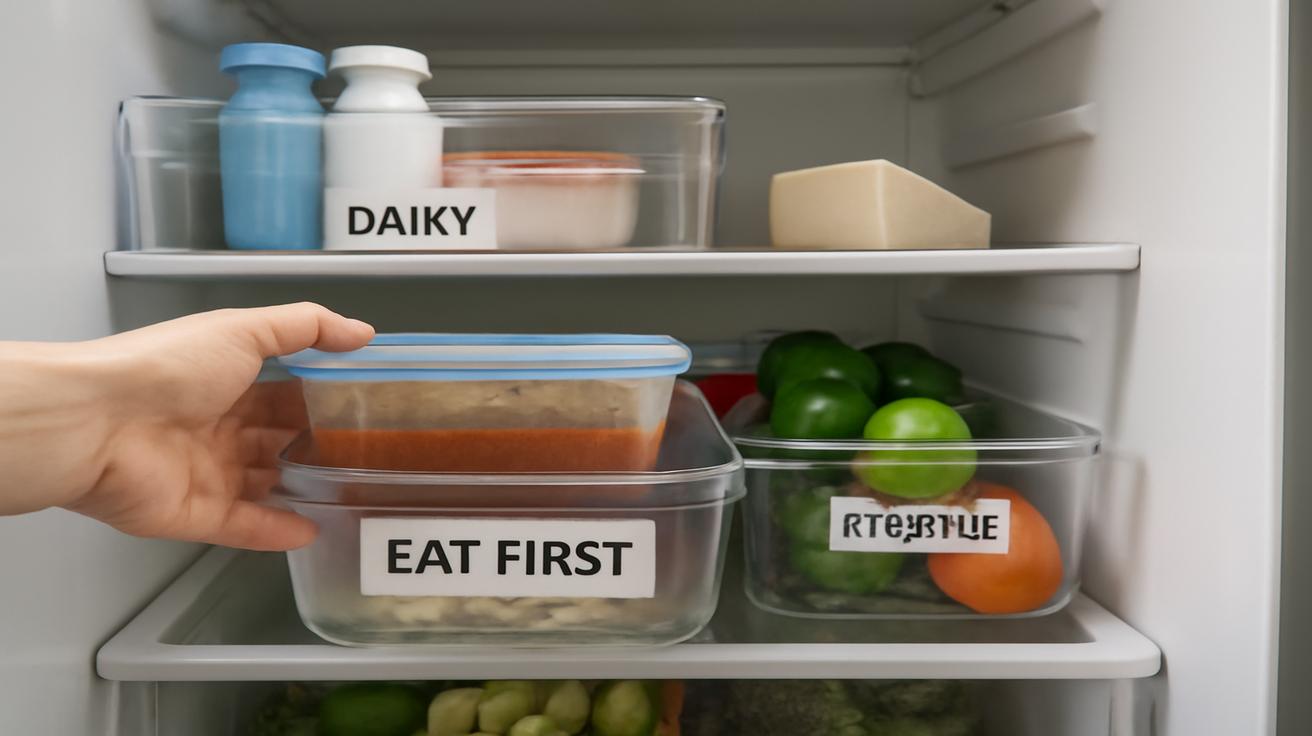
The first time I opened my friend Mara’s refrigerator, I understood exactly why she always said, “I swear I bought vegetables this week, but they disappear.” They hadn’t disappeared, of course. They were simply buried—wilting behind yogurt tubs, forgotten under a leaning tower of leftovers, slowly collapsing in the back of the produce drawer. The fridge itself wasn’t messy. It was normal. Ordinary. The way most of ours are: full of good intentions and quiet waste. We laughed as we excavated a sad, liquefied cucumber from the bottom of the crisper, but there was a small sting to the moment. It felt like a tiny betrayal of the effort, the money, the land and weather and hands that had brought that cucumber to her kitchen in the first place.
The Invisible Pile of Good Intentions
Food waste doesn’t look dramatic in a single kitchen. It looks like three strawberries gone fuzzy overnight, the half onion turning translucent, the leftovers you meant to eat but never craved. It looks like that bag of spinach you bought with a promise to yourself: more salads this week. And then, after work, when you’re tired and hungry, your eyes skip right past it. It slips further down in the drawer, tucked beneath newer, more exciting things.
Individually, each small loss feels harmless. But if you were to pile all those forgotten foods from the last month onto a table—the stale bread, the uneaten rice, the yogurt that expired two weeks ago—you’d see a little mountain of waste. You’d smell it, too. You’d remember the moments you bought each item, standing in the grocery aisle, thinking of meals you’d cook, how good and organized you’d finally be.
What’s wild is that the problem isn’t usually laziness or lack of care. Most people want to waste less. They want to shop mindfully, to cook more, to honor the food they bring home. The stumbling block is quieter: it’s how our kitchens are set up. The layout of a fridge, the depths of a pantry, the way we store things—it all silently nudges us toward certain habits. And the default layout? It’s usually working against us.
That’s why Mara’s fridge looked like most fridges you’ve probably seen: tall bottles in the doors, random leftovers on any available shelf, produce hidden in drawers. A jumbled but functional system. Nothing obviously wrong with it. But also, nothing about it helping her remember what needed to be eaten first. Fresh, fragile foods—those with the shortest life span—were literally out of sight and out of mind.
So when she asked, half jokingly and half not, “How do I stop murdering my vegetables?” I suggested one small, slightly rebellious change. Not a new app, not a special container, not a complete pantry overhaul. Just one simple tweak to the way her fridge was organized.
The Simple Tweak: A “Eat-First” Zone
The idea is almost absurdly simple: create a dedicated “eat-first” zone in your kitchen. One small, clearly defined spot where every food item that needs to be eaten soon goes—and only those items go there. That’s it. No complex system, no color-coded labels unless you enjoy them. Just a deliberate reshuffling of visibility and priority.
In practice, this can look like:
- The front half of the middle shelf of your fridge
- A clear bin labeled “Eat Me First” placed in easy reach
- A specific section on your countertop for fruit that’s ripening fast
- The left side of a pantry shelf where nearly-expired dry goods live
When I suggested this to Mara, we cleared space on the center shelf of her fridge—eye level, unavoidable. We slid a simple, shallow bin there and, in thick black marker on a piece of tape, she wrote: “Eat First.” Then we opened her crisper drawers and the far-back corners and gently, almost ceremonially, transferred every vulnerable, time-sensitive thing into that one spot: the half-used tub of ricotta, the opened salsa jar, the strawberries that were just beginning to soften, the last two tortillas, a slightly forgotten hummus.
The effect was instant. Instead of being scattered and invisible, the “food on deadline” became a small, colorful collection that greeted her every time she opened the door. It was like turning on a light in a room she didn’t realize had been dim.
Why Visibility Changes Everything
There’s something quietly powerful about changing what your eyes land on first. Our brains are lazy in predictable ways; we reach for what is easy, what is obvious, what doesn’t require rummaging or decision fatigue. When you shove fragile foods into drawers at the bottom of the fridge—places that require bending, squinting, digging—you turn them into a future problem.
But as soon as you pull them to the front, you shift them into the category of “today’s possibilities.” It stops being “that bag of kale down there somewhere” and becomes “oh, I have kale—I could toss a handful into my eggs.” The food hasn’t changed. You have. Or rather, your environment nudged a different part of your brain awake.
The “eat-first” zone reduces the mental overhead of using up what you have. You no longer have to do a full inventory scan every time you start cooking. You don’t have to wonder what’s close to expiring; it’s literally collected for you in a single place. Instead of trying to remember your entire fridge’s contents, you only need to remember this: check the eat-first spot before deciding what to cook or snack on.
Within a week, Mara noticed the difference. She started building her meals around that bin, almost without effort. If there was half a bell pepper and a lonely lemon in there, she made a quick pasta toss. If berries were sliding toward too-soft, she stirred them into yogurt. A spoonful of ricotta made its way onto toast with honey. The dread of “What should I make?” began to loosen into a more playful question: “What’s in the bin today?”
Designing Your Own “Eat-First” System
The beauty of this simple tweak is that it’s adaptable. Your kitchen doesn’t need to look like anyone else’s. What matters is choosing a visible, convenient, and clearly defined spot. A few guiding principles can help:
Make it Eye-Level and Easy-Reach
Don’t tuck your eat-first zone into a bottom drawer or the far back of a shelf. Put it where your gaze naturally lands. For many fridges, the center shelf is prime real estate. Sacrifice a bit of that ideal space; it will pay you back in food saved and meals made.
Keep It Small on Purpose
The zone should be limited—like a small stage, not a warehouse. The constraint forces you to rotate things regularly. When it’s full, that’s your signal not to buy more fragile foods until you’ve eaten down what’s there.
Use Simple, Visible Containers
A clear bin or basket works well because you can see everything at a glance. Labels are optional but helpful. “Eat First” or “Use Soon” might sound a little bossy, but that’s the point—it speaks directly to your future, distracted self.
Include All At-Risk Foods
Don’t limit this just to produce. Leftover rice, open jars, half-used blocks of cheese, cooked chicken, that last portion of soup—if it won’t last long, it belongs in the zone. Dry goods with near-term expiration dates can get their own small “eat-first” corner in the pantry too.
To keep this idea concrete, here’s a simple way you might define a few zones in a small kitchen:
| Location | Zone Type | What Goes There |
|---|---|---|
| Fridge center shelf (front) | Eat-First Bin | Leftovers, cut produce, open dairy, cooked grains |
| Countertop bowl | Ripening Fruit Spot | Bananas, peaches, avocados, tomatoes |
| Pantry eye-level shelf (left side) | Dry Eat-First Area | Near-expiry pasta, grains, snacks, canned foods |
| Freezer door or top basket | Use-Soon Freezer Zone | Frozen leftovers, bread ends, veggie scraps for stock |
The Small Ritual That Keeps It Working
Like any simple system, this one thrives on a tiny, regular ritual. Without that, the bin slowly becomes just another crowded shelf. The maintenance, though, doesn’t have to be serious or time-consuming. Consider a weekly “kitchen reset”—ten minutes at most.
Once a Week: The Five-Minute Fridge Walk
Pick a day tied to something you’re already doing: the evening before grocery shopping, or the same night you take out the trash. Open your fridge and:
- Scan for items close to expiring and move them into the eat-first zone.
- Check what’s already in the bin and mentally note two things you could cook or snack on tomorrow using them.
- Wipe crumbs or tiny spills so the space feels inviting, not grim.
This isn’t about perfection. It’s about staying in conversation with your food. Each time you do this little walk-through, you’re catching potential waste before it happens. You’re turning “oops, it went bad” into “oh, I’ll roast those tomorrow.”
Pair It with a “What Needs Using?” Habit
Before you default to a usual meal, ask yourself a simple question: What’s in the eat-first zone that I could use up today? You might not always build a whole meal from it, but you can often fold it into something: chopped herbs into scrambled eggs, half a can of beans into a quesadilla, yesterday’s roasted veggies onto a pizza.
Over time, this starts to feel less like a constraint and more like a gentle, creative challenge. It’s the kitchen version of foraging: you look at what’s there and let it guide what you make, rather than forcing your cravings to dictate everything.
How It Changes the Way You Cook and Feel
Reducing food waste isn’t just about numbers or guilt. It tangibly changes your experience of your own kitchen. When food is visible and welcomed into your daily meals instead of quietly discarded, you feel more in step with your own life, less like you’re always catching up.
In Mara’s case, the change became obvious in the way she talked about cooking. Before, she’d often text me, “I have nothing to eat,” while standing in front of a very full fridge. After the eat-first zone took root, her messages shifted to things like, “I had to use up ricotta and a lemon, so I made this wild toast situation and it was actually incredible.”
She began to notice how often “nothing to eat” actually meant “nothing I’ve pre-decided I want.” The bin showed her that she had options—raw material for meals, not just a graveyard of failed intentions. And the more she used that bin, the less she found herself throwing things out with that familiar blend of shame and resignation.
There’s another, quieter benefit too: respect. When you stop letting food die unnoticed in your kitchen, you become more connected to where it came from. A wilting carrot isn’t just a lost 79 cents—it’s soil, sun, water, a seed, labor, and transport. When you give it a visible, honored place to be used, you’re acknowledging that story, even in a small private way. It feels different to cook with something you nearly forgot but then rescued and transformed into dinner. There’s satisfaction baked into that act.
Most of us aren’t going to grow all our own food or live completely waste-free lives. But changing the fate of a few bags of spinach, some berries, a loaf of bread? That’s within reach. It starts with a single shelf, a single bin, a single decision: this is where the food that needs me goes.
Bringing the Tweak into Your Own Kitchen
Maybe as you read this, you can picture your own fridge: the half jars in the door, the produce drawer you dread opening, the mystery containers in the back. Maybe you’ve thrown away things recently that you meant to use. That ache of waste—that small wince as you tip food into the trash or compost—is a sign you care. And caring is the only requirement to start.
Here’s one way you might begin, today, without a store run, without new containers:
- Open your fridge and choose one visible, easy-reach section, even if it’s just the front right corner of a shelf.
- Clear it off for a moment. Wipe it down. Make it a blank stage.
- Look through your fridge and place anything that needs using soon into that space. Don’t overthink it.
- If you have tape and a pen, label the space. If not, name it in your mind: “This is my eat-first spot.”
- Before your next meal or snack, check that spot first. Let it inspire or gently constrain what you make.
If you stick with this for a week, you’ll likely notice at least one thing: fewer surprise science experiments hiding in the back. But you might also notice something subtler—less dread when you open the fridge, more ease when you decide what to cook, a quiet comfort in knowing you’re caring for what you’ve already brought into your home.
The change is small enough to almost disappear into your routine. But every time you pull something from that eat-first zone and turn it into a meal instead of trash, you’re participating in a different kind of story—a story where the kitchen isn’t just a place where food passes through, but a place where attention, intention, and respect actually shape what happens to it.
In a world of big, complicated problems, one organized shelf might not sound like much. Yet, multiplied across apartments and farmhouses, city kitchens and tiny house countertops, this one simple tweak adds up. Less waste in landfills, less money lost, fewer guilty tosses into the trash. More meals made from what you already have. More gratitude for the quiet, everyday miracle of food.
And maybe, the next time you reach for a snack and your hand lands on that softening apple in the eat-first bowl instead of something new, you’ll slice it, sauté it in a little butter, sprinkle cinnamon, and eat it warm. A small act, a little sweetness, pulled back from the edge of being forgotten.
FAQ
Do I really need a special bin, or can I just use a section of a shelf?
You don’t need anything fancy. A dedicated bin can help visually define the space, but simply choosing the front third of a shelf and mentally committing to it as your “eat-first zone” works just as well. The key is consistency and visibility, not the container itself.
What if my fridge is already packed and I have no space?
Start small. Clear just enough room for a single row of items at eye level. As you use up what’s in the eat-first zone, your fridge will naturally become less crowded. Often, once people begin this practice, they also shop more intentionally, which frees up space over time.
How do I remember to actually check the eat-first zone?
Pair it with habits you already have. Before deciding what to cook, make it a rule to glance at the zone first. Some people put a small note on the fridge door handle that says “Check Eat-First Shelf” until it becomes automatic.
Won’t everything in the eat-first zone go bad at the same time?
Not usually, because you’ll be adding and removing items regularly. The weekly quick check helps you stay ahead of what’s most urgent. If something has only a day or two left, make a point to use it at the next meal, even in a small way.
Can I do this in a shared household?
Yes, and it can actually make things easier. Label the zone clearly and explain to everyone that anything placed there should be eaten soon and is fair game unless labeled with a name. This reduces confusion about what’s “up for grabs” and helps everyone participate in wasting less.