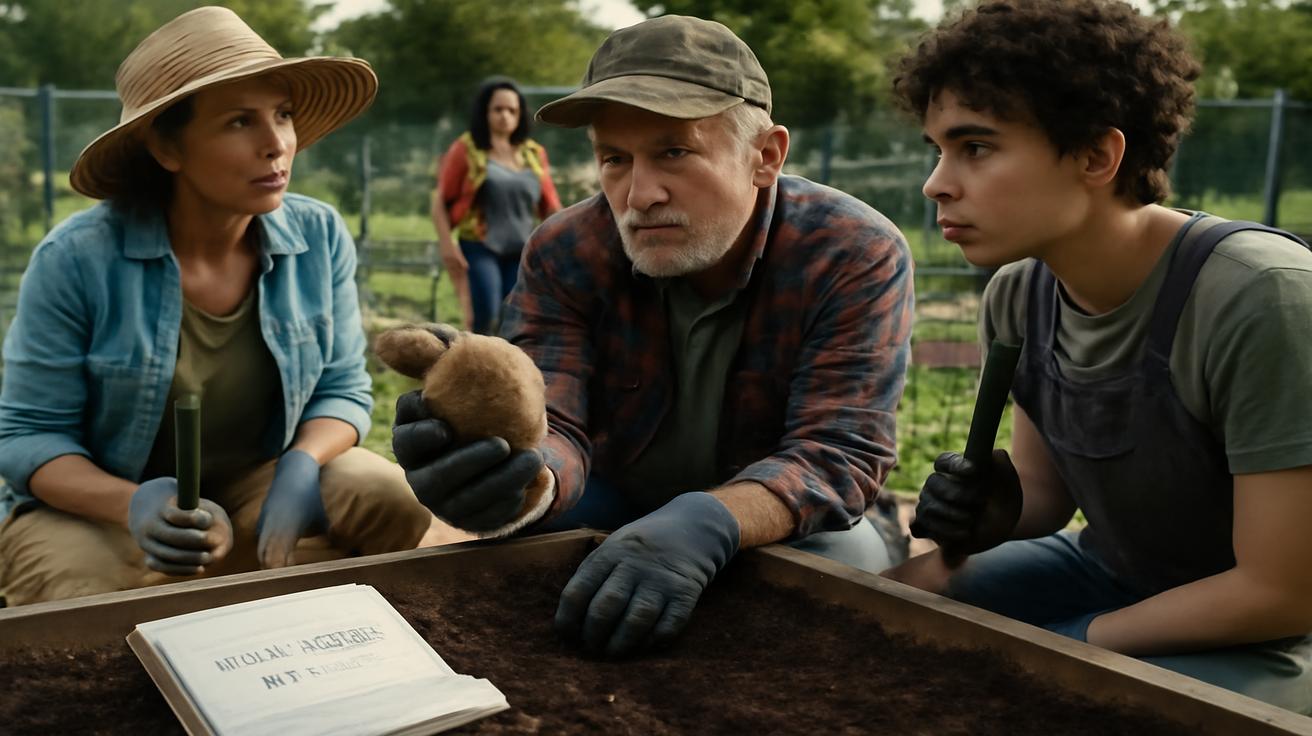
On a late March afternoon, the kind that can’t decide between winter and spring, I stood in a community garden watching an older woman push her bare hands into the soil. Around us, the air smelled like thawing earth and wet leaves. Robins hopped across the beds, pretending not to watch. The woman—her name was Ruth, seventy-three, with a red bandana and mud on her knees—looked up at me and said, “You’re here about potatoes, aren’t you?”
She was right. I’d spent weeks asking gardeners the same question: When is the best time to plant potatoes? I expected debates, spreadsheets, maybe even arguments. Gardeners love their opinions the way they love their favorite trowels: sharp and well used. Instead, something surprising happened.
From the coastal plots whipped by salty spring winds to the tiny raised beds behind city row houses, from chilly northern allotments to gentle, misted valleys, nearly everyone gave the same answer. Their voices came with different accents, but they all pointed to the same quiet, powerful moment in the year when winter finally loosens its grip and the soil begins, almost imperceptibly, to breathe again.
The Answer Gardeners Kept Repeating
The consensus rose like a chorus: Plant your potatoes when the soil has warmed and the risk of hard frost is mostly past—but before the full flush of spring heat arrives.
That sounds vague at first, like something pasted onto the back of a seed packet. But talk to enough gardeners and the phrase starts gathering texture and scent and memory. You begin to realize they’re not staring at a calendar when they decide. They’re watching the land.
“Around here,” said Martin, a quiet man who gardens on a wind-swept hill, “it’s about two weeks before our last expected frost. The soil’s not frozen, the worms are moving, and I can push my hand down without flinching.” He wiggled his fingers into the bed, wrist-deep, as if to prove his point. “If my fingers don’t go numb, my seed potatoes are coming in.”
Another gardener, Lena, laughed when I asked her for a date. “End of April-ish,” she said, “but really? It’s when my neighbor starts hanging laundry outside and I see the first dandelions in the ditch. That’s potato time.”
Different regions, different traditions—but a remarkably similar window: late winter to early spring, once the soil is workable and roughly above 45–50°F (about 7–10°C). Not bone-cold. Not full-on spring. That in-between moment, muddy and hopeful, when the garden looks almost embarrassed by how much life it’s about to unleash.
The Quiet Science Under Your Boots
Gardeners might describe it with bird calls and laundry lines, but there’s real biology humming behind their instincts. Potatoes are tough, but they’re not indifferent to timing. Beneath the surface, the tubers make quiet decisions of their own.
Plant too early, into icy ground, and they sit there sulking, vulnerable to rot. Plant too late, into already-warm soil, and you risk shorter growth, lower yields, and tubers that struggle when summer heat kicks in. That’s why that gentle early-spring window matters so much.
“Potatoes like to wake up slowly,” explained Joel, who manages a teaching garden behind a small-town library. “You give them a cool, moist bed—cool, not frigid—and they’ll sprout roots first, then shoots, building quietly before the heat and bugs show up.”
He knelt, scraping aside mulch to expose the soil. “Here, feel this,” he said. The earth was cool but not shocking, like the stone step of a shaded porch. “That’s potato weather. Not summer-warm. Just not winter-cold. There’s a difference.”
The soil temperature sweet spot—roughly 50°F (10°C) and up—isn’t just a nerdy detail. It’s the line between a seed piece that wakes, stretches, and builds a sturdy root system, and one that simply waits, vulnerable, in the dark. The gardeners I met didn’t carry thermometers in their pockets. They carried something older: a layered memory of springs past, of good years and bad, of that one disastrous early planting when a late frost blackened every tender shoot overnight.
Reading Your Landscape Instead of the Calendar
The most experienced gardeners I spoke with all said some version of the same thing: the calendar is a hint, not a boss. What matters more is what your own patch of land is telling you right now.
They shared, almost shyly, the signals they look for:
- Soil that crumbles in your hand instead of clumping in cold, gluey lumps.
- Earthworms wriggling in the top few inches of soil when you dig.
- Weeds just beginning to appear, not yet in full takeover mood.
- Early-flowering signs: dandelions, violets, or the buds on nearby shrubs starting to swell.
- Cold nights, but not brutal ones—occasional light frosts are okay if the tubers are still underground.
One gardener, Celine, described it beautifully: “There’s a morning when I walk outside and the air smells less like snowmelt and more like compost. That’s it. That’s potato time.”
The gardeners’ shared answer, when you translated all the bird calls and worm count and nose-testing into something you might actually write in a notebook, looked something like this:
| Climate Zone / Region (General) | Typical Potato Planting Window | What Gardeners Actually Watch For |
|---|---|---|
| Cool / Cold climates | Late March to late April | Soil just thawed, workable, not sticky; forecast with fewer hard frosts |
| Moderate / Temperate climates | Late February to early April | First weeds emerging, robins or local spring birds returning, soil cool but not icy |
| Mild / Coastal or very warm climates | Late winter; sometimes late fall for a winter crop | Stable cool weather, moist but not waterlogged soil, avoiding peak summer heat at harvest |
The table is tidy. Real life is not. But the feeling behind those windows is nearly universal: plant as winter fades, not after spring has fully claimed the garden.
What “Too Early” and “Too Late” Look Like in Real Soil
Not everyone gets it right every year. The stories of what goes wrong when timing slips were, honestly, just as instructive as the moments of victory.
“We planted right after that freak warm week in February,” said a couple who garden behind a converted school building. “We were impatient. The soil was still cold underneath, but the air felt like April. We told ourselves it would be fine.”
It was not fine. The tubers sat in that cold, damp soil like forgotten potatoes in the back of a fridge drawer. “By the time they finally sprouted,” they said, “they were weak. Then we got hit with a cold snap and… mush. We dug up more slime than potatoes.”
Too early, and you’re giving your seed potatoes a slow, miserable start in hostile territory: cold soil, microbial opportunists, stagnant moisture. The gardeners who’d made that mistake once did not repeat it willingly.
Too late has its own flavor of regret. “I waited for perfect conditions,” confessed a meticulous gardener named Sam. “Perfect never came. I planted at the end of April. Then May turned hot, fast. The plants shot up, flowered early, and never really bulked up underground.”
His harvest that year was a handful of small tubers, more like large marbles than the meal-worthy potatoes he’d pictured. “Everything above ground looked promising,” he said. “But when I dug, it was like someone had swapped my plants for a joke.”
Plant late, and the plants find themselves rushing against the clock: rising temperatures, expanding pest populations, and, eventually, the dry stress and heavy heat of summer. The window, as all those gardeners agreed, isn’t a neat square on a calendar. It’s a living hinge in the season—a time when soil, air, light, and water briefly align in favor of the potato.
Old Sayings, Same Answer
Ask an older gardener, and you might get the answer served as a proverb instead of a date. They’re fragments of local folklore, but beneath the humor and superstition, the message is almost always the same:
- “Plant your potatoes when you can sit bare-bottomed on the ground.”
- “Potatoes want to feel the sky’s still cold but the earth’s not angry.”
- “In by Easter, out by Midsummer.”
- “Plant when the blackbird starts singing at dawn.”
I heard a version of that first saying—about sitting on the ground—repeated so many times, in so many gardens, that it started to sound like a secret password. Behind the joke lies a genuine rule of thumb: your body is a decent thermometer. If sitting on the soil feels unpleasant but bearable—cool, not painful—you’re in the right neighborhood for potatoes.
That, more than any printed calendar, was the refrain: trust your senses, grounded in your particular place. Gardeners who had moved across regions—north to south, coast to inland—said the biggest mistake new arrivals make is importing their old timing without listening to the new land.
“Where I grew up, we planted on St. Patrick’s Day,” said one gardener who had moved many hundreds of miles south. “Here, that’s too early most years. I tried it my first season, stubbornly, and all I got was rot and heartbreak.” The following year, she watched instead of assuming, waited for the soil to soften, and finally planted in early April. That year, her harvest overflowed laundry baskets.
How the Best Time Changes with Your Gardening Goals
There was one twist in the gardeners’ almost-universal answer about timing: what you want from your potatoes matters too. Not all crops, they reminded me, are grown for the same reasons.
One gardener, Dez, actually plants two rounds. “Early crop as soon as the soil is ready in spring,” they said, “for those glorious, thin-skinned new potatoes in early summer. Then a later batch, about a month after the first, so I’ve got keepers for winter storage.”
The best time to plant, for them, became a small arc rather than a single date—a few weeks of decision-making based on the kind of eating they wanted later in the year.
- Early potatoes (often called “new potatoes”) go in as soon as the soil is reliably workable and lightly warmed. They don’t need as long to mature and are meant for fresh eating.
- Maincrop potatoes—the ones you cure and store for winter—often go in a little later in spring, once conditions are steady, to give them a long, uninterrupted growing season.
But whether they were chasing creamy new potatoes or dense, floury bakers to line their pantry shelves, the gardeners didn’t abandon that same central rule: cool, waking soil; fading frost; not yet summer.
Turning the Answer Into a Simple Plan
All of this—folklore, earth temperature, worms, dandelions—can feel beautifully poetic but hard to pin down when you’re standing in your own backyard with a sack of seed potatoes and a growing sense of uncertainty.
So here is the gardeners’ shared wisdom, distilled into something you can actually use this year:
- Figure out your approximate last frost date. Not as a law, but as a reference point. The best potato planting time usually falls from a few weeks before to about the time of that date, depending on how your soil behaves.
- Watch your soil, not just the sky. Try the “hand test”: if you can dig and crumble the soil without it sticking like cold clay, and your fingers don’t ache from the cold, you’re likely in range.
- Notice the early signals in your own landscape. First weeds, first insects, first birds, first dandelions—these show up around that same seasonal hinge, year after year.
- Accept a little imperfection. A light frost nipping the tops of emerging potato plants rarely kills the crop; they’ll often regrow. It’s the deep, lingering freeze in heavy, waterlogged soil that causes real trouble.
- Plant with your future self in mind. Think about when you want to eat them—early summer or autumn—and place your planting within that early-spring window accordingly.
The best time isn’t a single day circled in red ink. It’s a span of days where you feel, instinctively and physically, that the earth is ready to hold what you give it.
The Shared Answer, in One Sentence
After all the interviews, muddy boots, coffee at kitchen tables, and long walks through waking gardens, the gardeners’ agreement can be folded into a single line:
The best time to plant potatoes is when winter has just stepped back—your soil is cool but workable, the worst frosts are mostly behind you, and the land around you is quietly, unmistakably beginning to move.
Some will say “late March.” Others will swear by “around the last frost.” A few will wink and say, “When you can sit on the soil without swearing.” Beneath all of those is the same message: plant your potatoes into a world that’s waking up, not one still locked in sleep or rushing toward summer.
That afternoon in the community garden, Ruth finally answered the question I’d come to ask her. She brushed dirt from her hands, looked down the row where she’d just tucked her seed potatoes into the earth, and smiled.
“People always want a date,” she said. “But potatoes don’t read calendars. Put them in when the ground feels like a cool handshake, not an ice cube. When you can smell life starting again. That’s when.”
The sun slipped behind a bank of clouds, and a robin shouted its opinion from a nearby fence post. Somewhere under the soil, small, unseen eyes began to open.
Frequently Asked Questions
Can I plant potatoes before my last frost date?
Yes, as long as the soil is workable and not icy-cold. Many gardeners plant one to three weeks before their average last frost. The seed pieces are insulated underground, and light frosts usually won’t harm them. Just avoid planting into waterlogged or frozen soil.
What soil temperature is best for planting potatoes?
A soil temperature of around 45–50°F (7–10°C) or a bit higher is ideal. Colder than that slows sprouting and increases the risk of rot. You don’t need a thermometer if you don’t have one: if the soil is cool but doesn’t feel painfully cold to your hand, you’re probably in the right range.
Is it bad to plant potatoes too late?
Planting late can still give you a crop, but yields may be smaller. Late-planted potatoes face quicker warming, more pests, and less time for tubers to bulk up before summer heat. They’re more likely to give you small or fewer potatoes.
Can I grow potatoes in very warm climates?
Yes, but timing shifts. In hot regions, gardeners often plant in late winter or very early spring so that the plants grow before extreme heat arrives. Some even plant a fall crop to grow over the mild winter, avoiding high summer altogether.
What if I get a hard frost after my potatoes sprout?
If a hard frost blackens the emerging shoots, don’t panic. In many cases, the plant will resprout from below the soil line. You can gently hill soil or mulch over young sprouts if frost is forecast, to protect them. Truly severe, prolonged cold can damage the crop, but most spring frosts are survivable with a bit of care.