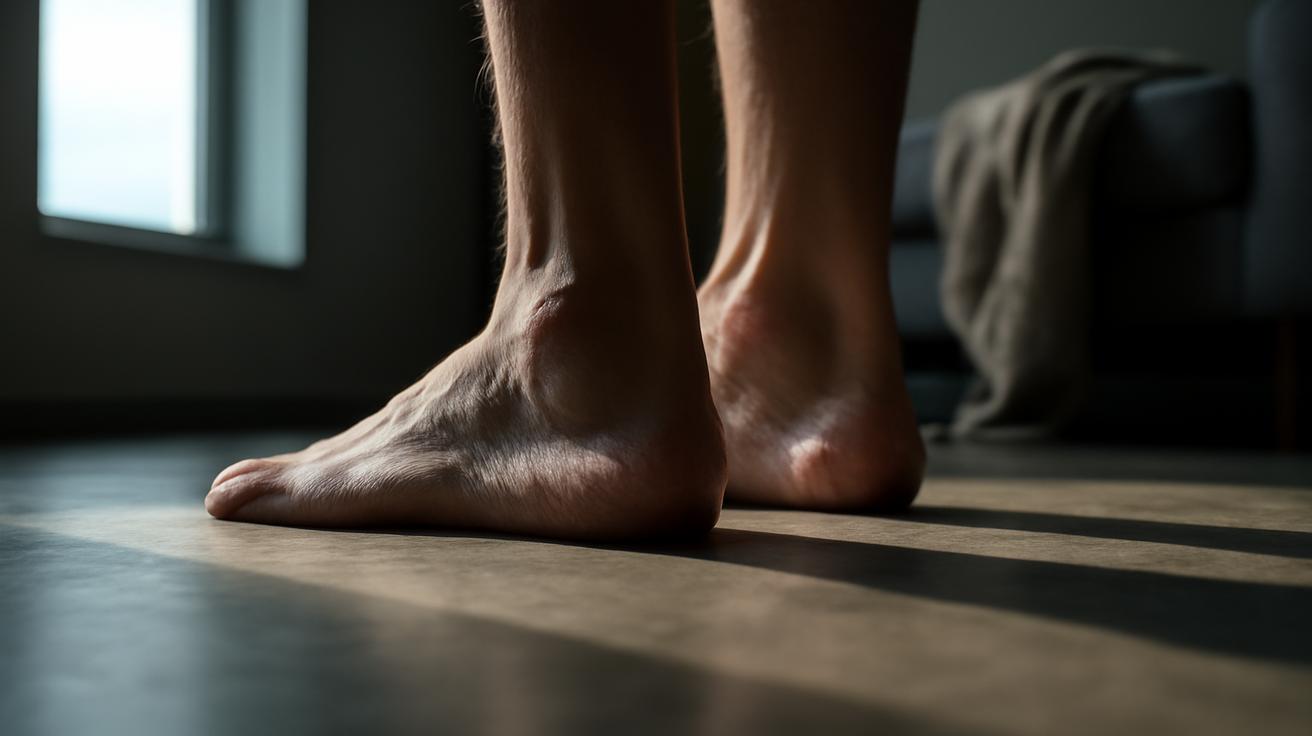
The tiles are the first to greet you. Not the warm light pooling through the window, not the smell of coffee, but that sharp, needling chill from the kitchen floor that races straight through your bare soles. In a second, your whole body shivers. The room hasn’t changed temperature. The thermostat hasn’t budged. But now the morning feels colder, harsher, as though winter has suddenly slipped under the door. You rub your arms, curl your toes against the floor, and wonder: how can a few square inches of skin touching a cold surface make your entire body feel like it’s stepped into a fridge?
The Hidden Conversation Between Your Feet and Your Brain
Most of the time, we move through our homes without thinking about what’s under us. Carpet, wood, tile, concrete—background texture in the story of our day. But the moment you go barefoot on a cold floor, your nervous system wakes up like someone’s rung an alarm bell.
Your feet are packed with nerve endings. Each sole is a dense landscape of sensors: pressure, pain, and, yes, temperature. These are not gentle observers. They’re wired straight into your spinal cord and brain, constantly whispering reports about what you’re standing on. Usually, those whispers are quiet. On a cold floor, they become a shout.
Those nerves send a fast, bright message upward: “Surface cold. Very cold. Too cold.” Your brain doesn’t treat this as a small local problem. It interprets it as a potential threat to your whole-body temperature. It’s as if the floor is announcing, “We’re losing heat.” And so, before you’ve even had your first sip of coffee, your brain is already recalibrating your sense of comfort.
That’s why it doesn’t feel like only your feet are cold. You may feel a surge of overall chill—across your arms, your back, even your face. The body, in its cautious wisdom, prefers to overreact. A little extra shiver is a small price to pay if it means you’ll move away from something that could ultimately drain your core warmth.
How Heat Leaves Your Body Through the Floor
Imagine your feet as small campfires and the cold floor as a huge stone that’s been sitting in the snow all night. The moment fire meets stone, they negotiate. One wants to stay warm; the other insists on sharing its cold. They do that through a physical conversation called conduction.
Conduction is simply the transfer of heat between two objects that are touching each other. No wind, no drafts, no visible movement—just silent, direct trade. The warmer object gives up some of its heat to the colder one until they start to even out. In your kitchen, that means warmth moving out of your skin and into tile, wood, or concrete.
Tile and stone are especially good at this. They’re what we call good thermal conductors. Touch them in winter and they feel brutally cold because they pull heat from your skin quickly and effectively. Wood, by contrast, is a poor conductor. It still steals some heat, but it does it more slowly, so it feels less shocking to bare feet. Carpet and rugs are even gentler—they’re partly air and fibers, and air is a notably poor conductor of heat. That’s why stepping onto a rug can feel like a small mercy.
From your body’s point of view, every second you stand barefoot on a cold, hard floor is a tiny leak in your heat budget. The skin on your feet cools rapidly, and your nervous system notices. It’s not just an uncomfortable moment; it’s a measurable loss of warmth from your body to the floor.
The Role of Surface Material and Temperature
Different materials at the same room temperature can feel wildly different against bare skin. Ten degrees Celsius tile and ten degrees Celsius carpet are not the same experience, even though a thermometer would report identical numbers. The carpet feels kinder, less biting.
That’s because “feels cold” isn’t only about temperature; it’s about how fast a material can pull heat from you. The faster the heat leaves, the colder it feels. Tile and concrete draw heat out like a sponge soaking up water. Carpet and cork are more like a slow drip.
So when you say, “This floor is freezing,” what you’re really noticing is not just the floor’s temperature, but the speed of that invisible escape of heat from your feet. Your nervous system isn’t fooled by numbers on a thermostat. It trusts the data coming from your skin.
Why Cold Feet Make Your Whole Body React
In a way, your feet are scouts. They are out on the front lines, closest to the ground, often farthest from your core. So your body makes strategic decisions about them: they’re important for balance and movement, but they’re not as crucial as your heart, brain, and lungs.
When your feet get cold, your body starts subtle protective maneuvers. Tiny muscles around your blood vessels respond quickly. Blood vessels in the skin of your feet begin to narrow—this process is called vasoconstriction. By tightening, they limit blood flow near the surface, which means less warm blood passes through, and less heat escapes into that cold floor.
It’s a clever defense, but you feel it as “cold feet.” And the story doesn’t end there. Messages from those chilled nerves influence your overall thermal comfort. Your body can trigger a mild systemic response: you might start to tense your muscles, hunch your shoulders, seek extra layers—moving into a mode that tries to protect core temperature. The result is that the whole body can feel colder, even if only the skin on your soles is in direct contact with the cold surface.
The Brain’s Thermal Illusion
There’s a strange trick at work here. The actual drop in your core body temperature from a cold floor might be small, especially if you’re only barefoot for a few minutes. But your brain isn’t measuring degrees directly; it’s measuring discomfort and risk.
Our sense of being “cold” is a blend of physical reality and perception. Temperature signals from your skin combine in the brain with context: the room’s lighting, the clothes you’re wearing, whether you’re tired, whether you just woke up, whether you’re holding a steaming mug. One strong signal—like ice-like tile on bare feet—can tilt that whole perception. Your brain generalizes the message: “Feet are very cold, environment must be cold,” and you experience full-body chill.
You notice this most at quiet moments. First thing in the morning, late at night, stepping out of a warm shower. In those in-between times, your attention is turned inward, and the contrast between warmth and cold is highlighted. The floor feels like the loudest voice in the room, and your body listens.
Cold Floors, Circulation, and the Long Journey of Warm Blood
Warmth in your body isn’t random; it moves, carried by blood flowing out from your core to your limbs and returning again. Your heart sends warmth outward like a steady tide. When your bare feet hit a cold floor, that tide runs into trouble.
The blood that circulates through your feet gives up heat to the cold surface. As that cooler blood returns toward your core, your body reads those changes. It doesn’t let your core cool easily—so it tightens vessels in your feet and lower legs to reduce blood flow and heat loss.
This is clever, but it has a cost. The more your body restricts warm blood from reaching your extremities, the more likely you are to feel overall chilly and tense. Muscles may stiffen a little, your posture may shift, and your sense of comfort drops. Your brain rarely isolates this as “foot cold only.” Instead, it broadcasts a wider status message: “We’re cold. Do something.”
How Long Exposure Changes the Story
Short contact with a cold floor is mostly about sensation: that initial sharp shock and the exaggerated feeling of cold. Longer exposure nudges the experience deeper into physiology.
If you stand or walk around barefoot on a very cold floor for a while, more heat is drawn away over time. The skin cools further, then the tissues underneath, and the cooler blood cycles back up toward your core. For a healthy adult in a reasonably warm home, this usually won’t drop core temperature dangerously—but it can lower your comfort level significantly.
Other factors matter too: if you’re already tired, underfed, or in a house kept on the cooler side, your body has less extra energy to throw at temperature regulation. You might shiver more, warm up more slowly, and feel inclined to wrap yourself in layers long after your feet have left the floor.
The Emotional Weather of Cold Underfoot
Temperature doesn’t just live in the body; it lives in the mind. There’s a reason so many of us instinctively link warmth with safety and cold with unease. In nature, cold has historically meant a harsher season, scarcer food, greater risk. Our bodies and brains remember this in ways we don’t consciously track.
Walking barefoot on a cold floor can trigger a faint emotional echo of that old story. You might feel more vulnerable, more awake in a way that isn’t entirely pleasant, more aware of the edges of your own body. That sudden cold can sharpen your awareness of the room, the draft you never noticed by the window, the silence of a winter morning.
At the same time, we also seek contrast. The sting of cold floor followed by the relief of warm slippers, the shock of a chilly step before sliding back under a thick blanket—all of these create a sensory narrative, a before-and-after that makes comfort more meaningful. Your body’s exaggerated reaction to that cold surface is part of what makes warmth feel so satisfying when you finally return to it.
A Quick Look at What Shapes Your “Cold Floor” Experience
Many small details shape how intensely you feel that chill seeping up through your feet. Some you can’t easily change; others are surprisingly simple to nudge.
| Factor | What It Does | How It Affects You |
|---|---|---|
| Floor material | Tile, stone, wood, carpet all transfer heat differently. | Tile/stone feel much colder than carpet at the same temperature. |
| Room temperature | Cool air slows your body’s ability to re-warm cold skin. | Cool rooms make cold floors feel harsher for longer. |
| Circulation | Blood flow delivers heat to your feet. | Poor circulation can mean icy feet and a stronger sense of overall chill. |
| Body type & metabolism | Some bodies produce and retain heat more easily. | If you “run cold,” floors will feel more punishing to you than to others. |
| Time of day & fatigue | Thermoregulation shifts throughout the day and with energy levels. | Early mornings and late nights can make cold floors feel especially intense. |
Simple Ways to Change the Story Under Your Feet
One of the quiet freedoms of home life is that you get to curate your little climate—especially the part that meets the soles of your feet. You can’t negotiate with the physics of conduction, but you can work around it.
A rug near your bed or along the path to the bathroom interrupts that sudden shock. It turns an abrupt drop into a gentle slope. Slippers or thick socks act as movable insulation, slowing the escape of body heat into the floor. Even something as mundane as a bath mat can become a daily moment of mercy: stepping out of a hot shower onto softness instead of raw tile is a small but profound act of kindness toward yourself.
Some people choose to warm the floor itself. Underfloor heating, for those who have it, reverses the script: instead of your body giving warmth to the ground, the ground gives warmth to you. The same nerves that once shouted alarm now send a different message: “We are safe. We are warm. Stay.”
Listening to What “Cold Feet” Are Trying to Tell You
If your feet are always cold—on floors, in shoes, under blankets—it can be a quiet signal worth listening to. It might simply mean your home runs cool or you like wearing lighter clothes. But persistent, uncomfortable coldness in your extremities can sometimes be tied to circulation issues, low body weight, certain hormonal changes, or other health conditions.
Your body speaks in sensations long before it finds words. That little sting of cold tile might be nothing more than a daily annoyance. Or it might be one note in a larger pattern: always wrapping in extra layers, always reaching for hot drinks, always the one who’s colder than everyone else in the room. Paying attention to those patterns is a kind of self-care too.
Cold Floors as a Daily Encounter with the Elements
We spend so much time indoors that it’s easy to think we’ve stepped outside of nature. But temperature is a thread that keeps us tied to the world beyond our walls. The cold seeping up through the floor in January, the surprising coolness of kitchen tiles in late spring mornings, the way a shady wooden deck still holds night’s chill at sunrise—these are all hints that we’re living on a breathing, changing planet, not floating in a sealed box.
Walking barefoot on a cold floor is, in its own small way, a daily encounter with the elements. The earth’s coolness rises through foundations and stones and boards, and your feet meet it directly. For a second, there’s a faint echo of walking on frosty ground, on river stones, on dew-soaked grass. Your body may protest, but it also remembers.
There is a choice each time you step down: recoil and armor up instantly, or pause just long enough to notice what that cold feels like, how quickly it sharpens your senses, how clearly it announces that another season has turned or another day has begun. Then, when you slide your feet into warm socks or step onto a waiting rug, the small joy of relief is that much richer.
The whole-body chill you feel from a cold floor is not just inconvenience; it’s communication. It’s your nervous system and the ground, the blood in your veins and the minerals beneath your house, all taking part in a conversation about warmth, survival, and comfort. A conversation so old that your cells, not your mind, are the ones who remember the script.
FAQs
Does walking barefoot on cold floors actually lower my core body temperature?
In a typical indoor setting and for short periods, walking on cold floors usually doesn’t drop your core body temperature very much. What changes more dramatically is your skin temperature and your perception of cold. Your body reacts strongly to protect core warmth, which can make you feel colder overall, even if your internal temperature hasn’t fallen significantly.
Can cold floors make me sick or cause a cold?
Cold floors themselves don’t cause viral infections like the common cold—that requires exposure to viruses. However, being chilled for long periods can stress your body slightly, and in some cases that might make it a bit harder for your immune system to function at its best. The floor is not the illness, but prolonged discomfort and cold can be one small factor among many.
Why do some people tolerate cold floors better than others?
People differ in circulation, body fat, metabolism, and nerve sensitivity. Someone who “runs warm,” moves a lot, or has naturally good blood flow to their extremities may barely notice a chilly floor. Others with slower circulation, lower body fat, or a tendency to feel cold in hands and feet will feel that floor as sharply, sometimes painfully, cold.
Is it bad for my joints to walk barefoot on cold floors?
For most healthy people, occasional barefoot walking on cold floors isn’t harmful to joints. But if you have joint pain, arthritis, or very sensitive feet, the combination of a hard surface and the discomfort of cold might aggravate your symptoms. In those cases, soft, warm footwear or rugs can reduce both impact and chill.
What’s the simplest way to stop feeling so cold from my floors?
Adding a layer between your skin and the floor makes the biggest difference. Rugs in high-traffic spots, warm socks, or slippers slow the loss of heat from your feet into the floor. Keeping the room slightly warmer and staying generally active also help your body maintain better circulation, so even when your feet do meet a cold surface, the chill doesn’t spread as deeply.