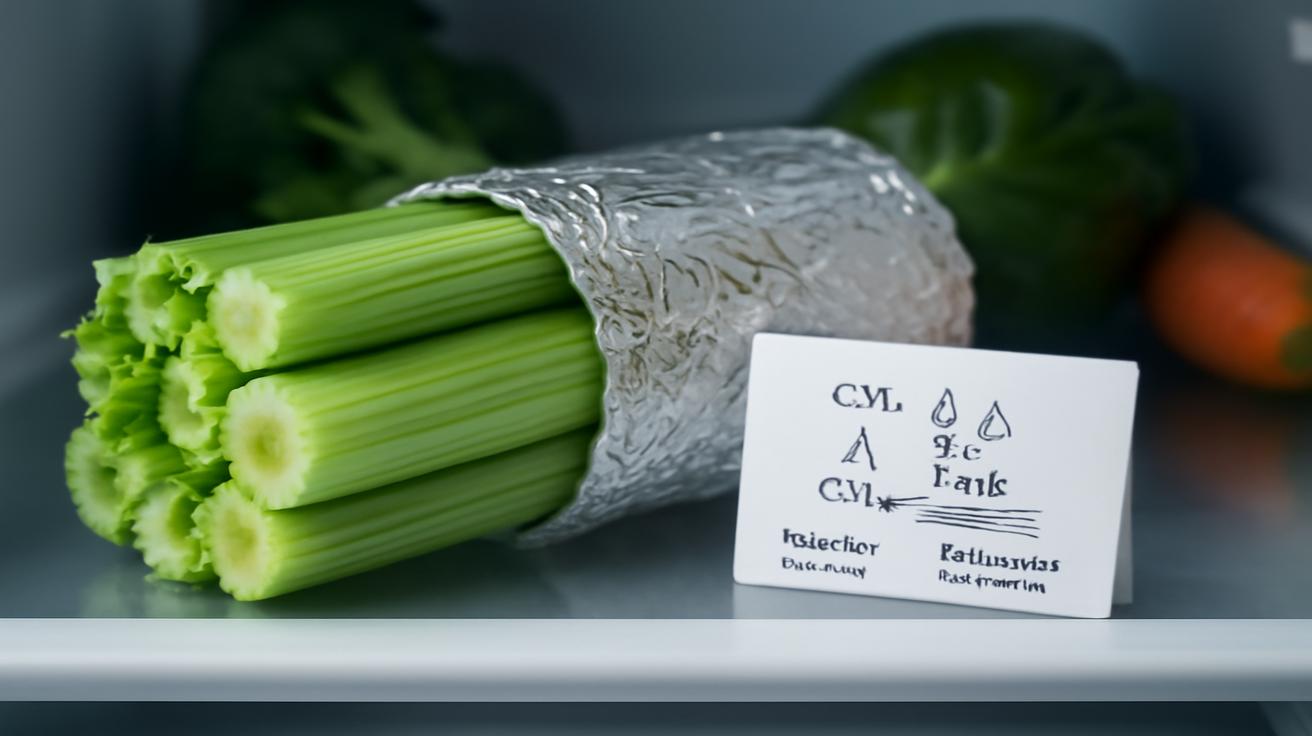
The first time I wrapped a bundle of celery in aluminium foil, it felt a little ridiculous—like I was tucking a vegetable into a shiny, crinkly sleeping bag. I’d heard the tip in passing, the way kitchen folklore often travels: overheard in grocery aisles, shared between neighbors, whispered like a secret. “Trust me,” a friend had said, “it’ll stay crisp for weeks.” Weeks? Celery, the vegetable that usually collapses into a sad, rubbery curve by day four? I was skeptical. But curiosity—and a slightly mushy history with produce—won. So I tried it. And a couple of weeks later, when I pulled that same bundle from the back of the fridge, unwrapped the foil, and snapped off a stalk that was still juicy and sharp enough to echo in the quiet kitchen, I realized there was something genuinely interesting happening in that little aluminum cocoon.
The Quiet Drama Inside Your Crisper Drawer
Most of the time, we toss vegetables into the fridge and assume cold air is the whole point. Colder equals fresher, right? But your crisper drawer is actually a slow-moving theater of water, gas, and life hanging on by a thread. Celery, in particular, is a plant caught in the in-between: not quite alive, not yet decayed, still breathing in its own quiet way.
Every stalk of celery is mostly water—about 95%—held inside long, fibrous cells like tiny water balloons. When you bite into a fresh piece and it shatters between your teeth, that snap is the sound of those cells popping and spilling cold, slightly salty, green-tasting juice. Once celery is harvested, those cells are still doing what plant cells do: they lose moisture to the air, respond to gases around them, and slowly break down. A fridge slows that process, but it doesn’t stop it.
Left naked in the refrigerator, celery dries out. The cold, moving air inside your fridge—even in the crisper—pulls moisture away. Those once-tight water balloons start to deflate. The stalks bend. The texture goes from firm to floppy, from refreshing to forgettable. And, as if that weren’t enough, ethylene gas—released by many fruits and some vegetables as they age—whispers to celery that it’s time to hurry up and decline.
What aluminium foil does is quietly shift the terms of this slow-motion drama. It doesn’t freeze the celery in time, but it changes the environment enough to tilt things in your favor: less moisture lost, gentler gas exchange, and a slower descent into limpness. It’s not magic. It’s physics, plant biology, and a little bit of common sense—wrapped, almost literally, in silver.
The Science Wrapped in Silver
When you cover celery with aluminium foil, you’re building a controlled microclimate around the plant. Not a sealed bag, not an airtight fortress—something in between. Foil is less permeable than plastic to light and air, but it isn’t perfect. Tiny imperfections and loose folds create an environment that cleverly balances protection with breathability.
Here’s what that microclimate is doing for your celery, step by step:
1. Moisture Retention Without Suffocation
Celery loses crispness primarily through water loss. Water evaporates from its cells into the surrounding air. The drier and more circulated that air, the quicker the stalks wilt. That’s why fridges—designed to keep food dry and cold—can be especially harsh on uncovered produce.
Aluminium foil acts as a barrier to that air flow. It keeps the immediate space around the celery slightly more humid. Some water still evaporates from the plant, but instead of vanishing into the vast cold of your refrigerator, much of it stays trapped inside the foil-wrapped bundle. The air inside that wrap becomes gently moist, reducing the rate at which the stalks dehydrate.
But unlike fully sealed plastic, foil typically isn’t 100% airtight when you wrap it by hand. You press it around the bundle, maybe crimp the ends, but you don’t create a laboratory-grade seal. That tiny bit of imperfection is actually ideal: it allows just enough airflow to keep the celery from getting soggy or slimy, while still retaining enough humidity to slow down water loss. The plant remains crisp, but not waterlogged.
2. Letting the Celery Breathe (A Little)
Celery, like most harvested vegetables, continues to respire. It takes in oxygen and releases carbon dioxide and water vapor. It’s not as dramatic as a living plant in the soil, but it’s still chemistry in motion. When you trap that respiration completely—as happens in some plastic bags—gases and moisture can build up too quickly.
In a tight, sealed plastic bag, the concentration of CO₂ can rise while oxygen levels drop. For some vegetables, a slightly elevated CO₂ level can slow decay, but there’s a tipping point. Too little oxygen and too much ethylene and moisture can lead to off-odors, sliminess, and that unsettling “swampy” feel you sometimes find at the bottom of a produce drawer.
Foil creates more of a “partial barrier.” It slows gas exchange but doesn’t completely stop it. That means the celery can keep respiring without suffocating. Carbon dioxide doesn’t rush out immediately, but it also doesn’t build to extremes. Oxygen can still sneak in. The plant gets to keep living at a calmer, slower pace. That slower biology is what extends its crisp life.
Celery vs. Plastic: Why the Classic Bag Fails You
Most people, by habit, tuck celery into plastic produce bags straight from the store. It seems logical: plastic keeps things from drying out. But it’s a flawed solution when you understand what celery actually needs.
Plastic traps almost everything: water vapor, ethylene gas, respired carbon dioxide. At first, this may seem great: nothing escapes, so everything stays “fresh,” right? Not quite. The combination of high humidity and trapped gases can create a damp, stale environment. Over a few days, condensation can form. Tiny droplets appear. That moisture settles back onto the celery’s surface, and while the stalks may stay somewhat firm for a time, the outer layers can start to break down, turning slimy where they’re pressed against the plastic.
Even more sneaky is the role of ethylene. While celery isn’t a big ethylene producer compared to, say, apples or bananas, it does respond to it. If your celery happens to be sharing fridge space—or especially a drawer—with higher-ethylene fruits in plastic, that trapped gas can accelerate the breakdown of cell walls and chlorophyll. The stalks may yellow, soften, or take on that tired, “end-of-life” look faster than you’d like.
Foil helps sidestep these extremes. It reduces evaporation, but doesn’t create a sealed swamp. It slows the buildup of gases, but doesn’t lock them in. It’s more like a breathable jacket than a plastic rain poncho. The celery stays protected, but comfortable.
| Storage Method | Typical Texture After 7–10 Days | Main Issues |
|---|---|---|
| Loose in fridge (no wrap) | Limp, rubbery, often bitter | Rapid moisture loss; drying from cold air |
| In plastic bag (tightly sealed) | Partly firm but prone to slimy spots | High humidity, trapped gases, condensation |
| Wrapped in aluminium foil | Crisp, snappy, evenly fresh | Minimal; quality slowly declines but stays usable for weeks |
How to Wrap Celery So It Stays Crisp for Weeks
There’s a small, almost meditative pleasure in the act of wrapping celery properly. A rustle of foil, the weight of the stalks in your hands, the quiet crimp of metal around green. Technique matters more than you might think—too tight, and you’ve recreated a plastic-bag problem in metallic form; too loose, and the fridge air sneaks in and steals the moisture anyway.
3. Step-by-Step: The “Foil Cocoon” Method
Here’s a simple way to get it right:
1. Start fresh. When you bring the celery home, check it over. Remove any obviously damaged or browning stalks and trim off the very end of the base, just a thin slice, to expose fresh tissue. This helps the stalks retain water more evenly.
2. Don’t wash it yet. Resist the urge to rinse. Added surface moisture can turn into condensation inside the wrap. Instead, store it dry. You can wash individual stalks just before using them.
3. Tear off a generous sheet of aluminium foil. Place the full bunch of celery in the center. You want enough foil to fully wrap around the bundle and fold over the ends, but not so much that you’re double- or triple-layering it tightly.
4. Wrap with a gentle snugness. Fold the foil over the celery lengthwise, then roll or fold the sides under. Close up the ends, but not with a hard, airless crimp. Imagine you’re making a loose parcel, not vacuum-sealing it. A bit of wiggle room is perfect.
5. Place it in the crisper drawer. The crisper is still the best home for it. It’s slightly more humid and a little more insulated from the dry air and temperature swings every time you open the fridge door.
Stored this way, celery that might have gone limp in five days can remain firm and bright for two, sometimes even three weeks, depending on how fresh it was when you bought it.
4. Why Washing and Cutting Early Shortens Celery’s Life
It’s tempting to wash and chop a whole bunch of celery at once for the week ahead—neat little sticks in a container, ready for dipping or tossing into soups. While that certainly wins on convenience, it loses on longevity.
When you cut celery, you rupture more cell walls. That speeds up moisture loss and increases the surface area exposed to air and microbes. Washing adds even more water to the mix, which can lead to faster textural breakdown if the pieces aren’t stored perfectly dry afterward.
If you love prepping ahead, a good compromise is this: keep the main bunch wrapped in foil, and every few days, take out just what you need. Rinse, chop, and store those pieces in a separate container with a paper towel to absorb excess moisture. Let the rest of the celery remain in its little foil climate, intact and protected.
The Subtle Chemistry of Crispness
Behind that satisfying crunch of a celery stalk lies a quiet world of polymers and pressure. Plant cells are held together by cell walls rich in cellulose and pectin—long chains of sugar molecules that give structure and firmness. When celery is fresh, these polymers are intact and pressurized, the internal water pushing against the walls the way air keeps a balloon taut.
As celery ages, two things happen: water leaks out or evaporates, and enzymes start breaking down the cell wall materials. Less water means lower internal pressure; weaker walls mean they can’t hold their shape as well. Both shifts lead to that telltale bendy, dull-textured stalk.
By slowing water loss with aluminium foil, you’re indirectly slowing both of these transformations. Less dehydration means the enzymes work in a slightly more stable environment for longer, and the pressure inside the cells doesn’t drop as quickly. The celery keeps its structural integrity. It’s the difference between biting into a fully pumped-up tire and a half-deflated one.
There’s another subtle piece: temperature stability. Foil, hugging the celery, buffers it from the wild microshifts of fridge temperature when the door opens and closes. Those small fluctuations can add stress to plant tissues over time. A gentler, more constant cool helps preserve texture.
5. Why This Trick Works Especially Well for Celery
Not every vegetable behaves like celery. Leafy greens, for example, have thinner, more delicate tissues and often prefer slightly different storage approaches. Root vegetables store a lot of their energy in dense tissues and often do fine without elaborate wrapping.
Celery sits in a sweet spot for the foil trick: it’s long, fibrous, packed with water, and vulnerable to dehydration but tolerant of a slightly humid, cool environment. Its structure is built for that signature crunch, and that structure responds beautifully to a microclimate that slows water loss without drowning it in condensation.
This is also why you sometimes hear people swear by keeping celery standing in a jar of water in the fridge. That method can plump up slightly limp stalks by rehydrating them. But as a long-term strategy, it’s less ideal: the exposed tops can still dry out, and the cut ends submerged in water can become slimy or discolored over time. Foil, by comparison, is more balanced and lower maintenance. Wrap once, store, and forget—until you’re ready for that clean, refreshing “snap.”
FAQs
How long can celery last when wrapped in aluminium foil?
When wrapped properly in aluminium foil and stored in the crisper drawer, celery can often stay crisp and fresh for about two to three weeks. The exact time depends on how fresh it was when you bought it.
Should I wash the celery before wrapping it in foil?
No. It’s better to store celery dry. Excess surface moisture can turn into condensation inside the foil, which may encourage slimy spots. Wash and trim only the stalks you plan to use right away.
Can I wrap cut celery sticks in foil too?
You can, but whole stalks or an intact bunch last longer. Once celery is cut, more surface area is exposed, and it tends to lose moisture faster. If you wrap cut sticks, keep them tightly grouped and still avoid excess moisture.
Is aluminium foil safe for storing vegetables?
Yes, aluminium foil is generally safe for storing vegetables like celery. It’s best not to use it with very acidic foods for long periods, but celery is not highly acidic, so it’s a suitable match.
Why not just use a reusable container instead?
A reusable container can work if it allows a bit of airflow and doesn’t trap too much moisture. However, many airtight containers behave more like sealed plastic bags. Foil naturally creates a looser wrap that balances humidity and breathability, which is particularly helpful for celery.
Can I reuse the same piece of foil?
In many cases, yes. If the foil is clean and not torn, you can gently flatten it and reuse it for another bunch of celery. Just avoid reusing foil that’s torn, heavily crumpled, or contaminated with food residues.
Does this method work for other vegetables?
It can help with some other moisture-sensitive vegetables, particularly ones that are fibrous and prone to drying out. However, each vegetable has its own ideal storage conditions. Celery happens to be one of the best candidates for the foil-wrap method.