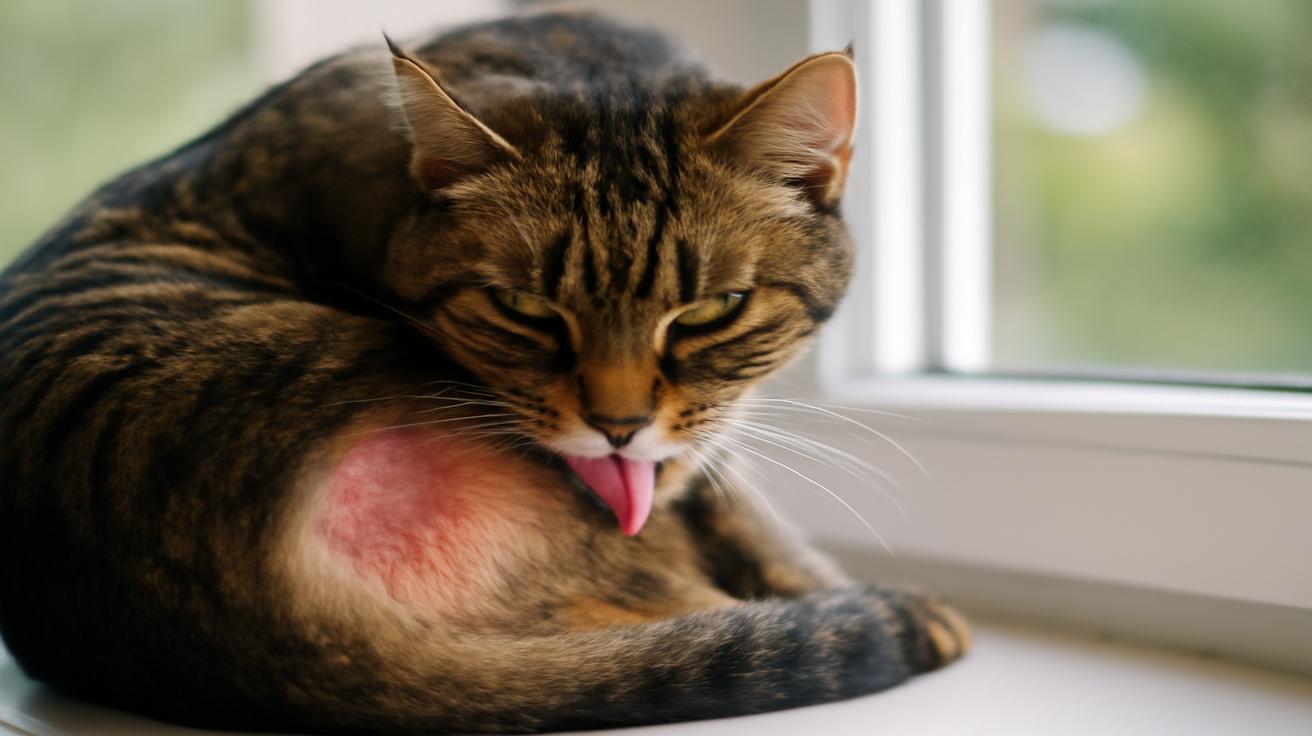
You notice it again while you’re scrolling your phone on the couch: that soft rasping sound, like sandpaper brushing silk. Your cat is curled in a tight cinnamon bun on the chair, tongue flicking rhythmically over the same patch of fur on her side. Lick, pause. Lick, lick, lick. You watch for a moment, half-smiling—cats groom themselves all the time, you remind yourself. But then you realize you saw her doing the exact same thing an hour ago. And earlier this morning. And last night. The moment stretches as you listen to that quiet, repetitive sound. Is she just being… a cat? Or is something else whispering beneath all that fur?
Why Cats Lick So Much in the First Place
If grooming were an Olympic sport, cats would win the gold without trying. A healthy adult cat can spend anywhere from 30% to 50% of its waking hours grooming. To us, that might feel excessive. To a cat, it’s just Tuesday.
That sandpapery tongue, covered in tiny backward-facing hooks called papillae, is an all-in-one brush, comb, and washcloth. With every stroke, she’s doing more than just smoothing fur:
- Cleaning the coat: Removing dust, loose hair, and tiny bits of debris she’s picked up wandering around your home or the yard.
- Distributing skin oils: Those subtle oils keep her coat glossy, waterproof, and lightly scented with her own familiar smell.
- Regulating temperature: A dampened coat can help cool her on warm days, like a tiny built-in air conditioner.
- Keeping predators and prey guessing: In wild ancestors, grooming helped remove smells that gave away their presence.
- Social bonding: Mother cats groom their kittens; bonded cats groom each other. When your cat grooms herself after you pet her, she might be blending your scent with hers.
So, yes: frequent grooming is absolutely normal. The problem is, “normal” for cats still looks pretty intense to humans. The key is not how often your cat grooms, but how she does it—and what her body and behavior look like between those grooming sessions.
When Routine Grooming Starts to Look Like Obsession
There’s a line—sometimes a thin, blurry one—between healthy grooming and self-comfort that’s tipped into stress or medical trouble. The tricky part: most cats won’t yowl or complain when something is wrong. They whisper it through habits and tiny changes you almost miss in the rush of your day.
Imagine watching your cat over the course of an evening. Natural, relaxed grooming usually looks like this: she stretches, adjusts position now and then, moves methodically from paw to leg to side to tail. She pauses frequently to glance around or doze off. The grooming feels like part of a bigger rhythm of cat life: nap, patrol the window, snack, wrestle with a toy, nap again.
But when licking turns into a coping mechanism—or a symptom—it often changes character. It becomes sharper, more urgent, almost like she’s trying to scrub something invisible away.
| Grooming Type | What It Looks Like | What It Might Mean |
|---|---|---|
| Relaxed routine grooming | Whole body, slow pace, lots of breaks, cat seems calm or sleepy | Normal self-care and comfort |
| Focused, repetitive licking in one spot | Same area over and over, possible thinning hair or redness | Itch, pain, or anxiety; needs investigation |
| Frantic or “twitchy” grooming | Sudden bursts of intense licking or biting at fur, restlessness | Allergies, skin issues, parasites, or stress |
| Overgrooming with bald patches | Visible hair loss, skin may look normal or inflamed | Common in both medical and stress-related problems |
You may notice patterns, too. Maybe your cat licks her stomach until the fur thins after you move to a new apartment. Or she suddenly attacks her tail with furious licking on the nights the neighbors’ dog barks. These are whispers worth listening to.
The Subtle Stories Your Cat’s Tongue Is Telling
Cats rarely send you one loud signal; they send a hundred small ones. The licking is just one part of a bigger pattern. When you’re trying to decode whether grooming is routine or a red flag, zoom out and look at the whole picture.
Ask yourself:
- Has the pattern changed recently? Did the licking increase after a schedule shift, a new pet, or returning to work after being home more?
- Is it always in the same place? Belly, inner thighs, base of the tail, or paws can point to specific issues like allergies, pain, or fleas.
- Is her skin or coat different? Redness, bumps, dandruff, or bald spots are firm clues that it’s more than just habit.
- How is the rest of her life? Is she hiding more? Eating less or more? Playing less? Startling easily?
Think of yourself on a stressful week. Maybe you chew your nails, pace, or scroll mindlessly. The action itself isn’t the problem; it’s the why beneath it. Your cat is no different—her tongue is just her version of your fidgeting fingers.
Medical Causes: When Licking Is a Symptom, Not a Quirk
Before we wander deep into the forest of stress and emotions, there’s a more practical trail to follow: your cat’s body. Many cats that overgroom are not “just stressed”—they’re itchy, uncomfortable, or in pain. And because they’re cats, they quietly keep going until the clues show up in their fur.
The Hidden Itch: Allergies and Skin Troubles
If your cat seems to be trying to lick herself inside out, start thinking about allergies. They are astonishingly common and maddeningly sneaky.
- Flea allergy: One single flea bite can send some cats into a full-body overgrooming spiral. You might never see the flea, but your cat feels the echo for days.
- Food allergies or sensitivities: Often show up as belly or paw licking, sometimes with ear problems or soft stools joining the party.
- Environmental allergies: Pollen, dust, mold—all the usual suspects. These can create a general, chronic itch that drives your cat back to her tongue again and again.
Skin infections, mites, or fungal issues like ringworm can also spark a grooming frenzy. Your cat can’t tell you her skin feels like it’s buzzing; she can only try to fix it with the one tool she has.
Pain That Hides in Plain Sight
Cats are masters at disguising pain. Evolution taught them that limping or crying out makes them look weak. Instead, they might lick the painful area.”
A cat with arthritis in her hips might endlessly groom her back legs. A cat with bladder discomfort might focus on her lower belly. Sometimes the spot she licks is near, not exactly on, the source of the pain. It’s a bit like rubbing your thigh when your knee hurts.
Other internal problems—like urinary tract inflammation or gastrointestinal upset—can also lead to intense belly grooming, even if the skin itself looks normal.
Why a Vet Visit Matters More Than Google
When licking crosses into “this feels like too much,” a veterinarian is your best translator. They can:
- Check for parasites, infections, and skin changes.
- Evaluate for pain, especially in joints, spine, and abdomen.
- Discuss diet, environment, and recent changes that might be fueling the problem.
- Run tests if allergies or other internal conditions are suspected.
It can be tempting to simply change food or shampoo and hope for the best, but guesswork often drags the problem out. Over time, your cat can develop a cycle where the skin becomes more irritated from all the licking, even if the original trigger improves. The sooner you have a clear diagnosis, the sooner the tongue can go back to normal cat business.
Stress, Anxiety, and the Comfort of the Tongue
Now we step into quieter territory—the things you don’t see on a skin scraping or blood test. Even if medical issues need to be checked first, stress often weaves its way through the story of a cat who licks too much.
Grooming is deeply soothing for cats. The familiar feel of the tongue, the scent of their own fur, the rhythm of the motion—it’s a built-in self-care routine. When life feels uncertain, that routine can become a lifeline. The problem is, like any coping mechanism, it can tip into overuse.
A Cat’s-Eye View of Stress
Stress for a cat rarely looks like dramatic meltdowns. It’s more like a subtle shift in the color of their world. Many things we see as minor can hit them with unexpected weight:
- A new baby, roommate, or partner moving in.
- Another pet joining—or leaving—the household.
- Furniture rearranged, boxes everywhere, the smell of paint.
- You returning to the office after months of working from home.
- Neighborhood cats patrolling outside the windows.
- Loud construction, storms, or frequent visitors.
Your cat might not hiss or hide under the bed. Instead, she might quietly increase her grooming sessions. It’s something she can control when everything else feels like it’s changing shape around her.
Psychogenic Alopecia: When Stress Goes Skin-Deep
There’s even a name for stress-driven overgrooming that leads to hair loss: psychogenic alopecia. It’s often a diagnosis of exclusion—made after other medical causes have been ruled out.
Cats with psychogenic alopecia often develop:
- Symmetrical bald areas (often on the belly, inner thighs, or legs).
- Very short, stubbly fur where the hair has been broken off by licking.
- Normal-looking skin, especially early on—no obvious rash or scabs.
Think of it as the feline equivalent of stress-picking at your skin, biting your lips, or constantly twirling your hair. It’s a way to turn invisible tension into something tangible.
Helping Your Cat Find Calm: Practical Ways to Ease Stress
Once medical causes are addressed—or ruled out—the heart of the question becomes: how can you help your cat feel safer in their own world? The answer isn’t a single magic product; it’s a quieter reshaping of daily life.
Create Safe, Predictable Territory
Cats anchor themselves to spaces that feel reliably “theirs.” You can help by:
- Adding vertical spaces: Cat trees, shelves, or even cleared spots on bookshelves. Height is security.
- Ensuring multiple hiding spots: Boxes lined with blankets, covered beds, or a quiet corner behind furniture.
- Keeping resources spread out: In multi-cat homes, have several feeding stations, water bowls, and litter boxes so no one has to “ask permission” to pee or eat.
A home that looks cozy to us can feel like a maze of contested zones to a cat. Space, height, and options reduce invisible tensions.
Protect the Power of Routine
Your cat doesn’t care about the time on the clock—but she cares deeply that life happens in a familiar order. Try to:
- Feed at roughly the same times each day.
- Keep play sessions and quiet cuddle time predictable.
- Introduce changes gradually whenever possible (new furniture, new pets, even new litter).
When big changes are unavoidable, counterbalance them with extra predictability in other areas: more play, more calm talking, more respect for your cat’s need to observe from a safe distance.
Invite Play, Don’t Force Affection
Stress often lives in a cat’s body as restless energy. Interactive play helps discharge it in a healthy way. Think of it as a pressure-release valve.
- Use wand toys that mimic prey, letting your cat stalk, chase, and pounce.
- End play sessions with a “catch” and a small snack to mirror a successful hunt.
- Offer different textures and types of toys to match your cat’s hunting style—some prefer ground-level scuttling toys, others like climbing and leaping.
And when it comes to touch, let your cat set the rules. A stressed cat may enjoy being near you but not handled too much. Respecting their boundaries builds the trust that eventually softens the stress underneath.
Use Calming Tools Thoughtfully
Some cats benefit from pheromone diffusers, calming supplements, or, in more severe cases, behavior medications prescribed by a veterinarian. These aren’t personality changers; they’re like turning down the volume on constant background static so your cat can relax enough to learn new patterns.
Any time you consider these options, do it with professional guidance. The goal isn’t to “drug your cat into being fine,” but to support her while you also adjust her environment and routines.
When to Worry—and When to Breathe
No one wants to overreact every time their cat takes a bath, but you also don’t want to wait until there are raw patches and bald spots. So where’s the line?
Consider contacting your vet when you notice any of the following:
- Licking that suddenly increases or changes in character (more intense, more focused).
- Hair loss, bald patches, or fur that feels rough, broken, or thin.
- Red, flaky, or bumpy skin; scabs or open sores.
- Changes in appetite, litter box habits, weight, or energy along with the increased grooming.
- Behavior changes—hiding more, startling easily, avoiding play or affection.
On the other hand, if your cat has always been an enthusiastic groomer, has a full, healthy-looking coat, and otherwise seems relaxed and content, you can likely exhale. Just keep paying quiet attention. You are, after all, the one who knows your cat’s rhythms best.
In the soft hush of your living room, that rasp of tongue on fur might be nothing more than your cat doing the ancient work of staying clean and calm. Or it might be her way of tapping you gently on the shoulder, asking you to notice that something doesn’t feel quite right. Your job isn’t to panic—it’s to listen. To watch. To seek help when the story her fur is telling begins to change.
Somewhere between those ordinary grooming sessions and the restless, repetitive licking that keeps catching your eye, there’s a threshold. On one side is simple catness. On the other is a body or mind trying to cope. When you learn to read the difference, that small, familiar sound of your cat licking herself becomes less of a background noise—and more of a language you can finally understand.
FAQ
How much licking is normal for a cat?
Many healthy cats spend a third or more of their awake time grooming. If your cat’s coat looks full and healthy, her skin looks normal, and her behavior and appetite haven’t changed, frequent grooming is usually normal.
Why does my cat lick the same spot over and over?
Persistent licking in one area often signals a problem there—itch, irritation, pain, or sometimes stress. Common causes include fleas, allergies, skin infections, or joint pain under the surface. It’s a good reason to schedule a vet visit.
Can stress alone cause my cat to lose fur from licking?
Yes. Once medical issues are ruled out, stress-related overgrooming (psychogenic alopecia) is a well-recognized cause of hair loss. The skin may even look normal, but the fur is short, broken, or missing where your cat licks most.
Is it dangerous if my cat swallows a lot of fur?
Swallowed fur usually passes through the digestive tract or forms hairballs that are vomited up. However, excessive licking can lead to more frequent hairballs, possible constipation, or, rarely, dangerous intestinal blockages. Addressing the cause of overgrooming helps reduce the risk.
Should I stop my cat when she’s overgrooming?
Interrupting occasionally with gentle distraction—like offering play or a treat—can be helpful, but you shouldn’t rely on that alone. Constantly stopping her without treating the underlying cause can add frustration and stress. Work with your vet to identify and address the root problem.
How can I tell if my cat is stressed at home?
Subtle signs include hiding more, reduced play, changes in relationships with people or other pets, increased startle responses, changes in litter box habits, and, of course, increased or focused grooming. Any cluster of changes is worth paying attention to.
When should I see a vet about my cat’s licking?
Book an appointment if you see hair loss, redness, scabs, sores, sudden increases in grooming, or any change in appetite, weight, or energy alongside the licking. Early evaluation can prevent a minor issue from turning into a long, uncomfortable cycle for your cat.